Gadkari attends BRICS Transport Ministers' Meet in Nagpur
Synopsis
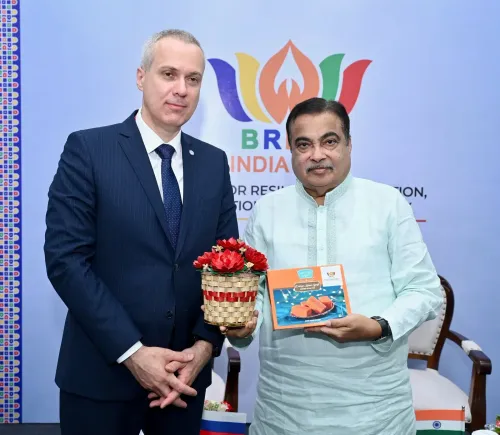
Union Minister Nitin Gadkari attended the 3rd BRICS Transport Ministers' Meeting in Nagpur on 11 July 2026, a key sectoral engagement under India's BRICS 2026 Chairship focused on cross-border connectivity and logistics cooperation among member nations.
Key Takeaways
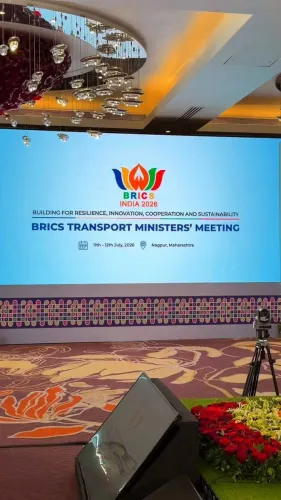
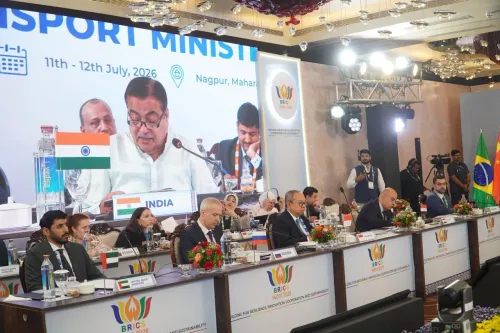
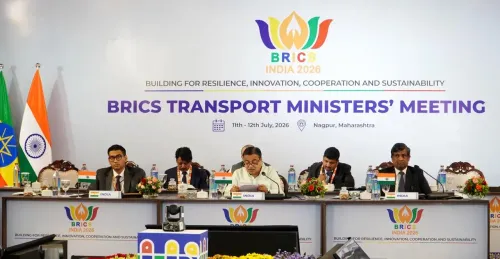
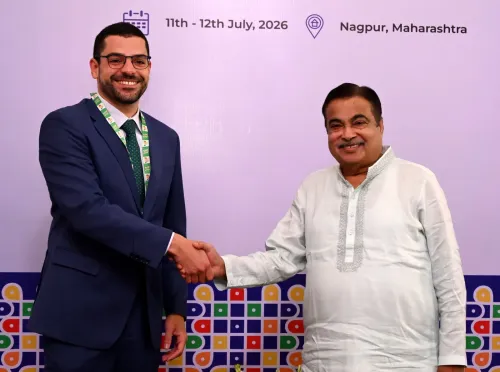
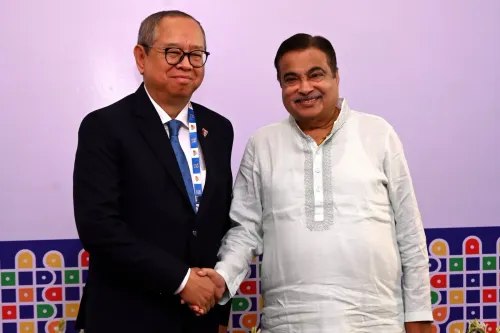
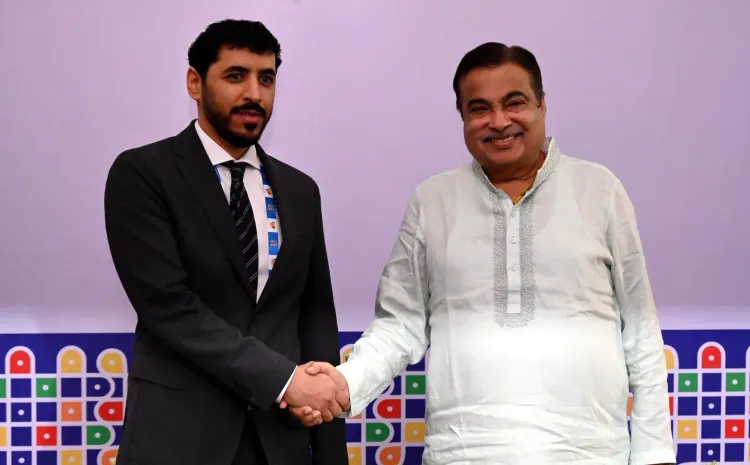
Nitin Gadkari , Union Minister of Road Transport and Highways, attended the 3rd BRICS Transport Ministers' Meeting in Nagpur, Maharashtra on 11 July 2026 .
The meeting is part of India's BRICS 2026 Chairship , during which India is hosting a full calendar of summit and sectoral ministerial meetings.
Nagpur — a central-Indian logistics hub and Gadkari's political base — was chosen as the host city, highlighting India's multimodal infrastructure ambitions.
BRICS transport ministerial meetings address cross-border freight facilitation, road safety standards, port connectivity and digital logistics technologies.
Outcomes from the meeting are expected to inform the final agenda and joint statement of the BRICS 2026 Summit .
India previously held the BRICS chairship in 2016 , hosting the 8th BRICS Summit in Goa with infrastructure as a centrepiece.
Union Road Transport and Highways Minister Nitin Gadkari attended the 3rd BRICS Transport Ministers' Meeting in Nagpur, Maharashtra, on Saturday, 11 July 2026, as India exercises its BRICS 2026 Chairship. The meeting marks one of the key sectoral ministerial engagements under India's year-long stewardship of the intergovernmental grouping.
Context
Nagpur — a major central-Indian logistics hub and Gadkari's own political constituency — hosted transport ministers from across the BRICS bloc, which groups Brazil, Russia, India, China and South Africa alongside its expanded membership. Hosting the meeting in Nagpur underscores India's intent to anchor BRICS sectoral diplomacy in cities beyond the capital, while drawing attention to the country's rapidly expanding road and multimodal infrastructure network.
India assumed the BRICS 2026 Chairship at the start of this year, committing to a calendar of summits and ministerial-level meetings spanning trade, finance, health and transport. The transport ministers' track is a recurring feature of BRICS chairships, designed to align member-state policies on cross-border connectivity, logistics standards and technology sharing.
Policy Backdrop
India has consistently used BRICS platforms to advance its South-South cooperation agenda on physical connectivity. During its previous BRICS chairship in 2016, India hosted the 8th BRICS Summit in Goa, where infrastructure and multimodal corridors featured prominently in the joint declaration. The 2026 edition builds on that lineage, with Gadkari's ministry — which has overseen the construction of tens of thousands of kilometres of national highways in the current government's tenure — well-positioned to lead the transport diplomacy track.
BRICS transport ministerial meetings typically address road safety standards, cross-border freight facilitation, port connectivity and the integration of digital technologies in logistics. India's own experience with expressway corridors, multimodal logistics parks and the PM Gati Shakti national master plan gives it substantive ground to contribute to bloc-wide discussions.
Stakeholders and Impact
The meeting brings together transport ministries of BRICS nations whose combined freight and passenger volumes represent a significant share of global movement. For Indian logistics and highway developers, outcomes from such meetings can open doors to technology-transfer arrangements, joint standards, and financing frameworks that complement domestic infrastructure programmes.
For Nagpur specifically, hosting an international ministerial meeting reinforces the city's profile as a national transport nerve centre — it sits at the geographical heart of India and is already home to a major multimodal logistics hub. Local industry and trade bodies stand to benefit from the visibility that accompanies high-level multilateral gatherings.
What's Next
The deliberations at the 3rd BRICS Transport Ministers' Meeting are expected to feed into the broader agenda of the BRICS 2026 Summit, where a joint statement on transport cooperation could formalise commitments on cross-border connectivity projects and harmonised logistics standards. Observers will watch for any working-group mandates on transport technology or infrastructure financing that emerge from the ministerial communiqué. As India steers the bloc through the remainder of its chairship year, the Nagpur meeting signals that transport diplomacy remains a substantive — not merely ceremonial — pillar of its BRICS priorities.
Point of View
Projecting India's infrastructure story from its geographic heartland. This fits a broader pattern in which successive Indian BRICS chairships have used the transport track to advance South-South connectivity frameworks that complement bilateral agreements and domestic corridor projects. The real test will be whether the ministerial discussions translate into concrete working-group mandates or financing commitments at the BRICS 2026 Summit.
NationPress
10 Oct 2026
Frequently Asked Questions
What is the BRICS Transport Ministers' Meeting?
The BRICS Transport Ministers' Meeting is a sectoral ministerial forum within the BRICS grouping where transport ministers of member nations meet to align policies on cross-border connectivity, logistics standards, road safety and technology sharing.
Why was the BRICS Transport Ministers' Meeting held in Nagpur?
Nagpur was chosen as the host city under India's BRICS 2026 Chairship. The city is a major logistics and road-transport hub located at the geographical centre of India, and it is also Union Minister Nitin Gadkari's political base.
What is India's BRICS 2026 Chairship?
India holds the BRICS Chairship for 2026, meaning it presides over and hosts the bloc's summit and all sectoral ministerial meetings throughout the year, setting the agenda for cooperation among member nations.
Which countries are part of BRICS?
The original BRICS grouping comprises Brazil, Russia, India, China and South Africa. The bloc has since expanded to include additional member nations, making it a broader coalition of emerging-market economies.
What outcomes are expected from the 3rd BRICS Transport Ministers' Meeting?
The meeting's deliberations are expected to contribute to the agenda of the BRICS 2026 Summit, potentially resulting in a joint communiqué covering cross-border freight facilitation, transport technology cooperation and infrastructure financing frameworks.