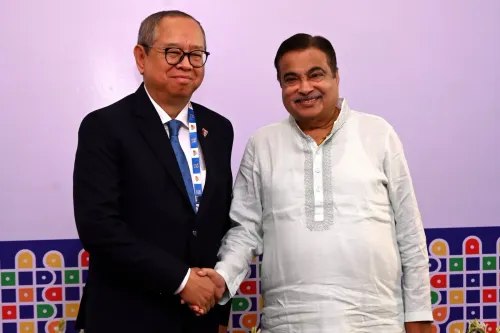
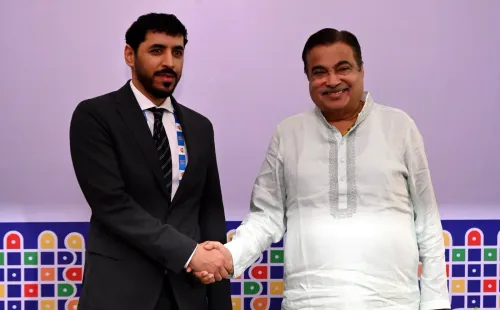
Gadkari Delivers Opening Address at 3rd BRICS Transport Ministers' Meeting in Nagpur
Synopsis
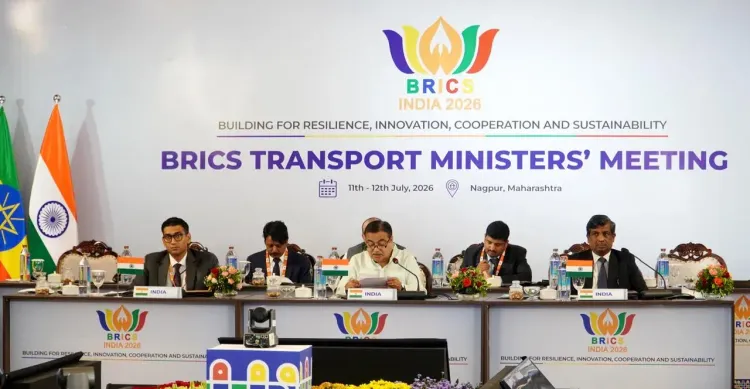
Union Minister Nitin Gadkari delivered the opening address at the 3rd BRICS Transport Ministers' Meeting in Nagpur on 11 July 2026, as India leads the grouping's agenda under its BRICS 2026 Chairship. The meeting focuses on connectivity, logistics standards, and cross-border infrastructure among an enlarged BRICS membership.
Key Takeaways
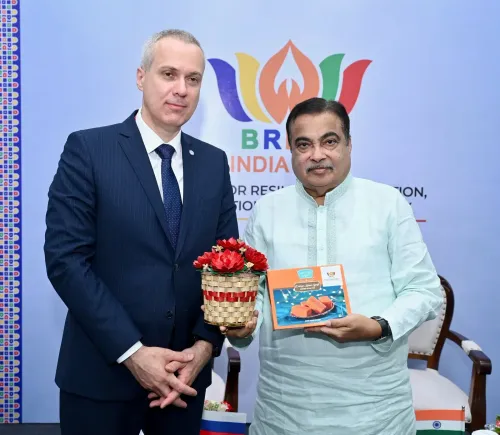
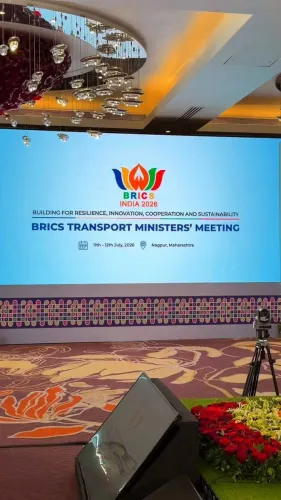
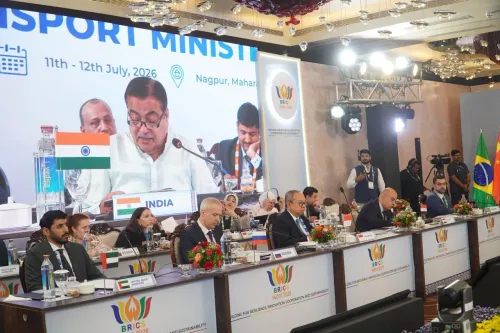
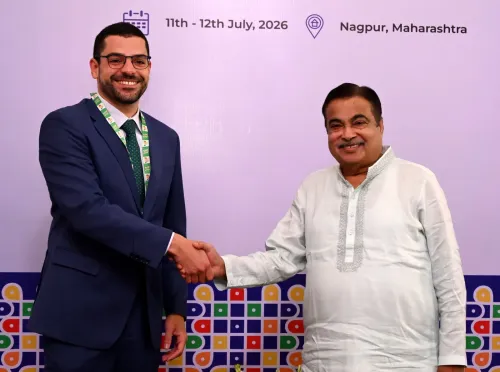
Nitin Gadkari delivered the opening address at the 3rd BRICS Transport Ministers' Meeting in Nagpur, Maharashtra on 11 July 2026 .
The meeting is held under India's BRICS 2026 Chairship , placing New Delhi at the centre of the grouping's sectoral agenda.
BRICS was enlarged at the 2024 Kazan Summit to include Egypt, Ethiopia, Iran, Saudi Arabia , and the UAE , broadening the transport-cooperation agenda.
Nagpur was chosen as the venue, reflecting its role as a key logistics and road-connectivity hub in central India.
Key themes include technology sharing, standards harmonisation, and financing of cross-border transport corridors among member states.
Outcomes from the ministerial are expected to feed into the broader 2026 BRICS Summit agenda.
Union Road Transport and Highways Minister Nitin Gadkari delivered the opening address at the 3rd BRICS Transport Ministers' Meeting held in Nagpur, Maharashtra, on Saturday, 11 July 2026, as India exercises its BRICS 2026 Chairship. The ministerial conclave brings together transport officials from across the BRICS grouping to advance cooperation on connectivity, logistics, and sustainable infrastructure.
Context
Nagpur — a city that sits at the geographic heart of India and serves as a major logistics and road-connectivity hub — was chosen as the venue for the meeting, underlining the city's growing stature in multilateral infrastructure diplomacy. Gadkari, whose ministry oversees one of the world's largest highway expansion programmes, is a natural choice to lead India's engagement at a transport-focused ministerial. As host minister, he set the tone for the day's deliberations with his opening remarks.
India's BRICS presidency for 2026 places New Delhi at the centre of the grouping's sectoral agenda, with ministerial meetings spread across policy domains. The transport ministers' meeting is among the most consequential of these, given the grouping's shared interest in cross-border corridors and multimodal freight networks.
Policy Backdrop
The BRICS grouping — originally comprising Brazil, Russia, India, China, and South Africa — was significantly enlarged at the 2024 Kazan Summit, which admitted Egypt, Ethiopia, Iran, Saudi Arabia, and the UAE as new members. This expansion has broadened the transport-cooperation agenda considerably, bringing in economies with major port, rail, and road assets that are central to emerging Global-South supply chains.
India previously held the BRICS chair in 2021, during which it hosted a range of sectoral ministerial meetings. Successive BRICS transport ministerials have focused on technology sharing, harmonisation of standards, and financing mechanisms for cross-border infrastructure corridors. The 2026 meeting builds on that institutional foundation while reflecting the realities of an enlarged grouping.
Gadkari's ministry has, in parallel, been driving domestic ambitions — including the Bharatmala Pariyojana highway programme and multimodal logistics parks — that align closely with the connectivity themes on the BRICS transport agenda. India's domestic infrastructure push gives its multilateral positions added credibility among partner nations.
Stakeholders and Impact
The primary stakeholders at the meeting are the transport ministries of all BRICS member states, including the five new members admitted in 2024. Logistics companies, port operators, and infrastructure financing institutions from across the grouping are the indirect beneficiaries of any agreements or working-group mandates that emerge from the ministerial.
For India, the meeting is an opportunity to project its infrastructure-building expertise and to shape BRICS norms on sustainable transport — an area where Indian policy has evolved rapidly with the adoption of green highway standards and electric-mobility targets. Nagpur itself, as a road and rail junction, symbolises the kind of multimodal connectivity the meeting is designed to promote.
What's Next
Attention will now turn to the final joint statement expected at the close of the ministerial, which could include new working-group mandates or declarations on technology sharing and corridor financing. Any outcomes from the 3rd BRICS Transport Ministers' Meeting are likely to feed into the broader agenda of the 2026 BRICS Summit, the flagship event of India's chairship year. Gadkari's opening address sets the political register for those negotiations, and follow-up announcements from the ministry are expected in the days ahead.
Point of View
Making the transport ministerial a more complex but also more consequential forum. How the final joint statement frames cross-border corridor financing and sustainability standards will reveal how effectively India has leveraged its chair role.
NationPress
10 Oct 2026
Frequently Asked Questions
What is the 3rd BRICS Transport Ministers' Meeting?
It is a ministerial-level meeting of transport officials from BRICS member states, held in Nagpur on 11 July 2026 under India's BRICS 2026 Chairship, focused on connectivity, logistics, and cross-border infrastructure cooperation.
Why is India hosting BRICS meetings in 2026?
India holds the BRICS Chairship for 2026, which means it presides over and hosts the grouping's summit and all sectoral ministerial meetings throughout the year.
What did Nitin Gadkari do at the BRICS transport meeting?
Union Minister Nitin Gadkari delivered the opening address at the 3rd BRICS Transport Ministers' Meeting in Nagpur on 11 July 2026, setting the agenda for the day's deliberations on transport cooperation.
Which countries are now part of BRICS?
Following the 2024 Kazan Summit, BRICS comprises Brazil, Russia, India, China, South Africa, Egypt, Ethiopia, Iran, Saudi Arabia, and the UAE.
Why was Nagpur chosen for the BRICS transport meeting?
Nagpur is a major logistics and road-connectivity hub at the geographic centre of India, making it a fitting venue for a multilateral meeting on transport and infrastructure.