BRICS Anti-Drug Agencies Meet in Guwahati: India hosts July 6-7 summit
Synopsis
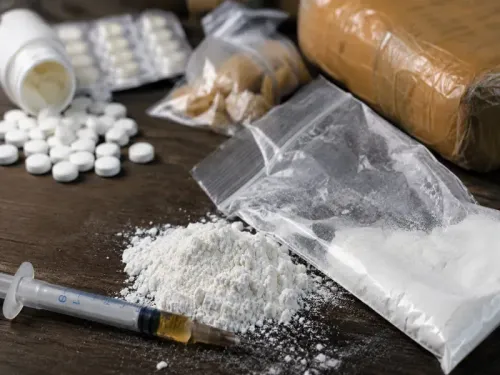
India is convening the BRICS Heads of Anti-Drug Agencies in Guwahati — a city on the doorstep of the Golden Triangle — to push the bloc’s counter-narcotics engagement from talk to action. With darknet trafficking, synthetic drugs, and cryptocurrency-financed cartels on the agenda, the joint declaration expected on 7 July could set a concrete enforcement template for 11 of the world’s largest emerging economies.
Key Takeaways
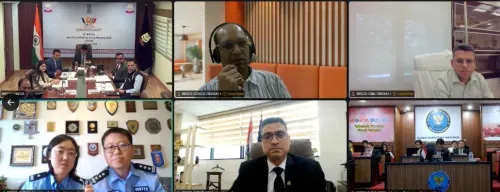
India hosts the BRICS Heads of Anti-Drug Agencies Meeting in Guwahati, Assam on 6-7 July 2025 .
The summit is convened by the Narcotics Control Bureau (NCB) under the Ministry of Home Affairs .
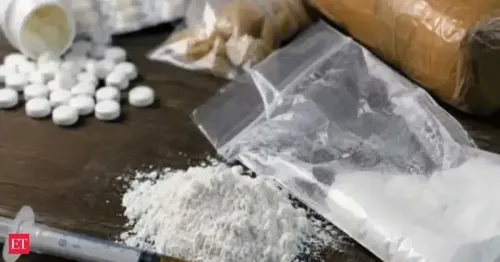
Six thematic sessions will address synthetic drugs, darknet trafficking, New Psychoactive Substances (NPS) , precursor diversion, and demand reduction.
India recently released its Vision Document on Narcotics Control (2026–2029) ahead of the meet.
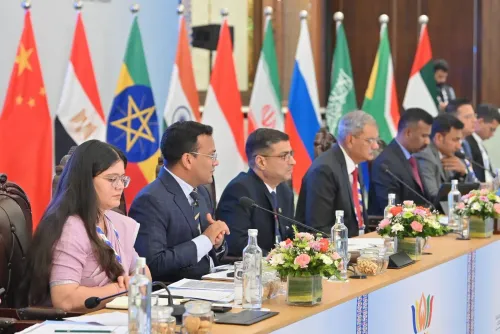
The meeting will conclude with the adoption of a joint declaration by all 11 BRICS member nations .
India’s BRICS Chairship theme is ‘Building for Resilience, Innovation, Cooperation and Sustainability’ .
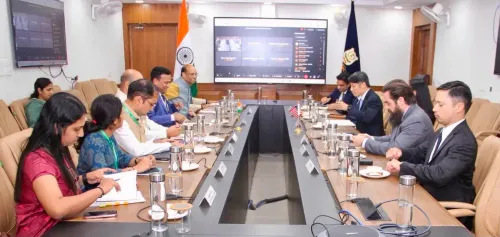
India is set to host the BRICS Heads of Anti-Drug Agencies Meeting in Guwahati, Assam on 6-7 July, bringing together senior drug-control officials from across the 11-nation BRICS bloc to forge stronger operational ties. The two-day summit, convened by the Narcotics Control Bureau (NCB) under the Ministry of Home Affairs, will centre on three overarching priorities: combating synthetic drugs and precursor diversion, deepening intelligence sharing and operational coordination, and advancing capacity building and institutional cooperation.
Key Agenda and Thematic Sessions
Delegates from BRICS member countries will deliberate on the drug situation in their respective nations across six thematic sessions addressing some of the most pressing challenges in global narcotics control. Topics include leveraging digital technology for real-time drug interdiction, dismantling trafficking networks operating over the darknet, tackling emerging New Psychoactive Substances (NPS), and reinforcing global supply chains against precursor diversion and chemical leakage.
Additional sessions will focus on special initiatives for drug demand reduction and on strengthening institutional mechanisms across member states. The meeting is expected to conclude with the adoption of a joint declaration.
What the Ministry of Home Affairs Said
The Ministry of Home Affairs underscored the shifting landscape of global narcotics, noting that “the proliferation of synthetic drugs, New Psychoactive Substances (NPS), darknet-enabled trafficking and cryptocurrency-based financial flows” pose complex transnational challenges. It added that advances in interdiction technologies, data analytics, and financial intelligence present “significant opportunities for enhanced international cooperation and coordinated enforcement action.”
India, as chair, intends to push cooperation beyond dialogue. “India envisions this meeting as a pivotal step in transforming BRICS cooperation from dialogue-centric engagement to structured and action-oriented collaboration,” the ministry said in a statement.
India’s Domestic Anti-Drug Push
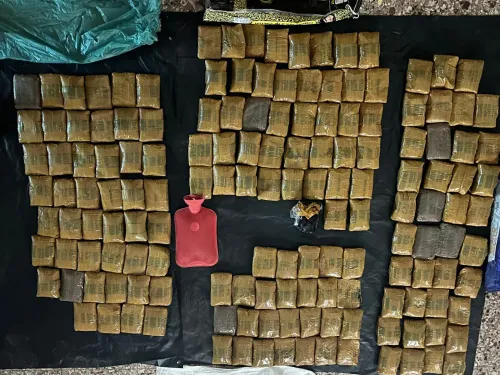
The Guwahati summit also serves as a platform for India to highlight its own intensified counter-narcotics record. In recent years, the government has pursued a whole-of-government, network-centric approach against illicit drug trafficking and organised criminal networks, while simultaneously investing in awareness generation, community participation, and addiction treatment.
India recently released its Vision Document on Narcotics Control (2026–2029), a roadmap aimed at further strengthening institutional capacity. As BRICS Chair, New Delhi will specifically seek cooperation on clandestine laboratory intelligence, emerging synthetic drug trends, precursor chemical monitoring, joint training programmes, and expert exchanges.
India’s BRICS Chairship and the Broader Context
India’s current BRICS Chairship is guided by the theme ‘Building for Resilience, Innovation, Cooperation and Sustainability’ — a people-centric framework articulated by Prime Minister Narendra Modi at the 2025 Rio Summit. BRICS comprises 11 major emerging markets and developing economies: Brazil, China, Egypt, Ethiopia, India, Indonesia, Iran, Russia, Saudi Arabia, South Africa, and the United Arab Emirates.
The choice of Guwahati as the venue is notable given Assam’s geographic proximity to the Golden Triangle — one of the world’s largest illicit drug-producing regions — lending the summit an added layer of strategic significance. With the joint declaration expected by 7 July, the outcomes of this meeting will shape BRICS’ collective counter-narcotics posture through the remainder of India’s chairship.
Point of View
And the optics of convening here reinforce India’s claim to frontline expertise. The harder question is whether a joint declaration will translate into real-time intelligence sharing, or remain the kind of aspirational communiqué that BRICS summits have historically produced. Cryptocurrency-financed trafficking and darknet markets operate faster than any multilateral coordination mechanism built so far. India’s Vision Document on Narcotics Control (2026–2029) is a credible domestic framework, but its value at the BRICS table depends entirely on whether partner nations — particularly those with opaque enforcement records — reciprocate with verifiable data.
NationPress
5 Oct 2026
Frequently Asked Questions
What is the BRICS Heads of Anti-Drug Agencies Meeting in Guwahati?
It is a two-day multilateral summit hosted by India’s Narcotics Control Bureau (NCB) in Guwahati, Assam on 6-7 July 2025, bringing together anti-drug agency heads and senior officials from all 11 BRICS member nations. The meeting aims to shift BRICS counter-narcotics cooperation from dialogue to structured, action-oriented collaboration.
What are the key issues on the agenda?
The summit will address six thematic areas: leveraging digital technology for drug interdiction, neutralising darknet trafficking, tackling New Psychoactive Substances (NPS), preventing precursor chemical diversion, drug demand reduction, and strengthening institutional mechanisms. A joint declaration is expected at the close of proceedings on 7 July.
Why is Guwahati significant as the venue?
Guwahati in Assam is geographically proximate to the Golden Triangle — the Myanmar-Laos-Thailand corridor that is one of the world’s largest illicit opium and synthetic drug producing regions. Hosting the summit there underscores India’s frontline exposure to cross-border drug flows.
What is India’s Vision Document on Narcotics Control?
The Vision Document on Narcotics Control (2026–2029) is a recently released government roadmap to strengthen India’s institutional capacity in counter-narcotics operations. It underpins India’s broader whole-of-government approach that combines enforcement with awareness, community participation, and addiction treatment.
Which countries are part of BRICS?
BRICS currently comprises 11 member nations: Brazil, China, Egypt, Ethiopia, India, Indonesia, Iran, Russia, Saudi Arabia, South Africa, and the United Arab Emirates. India holds the BRICS Chairship in 2025 under the theme ‘Building for Resilience, Innovation, Cooperation and Sustainability.’