Hamid Ansari's 'Hindu communalism' quote sparks VHP, Imam body backlash
Synopsis
Former Vice President Hamid Ansari's citation of a Nehru-attributed warning about 'Hindu right-wing communalism' has drawn fire from an unlikely coalition — the VHP and the All India Imam Organisation both condemned his remarks, with the latter accusing him of opportunistically 'playing politics' in the name of Muslims after years of silence on community concerns.
Key Takeaways
Former Vice President Mohammad Hamid Ansari cited a Nehru-attributed remark on 'Hindu right-wing communalism' at the A.G.
Noorani Memorial Lecture in New Delhi on 18 September 2026 .
The quote was drawn from A.G.
Noorani's 2019 book The RSS: A Menace to India , originally recorded by former Foreign Secretary Jagat Singh Gundevia .
VHP spokesperson Vinod Bansal accused Ansari of fomenting fear among Muslims and raised past controversies during his ambassadorial and Vice Presidential tenures.
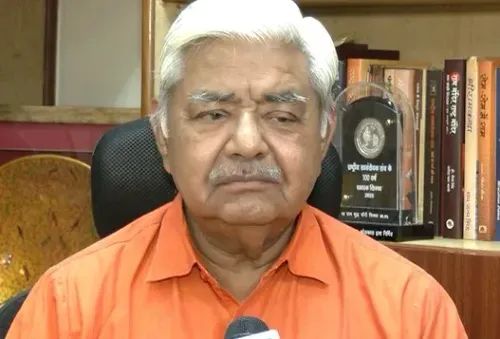
All India Imam Organisation Chief Imam Umar Ahmed Ilyasi also 'strongly condemned' the remarks, calling them a potential 'conspiracy to spoil the atmosphere' .
Ansari, who served as Vice President for a record two consecutive terms (2007–2017) , has previously been at the centre of debates on secularism and minority rights.
Former Vice President Mohammad Hamid Ansari has ignited a political controversy after citing a remark attributed to former Prime Minister Jawaharlal Nehru warning of what Nehru reportedly called the threat from 'Hindu right-wing communalism' — drawing sharp condemnation from the Vishwa Hindu Parishad (VHP) and the All India Imam Organisation.
The Remarks That Sparked the Row
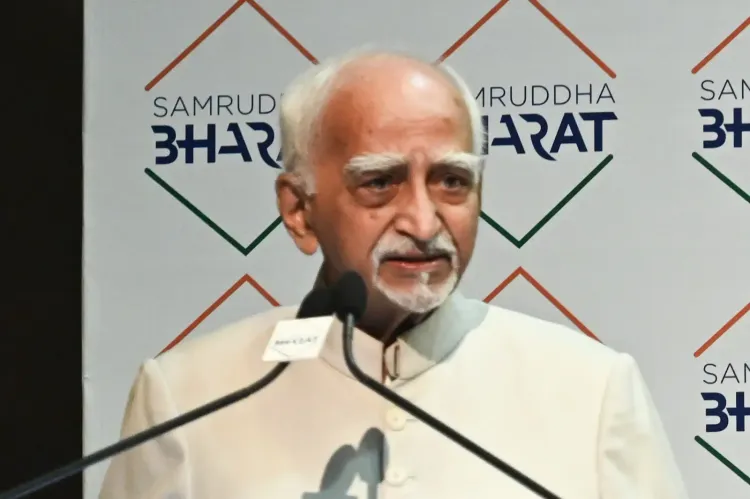
Ansari made the statements while delivering an address at the third A.G. Noorani Memorial Lecture in New Delhi on 18 September 2026. The event, titled 'Remembering a Polymath: The Life and Times of Abdul Ghafoor Noorani', was organised to honour the life and work of the late jurist, constitutional expert, and author A.G. Noorani.
Referring to Noorani's 2019 book The RSS: A Menace to India, Ansari quoted a passage in which Noorani cited an observation attributed to Nehru from a meeting of Ministry of External Affairs officials. The observation was recorded by former Foreign Secretary Jagat Singh Gundevia.
Quoting the passage, Ansari said: 'The danger to India, mark you, it is not communism; it is Hindu right-wing communalism.'
Ansari argued that certain trends discussed in this context sought to replace civic nationalism with what he described as 'cultural nationalism'. He contended that such an approach risked portraying an electoral majority as a religious majority, thereby creating distinctions among citizens on the basis of faith.
VHP's Sharp Rebuttal
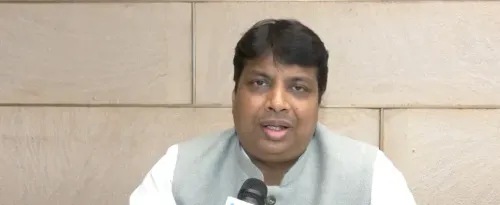
VHP spokesperson Vinod Bansal responded forcefully, questioning both Ansari's remarks and his broader political conduct.
'Leaders like Hamid Ansari, who served as India's ambassador in several countries, were given the position of Vice President twice and were respected by the country. But towards the end, he raised the issue of creating fear among Muslims,' Bansal said.
Bansal went further, questioning Ansari's associations during his tenure as Vice President. 'When he was Vice President, how many times did he participate in programmes of terror organisations like PFI and SDPI? Everyone knows about the controversies surrounding him when he was an ambassador; I do not want to elaborate,' he said.
The VHP spokesperson added: 'Today, he finds fault with the majority Hindu society — the very society that respected him and accepted him, and because of whose acceptance India has the world's largest Muslim population and some of the largest numbers of mosques in the world. In which world is he living?'
All India Imam Organisation Condemns the Remarks
Notably, the condemnation was not limited to Hindu organisations. The All India Imam Organisation also 'strongly condemned' Ansari's comments, with its chief offering a pointed critique of the former Vice President's motives.
Chief Imam Umar Ahmed Ilyasi said: 'Hamid Ansari now wants to engage in politics in the name of Muslims, but when he held high posts, he did not remember Muslims. Today, he is remembering Muslims. Today, when Muslims are not asking about him, he feels that he should play politics using the name of Muslims.'
Ilyasi further described the remarks as potentially destabilising. 'I feel this looks like a big conspiracy or a plot to spoil the atmosphere in the country through such rhetoric. No Muslim agrees with this statement,' he said. He urged Ansari to reconsider the language he employs, adding: 'If his perspective changes, the scenario will change as well.'
Context and Background
Ansari, who served as India's Vice President from 2007 to 2017 — a record two consecutive terms — has previously courted controversy with remarks on minority rights and the state of pluralism in India. The current episode is significant because the backlash comes from both Hindu nationalist groups and a prominent Muslim religious body, reflecting the breadth of criticism his comments have attracted.
This comes amid an ongoing national debate over religious identity, nationalism, and the Constitution's secular framework. The invocation of a Nehru-era quote — attributed second-hand through Gundevia's records and filtered through Noorani's book — adds a layer of historical complexity to an already charged political moment.
How the broader political establishment responds, and whether Ansari chooses to clarify or stand by his remarks, is likely to shape the next phase of this controversy.
Point of View
Which frames Ansari's remarks as political opportunism rather than principled advocacy. That a prominent Muslim religious body should accuse a former Muslim Vice President of 'playing politics in the name of Muslims' reflects a credibility deficit that neither side of the secular-communalism debate can easily paper over. The underlying Nehru quote, attributed second-hand through a bureaucrat's memoir and then a polemical book, is also contested source material — Ansari's choice of it invites the accusation that the argument rests on shaky evidentiary ground. The real question this row raises is whether India's public sphere still has the capacity to debate the RSS, nationalism, and minority rights without instantly collapsing into competing condemnation cycles.
NationPress
20 Sept 2026
Frequently Asked Questions
What did Hamid Ansari say that triggered the controversy?
At the A.G. Noorani Memorial Lecture in New Delhi on 18 September 2026, former Vice President Hamid Ansari quoted a passage from Noorani's 2019 book attributing a remark to Jawaharlal Nehru that 'The danger to India, mark you, it is not communism; it is Hindu right-wing communalism.' Ansari used the quote to argue against replacing civic nationalism with cultural nationalism, warning it could create distinctions among citizens based on religious identity.
Why did the VHP condemn Ansari's remarks?
VHP spokesperson Vinod Bansal accused Ansari of fomenting fear among Muslims despite having been twice elected Vice President with the support of the Hindu majority. Bansal also raised allegations about Ansari's associations with organisations described as terror groups during his Vice Presidential tenure, though he did not elaborate on specifics.
Why did the All India Imam Organisation also criticise Ansari?
Chief Imam Umar Ahmed Ilyasi of the All India Imam Organisation said Ansari was engaging in political opportunism, invoking Muslim issues now despite ignoring the community when he held high office. Ilyasi called the remarks a potential 'conspiracy to spoil the atmosphere in the country' and stated that no Muslim agrees with the statement.
Who was A.G. Noorani and what was the lecture about?
A.G. Noorani was a prominent Indian jurist, constitutional expert, and author. The third A.G. Noorani Memorial Lecture, titled 'Remembering a Polymath: The Life and Times of Abdul Ghafoor Noorani', was held in New Delhi on 18 September 2026 to commemorate his life and work. Ansari delivered the address at this event.
What is the source of the Nehru quote cited by Ansari?
The quote is attributed to Nehru from a meeting of Ministry of External Affairs officials and was recorded by former Foreign Secretary Jagat Singh Gundevia. It was later cited in A.G. Noorani's 2019 book The RSS: A Menace to India, from which Ansari read the passage at the memorial lecture.