BJP slams Arshad Madani's jihad remark, calls it provocative politics
Synopsis
Maulana Arshad Madani's declaration that jihad is 'every Muslim's duty' — framed by him as a reference to India's 1803 anti-colonial struggle — has triggered a coordinated BJP backlash, with leaders from Rohan Gupta to Mukhtar Abbas Naqvi calling it a recurring play to polarise voters. The episode lays bare how religious historical framing and political counter-narrative collide in contemporary India.
Key Takeaways
Maulana Syed Arshad Madani declared jihad 'every Muslim's duty' at a Jamiat Ulema-e-Hind meeting in Haridwar on Wednesday, 24 June .
He framed the remark historically, referencing 1803 and the anti-colonial struggle for independence.
BJP leader Rohan Gupta alleged Madani makes such statements 'every 10–15 days' to advance a political agenda.
BJP MP Bhola Singh called the remarks 'irresponsible' and demanded action against those who 'mislead and provoke society.' Senior BJP leader Mukhtar Abbas Naqvi said the agenda behind such statements is 'repeatedly being rejected by the people.' UP Ministers Yogendra Upadhyay and Om Prakash Rajbhar urged clerics to focus on education and social progress over divisive rhetoric.
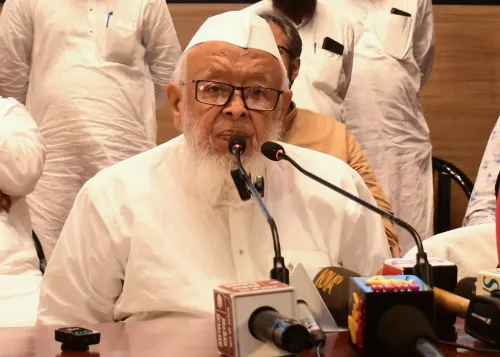
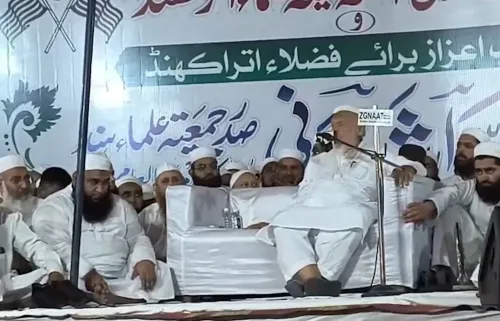
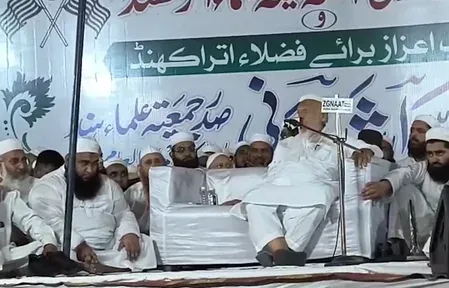
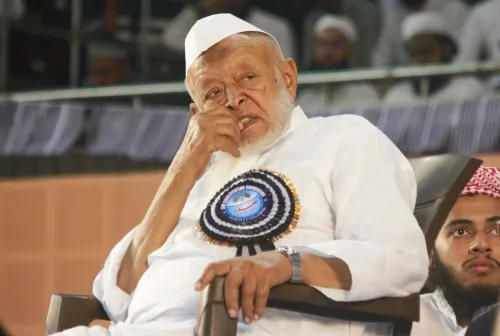
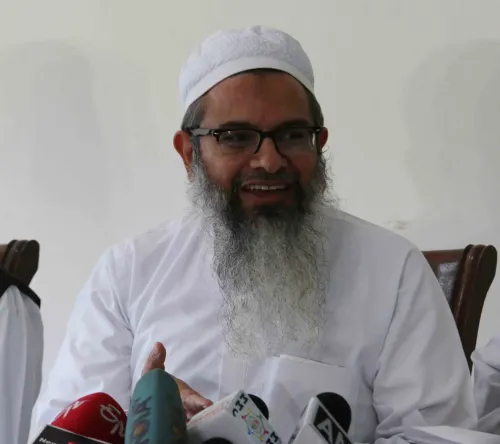
Bharatiya Janata Party (BJP) leaders on Wednesday sharply criticised Jamiat Ulema-e-Hind national president Maulana Syed Arshad Madani after he declared that 'jihad is every Muslim's right,' with senior party figures calling the statement politically motivated and socially divisive. The remarks were made during a Jamiat Ulema-e-Hind state executive meeting in the Piran Kaliyar area of Haridwar, Uttarakhand, attended by a large gathering of ulema, huffaz, and community members.
What Madani Said
Addressing the meeting as chief guest, Maulana Madani framed his remarks in a historical context. 'In 1803, when our country was under slavery, the message of jihad was given for the country's independence. To free the country — that is, to remove the chains of slavery from the neck — it is every Muslim's duty to do jihad. This is a teaching that has come from madrasas, and whoever does not know this is ignorant,' he said. The statement was positioned as a reference to the anti-colonial struggle, though it drew immediate and widespread condemnation from BJP leaders across states.
BJP's Reaction: 'Provocative Politics Has Ended'
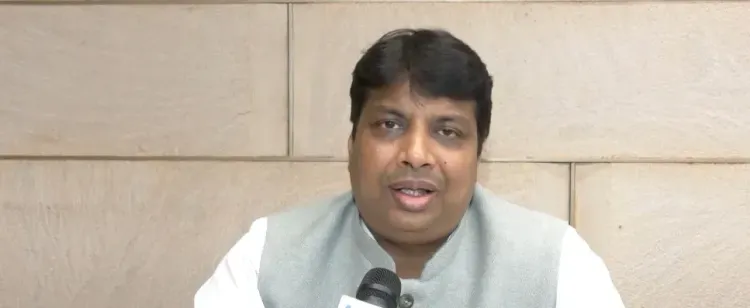
BJP leader Rohan Gupta said Madani makes such statements periodically to advance his political agenda. 'Maulana Madani, every 10–15 days, makes some statement or warning to promote his politics and provoke Muslims. However, I believe the Muslim community has now understood this pattern and no longer gives much importance to such remarks,' Gupta said. He further alleged that attempts are routinely made to link illegal immigrants with the Muslim community for political gains, adding, 'This kind of provocative politics has now come to an end. The politics of appeasement has also ended.'
BJP MP Bhola Singh called the remarks irresponsible. 'Instead of guiding the youth of society, if community leaders make such statements, it is highly condemnable. Action should be taken against people who mislead and provoke society rather than providing positive guidance,' he said.
Ministers and Senior Leaders Weigh In
Uttar Pradesh Minister Yogendra Upadhyay said the remark reflects a narrow worldview. 'This is the result of a narrow mindset that places religion above the nation. If Arshad Madani considers his religion to be above the nation, that is his personal way of thinking,' Upadhyay said.
Senior BJP leader Mukhtar Abbas Naqvi said the agenda behind such statements is being consistently rejected. 'Some people are trying to create unrest in the name of jihad and are engaged in a form of competitive radicalism. They should understand that their agenda is repeatedly being rejected by the people and is not finding acceptance. India is a country where a large Muslim population lives in a non-Muslim-majority nation while enjoying full constitutional rights and protections,' he said.
Uttar Pradesh Minister Om Prakash Rajbhar urged religious leaders to redirect their energies. 'I would advise such religious leaders not to spread hatred in society. Instead, they should guide people towards better education and a positive direction. Divisive rhetoric only harms the community and hinders its progress,' he said.
Context and Political Significance
The episode underscores a recurring pattern in Indian political discourse, where statements by prominent religious figures become flashpoints for inter-party contestation. Madani's remarks, while historically framed by him as a reference to the 1803 anti-colonial struggle, were interpreted by BJP leaders as contemporary provocation. Notably, this is not the first time statements from Jamiat Ulema-e-Hind leadership have drawn political fire — the organisation has periodically found itself at the centre of debates on secularism, minority rights, and national identity. The BJP's response, with voices from multiple states and seniority levels, signals a coordinated counter-narrative ahead of an electorally sensitive period.
Point of View
Preferring instead to treat it as contemporary incitement. That selective reading is itself politically convenient. The real question mainstream coverage sidesteps is whether India has a framework for distinguishing religious-historical speech from incitement — and why that line keeps being drawn differently depending on who is speaking. The BJP's multi-state, multi-voice response suggests this is less about the remark and more about sustaining a counter-narrative on minority appeasement ahead of electoral cycles.
NationPress
22 Sept 2026
Frequently Asked Questions
What did Maulana Arshad Madani say about jihad?
Maulana Syed Arshad Madani said that jihad is every Muslim's duty, framing it as a historical reference to India's anti-colonial struggle of 1803. He made the remark while addressing a Jamiat Ulema-e-Hind state executive meeting in Haridwar's Piran Kaliyar area, attended by ulema, huffaz, and community members.
Why did the BJP condemn Madani's statement?
BJP leaders alleged that Madani periodically makes inflammatory statements to promote a political agenda and provoke sections of the Muslim community. They called the remarks irresponsible and said such rhetoric harms social harmony and hinders community progress.
Who are the BJP leaders who responded to Madani's remark?
The BJP's response came from multiple leaders: Rohan Gupta, MP Bhola Singh, UP Minister Yogendra Upadhyay, senior leader Mukhtar Abbas Naqvi, and UP Minister Om Prakash Rajbhar. Each condemned the remark from different angles — political, social, and constitutional.
What is Jamiat Ulema-e-Hind?
Jamiat Ulema-e-Hind is one of India's oldest Islamic organisations, founded in 1919. Maulana Syed Arshad Madani serves as its national president. The organisation has historically been associated with the independence movement and issues concerning Muslim religious and civil rights in India.
What did Mukhtar Abbas Naqvi say about the jihad remark?
Senior BJP leader Mukhtar Abbas Naqvi said some people are engaged in 'competitive radicalism' and trying to create unrest in the name of jihad. He added that such agendas are 'repeatedly being rejected by the people' and that Muslims in India enjoy full constitutional rights and protections.