Madani's 1803 Jihad remark at Haridwar meet sparks fresh row
Synopsis
Jamiat Ulema-e-Hind chief Maulana Syed Arshad Madani invoked an 1803 anti-colonial Jihad at a Haridwar gathering, calling it a religious duty for Muslims — then pivoted to accuse the Modi government of demolishing mosques with bulldozers. The remarks blend historical revisionism with live political grievance, ensuring the controversy will not stay local.
Key Takeaways
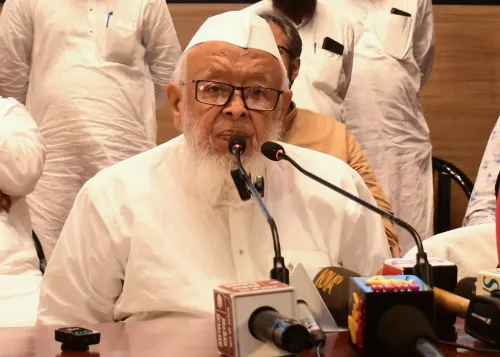
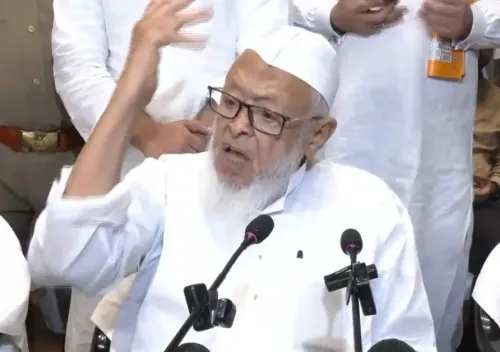
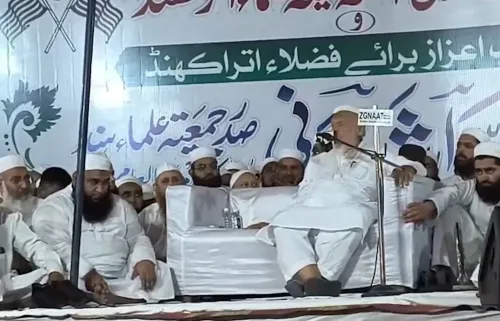
Maulana Syed Arshad Madani , president of Jamiat Ulema-e-Hind , made the remarks at a gathering in Kaliyar, Haridwar on 24 June .
Madani stated that in 1803 , during colonial rule, a call for Jihad was issued and that waging it was 'the duty of every Muslim' to free the nation.
He accused the Narendra Modi -led Union government of demolishing mosques and madrasas using bulldozers.
Madani also alleged that Muslims face mob lynching and home demolitions, contrasting this with the community's historic role in India's independence struggle.
He closed with an appeal for communal harmony, urging all communities to 'abandon the politics of hatred.'
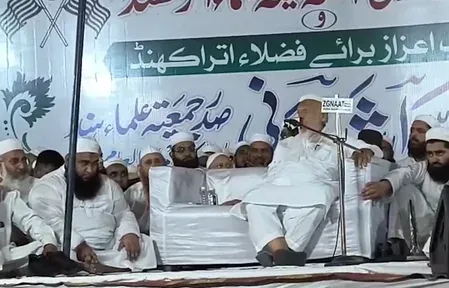
Jamiat Ulema-e-Hind National President Maulana Syed Arshad Madani has triggered a fresh controversy after remarks he made at a gathering in Kaliyar, a small town near Roorkee in Uttarakhand's Haridwar district, on 24 June. Speaking as chief guest at the organisation's State Executive Committee meeting, Madani invoked the year 1803 to argue that waging Jihad against colonial rule was a religious duty — comments that have since drawn sharp reactions across the political spectrum.
What Madani Said
Addressing a large gathering of Ulema (Islamic scholars), Hafiz (those who have memorised the Quran), and members of the Muslim community, Madani stated: 'In 1803, when our country was enslaved, a call for Jihad was issued for the nation's freedom. And to free it, to break off the chains of slavery from our necks, doing jihad is the duty of every Muslim. This is a movement that originated from the madrasas. Whoever does not know this is ignorant.'
The Jamiat Ulema-e-Hind president framed his remarks in a historical context, positioning the anti-colonial Jihad movement as a foundational contribution of Muslims to India's independence struggle. He asserted that this legacy is often overlooked or dismissed.
Charges Against the Current Government
Madani also used the platform to level sharp criticism at the Narendra Modi-led Union government, alleging that mosques built during the independence movement are now being demolished. 'After Independence, those in power began to harm Muslims; successive governments kept the Muslim community entangled in riots and unrest, but the current government is opposed not only to Muslims but to Islam itself. Our religious sites are being razed with the help of bulldozers,' he said.
He further alleged that Muslims today face mob lynching, demolition of homes, and closure of madrasas — contrasting this with what he described as the community's historic sacrifices for the nation.
Call for Love Over Hatred
Despite the combative framing, Madani concluded with an appeal for communal harmony. 'A nation cannot survive without love and affection. I urge everyone: if you love the country, abandon the politics of hatred and keep the politics of love alive,' he said, urging Muslims to live with affection towards all communities as the true measure of national loyalty.
He cited Jamiat Ulema-e-Hind's relief work during floods in West Bengal — where the organisation reportedly provided food to both Hindus and Muslims — as an example of the community's commitment to national solidarity.
Context and Background
The 1803 reference alludes to the early anti-British resistance movements led by Muslim clerics and scholars, a period that predates the more widely commemorated 1857 uprising. Historians have documented these movements, though their characterisation — particularly the use of the term 'Jihad' — has long been a point of political and academic contention in India.
Madani's remarks come at a time of heightened sensitivity around mosque demolitions and madrasa regulations, with multiple legal and administrative actions in various states drawing protests from Muslim organisations. The Jamiat Ulema-e-Hind has been among the most vocal in challenging such actions in courts.
How authorities and political parties formally respond to the latest remarks is expected to become clear in the coming days.
Point of View
Making it easy for critics to strip the historical context and amplify the incendiary framing. What mainstream coverage will likely miss is the internal audience: Madani was speaking to Ulema and community leaders at an executive committee meeting, not issuing a public manifesto. The political fallout, however, will be measured in headlines, not intent.
NationPress
22 Sept 2026
Frequently Asked Questions
What did Maulana Arshad Madani say about Jihad at the Haridwar meeting?
Madani stated that in 1803, when India was under colonial rule, a call for Jihad was issued for the nation's freedom, and that waging Jihad to break the chains of slavery was 'the duty of every Muslim.' He presented this as a historical fact rooted in the anti-British resistance movements of the early 19th century.
Where and when did Madani make these remarks?
The remarks were made on 24 June at a gathering in Kaliyar, a small town near Roorkee in Uttarakhand's Haridwar district. Madani was attending the Jamiat Ulema-e-Hind State Executive Committee meeting as chief guest.
What allegations did Madani make against the Modi government?
Madani alleged that the Narendra Modi-led Union government is demolishing mosques and madrasas using bulldozers, and that Muslims face mob lynching and home demolitions. He claimed the current government is 'opposed not only to Muslims but to Islam itself.'
What is the historical basis for Madani's 1803 reference?
The year 1803 is associated with early anti-British resistance movements led by Muslim clerics and scholars in India, predating the more widely known 1857 uprising. Historians have documented these movements, though the use of the term 'Jihad' to describe them remains a point of political and academic debate.
Who is Maulana Syed Arshad Madani?
Maulana Syed Arshad Madani is the National President of Jamiat Ulema-e-Hind, one of India's oldest and largest Islamic organisations. He has been a prominent voice on Muslim community issues, religious freedom, and communal harmony, and has frequently challenged government actions in courts.