Are Leaders Right to Condemn Mahmood Madani's Jihad Remarks?
Synopsis
Political leaders from across India have strongly criticized Maulana Mahmood Madani's comments on 'jihad', reinforcing the country's commitment to the Constitution. This controversy highlights the ongoing debate over religious interpretations and national unity. Dive into the reactions and implications of such statements in a diverse nation like India.
Key Takeaways
Leaders condemned Madani's remarks.
Madani suggested jihad's relevance for the nation.
Importance of the Constitution emphasized.
Political reactions highlight societal divides.
Concerns over educational implications raised.
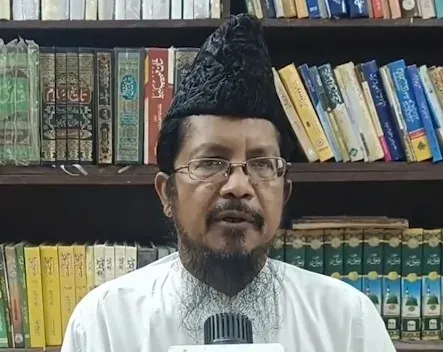
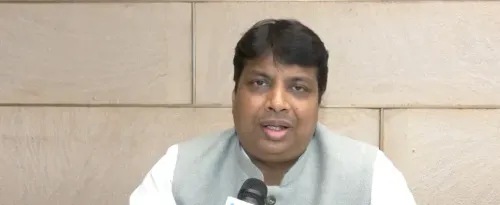
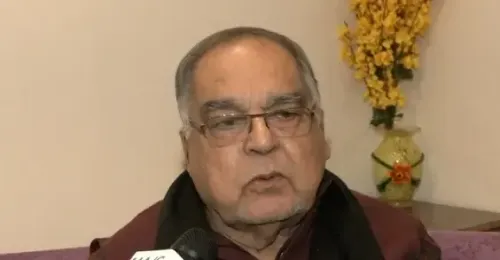
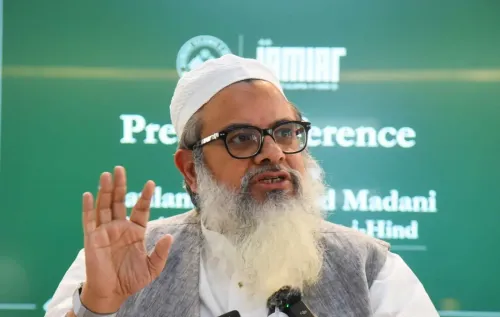
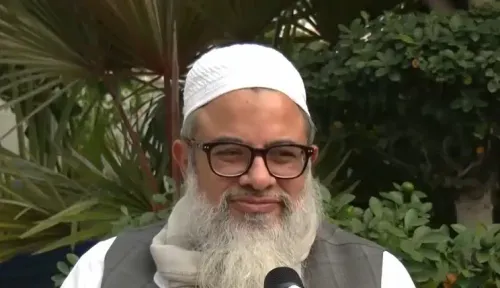
New Delhi, Dec 3 (NationPress) Political leaders from various parties have vehemently condemned the recent statements made by Maulana Mahmood Madani, the President of Jamiat Ulama-e-Hind (JUH), regarding 'jihad'. They emphasized that India operates under the Constitution and will not tolerate any remarks that oppose it.
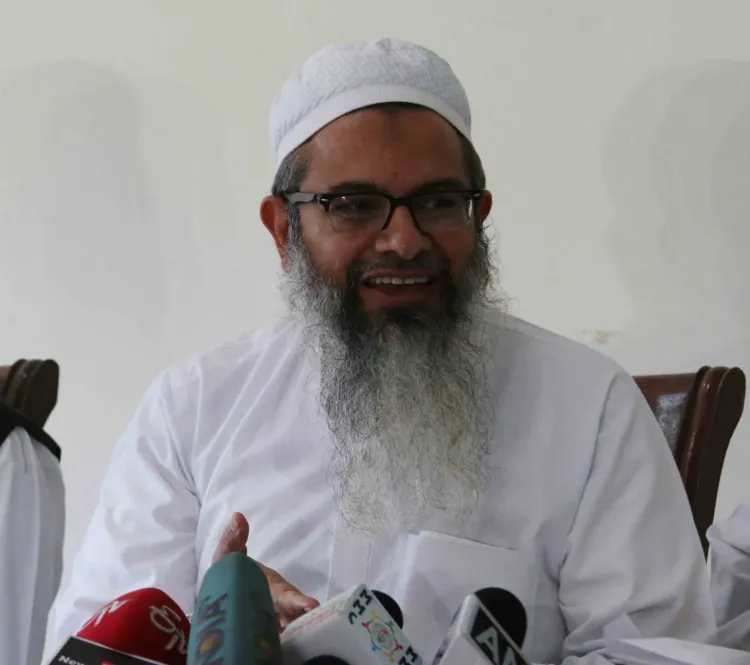
In an exclusive interview with IANS, Madani asserted that the concept of 'jihad' is significant not only for Muslims but for the whole nation. He proposed that it be included in school education so that children can grasp its true meaning.
He argued that 'jihad', which traditionally refers to the struggle against the enemies of Islam or the defense of the Muslim community, has been persistently misrepresented and intentionally associated with violence.
His comments elicited strong reactions from political figures, with many labeling the statements as “unfortunate”.
Union Minister Giriraj Singh remarked to the media, “India is governed by the Constitution. Anyone who engages in jihad within India will face the law.”
BJP National General Secretary Tarun Chugh criticized the JUH leader, stating to IANS, “Madani’s comments are an attempt to resurrect the Muslim League ideology in India, which is extremely regrettable. The nation is governed by the Constitution and law, not by jihad. Certain individuals are promoting soft terrorism and attempting to spread urban terrorism. India will not accept this.”
BJP MP Shashank Mani Tripathi conveyed that the public would “teach a lesson to such Maulanas.”
“I believe that the entire country will stand against such individuals. Discussing jihad with open intentions is entirely contrary to our Constitution,” he told IANS.
Congress MP Imran Masood opined that Madani is presenting a distorted interpretation of the concept.
He noted to IANS, “Indeed, jihad is a term that should be taught. It is for the country, for the nation, especially in times of crisis. However, I question the direction in which he (Madani) is taking the concept of jihad.”
Shiv Sena (UBT) MP Priyanka Chaturvedi characterized the remarks as a deliberate attempt to polarize the public and divert attention from significant issues.
“I assert that there is a systematic strategy at play. When BJP leaders and their affiliates bring up specific topics, such as Rajnath Singh discussing the Babri Masjid while Mahmood Madani speaks on jihad, it aims to reinforce the Hindu-Muslim narrative. Meanwhile, critical issues like corruption or terrorism continue to be overlooked, distracting the public,” Chaturvedi stated to IANS.
Point of View
I maintain that the nation must always prioritize the Constitution over divisive rhetoric. Discussions around sensitive topics like 'jihad' should foster understanding, not division. It is essential for the leaders to engage in responsible dialogue that promotes unity in our diverse society.
NationPress
20 Sept 2026
Frequently Asked Questions
What did Mahmood Madani say about jihad?
Mahmood Madani suggested that 'jihad' is relevant for the entire nation and should be included in school curricula for better understanding, emphasizing that it has been misinterpreted.
How did political leaders react to Madani's comments?
Leaders from various parties condemned Madani's remarks, highlighting that India operates under the Constitution and will not accept contradictory statements.
What is the significance of the Constitution in this context?
The Constitution is regarded as the supreme law of India, guiding the nation's governance and ensuring that all citizens are treated equally under the law.
What are the implications of discussing jihad in schools?
Including discussions on jihad in educational curricula could lead to misunderstandings or misuse of the term, necessitating careful and responsible teaching.
Why is this controversy important?
This controversy reflects broader societal issues regarding religious interpretations and the potential for political leaders to influence public opinion and societal unity.