Why Were Over 5,000 Afghan Refugees Forced to Return from Pakistan and Iran?
Click to start listening
Synopsis
In a shocking turn of events, over 5,000 Afghan refugees were forcibly repatriated from Pakistan and Iran in a single day. This article delves into the circumstances behind this mass return, the humanitarian implications, and the ongoing challenges faced by Afghan migrants.
Key Takeaways
- Over 5,000 Afghan refugees were forcibly repatriated in one day.
- The returnees faced significant challenges upon arrival.
- The UNHCR reported a record number of detentions of Afghan migrants in Pakistan.
- Humanitarian organizations urge for voluntary returns.
- Mass expulsions threaten stability along the Afghan border.
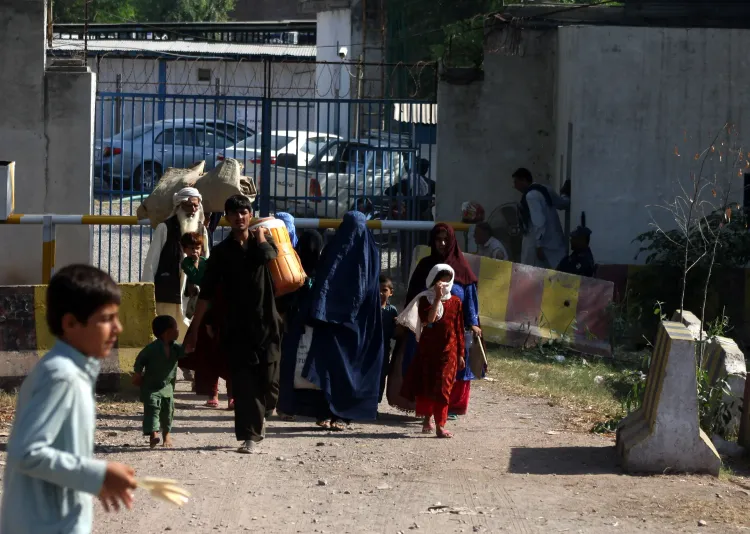
Kabul, Dec 3 (NationPress) More than 5,000 Afghan refugees were compelled to return from Pakistan and Iran in just one day, as reported by local media quoting a Taliban official on Wednesday.
According to a statement from the High Commission for Addressing Migrants' Issues shared on X, Taliban deputy spokesperson Hamdullah Fitrat revealed that 689 families, totaling 5,496 individuals, returned to Afghanistan on Tuesday, as reported by Pajhwok Afghan News.
The returnees crossed into Afghanistan through various points, including Bahramcha in Helmand, Torkham in Nangarhar, Islam Qala in Herat, Pul-i-Abresham in Nimroz, and Spin Boldak in Kandahar.
Fitrat noted that 856 returning families, consisting of 4,800 people, were relocated to their respective areas, while 563 families received humanitarian aid. Additionally, telecommunication companies provided 536 SIM cards to the returning Afghan refugees.
Earlier, on Monday, 3,164 Afghan refugees were forcibly returned from Pakistan and Iran.
In a report released in November, the United Nations High Commissioner for Refugees (UNHCR) highlighted that Pakistan has detained a record number of Afghan migrants in 2025, with the majority of arrests occurring in Balochistan and Punjab provinces.
According to Khaama Press, most arrests took place in Chagai and Quetta districts of Balochistan and Attock district of Punjab. Pakistani authorities apprehended 100,971 Afghans from January 1 to mid-November 2025, a significant increase compared to around 9,000 arrests in 2024 and over 26,000 in 2023.
The UNHCR reported that 76 percent of those detained were Afghan Citizen Card holders or undocumented migrants, while the remaining 24 percent held Proof of Registration cards.
This surge in Afghan migrant detentions follows two government orders issued in 2025, mandating the removal of Afghan migrants from Islamabad and Rawalpindi and permitting police to arrest PoR-card holders.
Numerous humanitarian organizations have called on Pakistan to guarantee that all returns are voluntary and in compliance with international obligations, warning that mass expulsions could destabilize the Afghanistan border, where newly returned families often struggle with a lack of housing, employment, and essential services.
Point of View
It is crucial to acknowledge the humanitarian crisis stemming from the forced return of Afghan refugees. The situation demands our attention and underscores the need for international cooperation to ensure that repatriation is conducted safely and in accordance with human rights standards.
NationPress
03/12/2025
Frequently Asked Questions
How many Afghan refugees were returned in one day?
Over 5,000 Afghan refugees were forcibly repatriated from Pakistan and Iran in a single day.
What regions did the Afghan refugees return from?
The refugees returned from Pakistan and Iran through various crossing points into Afghanistan.
What challenges do returning Afghan refugees face?
Many returning families lack housing, jobs, and access to basic services, leading to a humanitarian crisis.
What did the UNHCR report about Afghan migrants in 2025?
The UNHCR reported a record number of Afghan migrants were detained in Pakistan, with over 100,000 arrests.
What were the primary reasons for the forced repatriation?
Government directives in Pakistan aimed at removing Afghan migrants led to increased detentions and forced returns.