Should the Rajya Sabha Raise Bank Deposit Insurance and Tackle Spurious Cough Syrups?
Synopsis
In a passionate address during Zero Hour in the Rajya Sabha, Congress's Neeraj Dangi called for an increase in bank deposit insurance from Rs 5 lakh to Rs 25 lakh, while Shiv Sena's Priyanka Chaturvedi highlighted the urgent need to combat food adulteration and substandard medicines, branding it a national health crisis.
Key Takeaways
Neeraj Dangi advocates for raising deposit insurance from Rs 5 lakh to Rs 25 lakh.
A significant portion of deposits remains uninsured, particularly affecting senior citizens.
Priyanka Chaturvedi emphasizes the need to tackle food adulteration and substandard medicines.
There is a call for stricter regulations and actions to protect public health.
Current deposit insurance limits do not adequately safeguard depositors' savings.
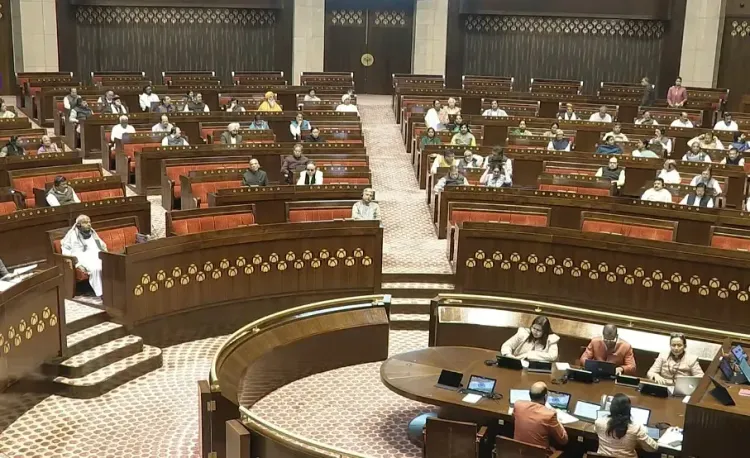
New Delhi, Dec 3 (NationPress) During the Zero Hour in Rajya Sabha on Wednesday, Neeraj Dangi from Congress vehemently condemned the insufficient Rs 5 lakh deposit insurance limit set by the Deposit Insurance and Credit Guarantee Corporation (DICGC). He urged that this limit be elevated to a minimum of Rs 25 lakh per depositor.
“Should any bank (commercial or cooperative) collapse, every form of deposit—including savings, current accounts, fixed deposits (FD), or recurring deposits—is insured only up to Rs 5 lakh. Any amount exceeding this threshold is solely the depositor's risk. This limit was established on February 4, 2020, following the Punjab & Maharashtra Co-operative Bank (PMC Bank) crisis. Prior to this, the limit had been just Rs one lakh for decades, as indicated by the latest DICGC report (March 2024),” Dangi stated.
“Among 1,497 insured banks, only 43.8 percent of total deposits are fully protected under the current Rs 5 lakh limit. Alarmingly, 56.2 percent of total deposits remain entirely uninsured, with a significant portion belonging to senior citizens who deposit their lifelong savings in banks for safety. If a major urban cooperative or small finance bank fails, the hard-earned savings of countless senior citizens could disappear in an instant,” he added.
“In the past year alone (2023-24), 431 urban cooperative banks have either collapsed or experienced severe stress,” he noted.
In a crisis similar to the PMC Bank incident, the DICGC had to disburse approximately Rs 17,000 crore to numerous depositors, Dangi mentioned. “The insurance premium (currently set at 0.12 percent paid by banks and not charged to customers) should remain entirely the responsibility of the banks,” he emphasized, advocating that raising deposit insurance would foster increased trust in the banking sector.
Additionally, Priyanka Chaturvedi, a Rajya Sabha MP from Shiv Sena (UBT), brought attention to the escalating problem of food adulteration and substandard or spurious medicines across the nation, labeling it a “national health emergency that is claiming innocent lives daily.”
Addressing the issue during Zero Hour, the MP revealed she had previously communicated with the Union Health Minister about this matter and reiterated her plea to the government through the House—indicating that the scale of food adulteration and contaminated medicines has surpassed all limits.
“From tainted cough syrups that have tragically taken the lives of infants, to low-quality medicines readily available in the market. The food adulteration leading to cancer across the nation must be controlled, necessitating stricter measures and punitive actions against those violating these standards,” she concluded.
Point of View
Our stance aligns with the pressing need for reform in deposit insurance to safeguard citizens' savings. The issue of food safety and the quality of medicines is equally critical. Ensuring public trust in banking and health sectors is paramount for a stable society.
NationPress
26 Sept 2026
Frequently Asked Questions
What is the current deposit insurance limit in India?
The current deposit insurance limit in India is Rs 5 lakh per depositor.
Who is Neeraj Dangi?
Neeraj Dangi is a member of Congress who raised concerns regarding the inadequacy of the deposit insurance limit.
What issues did Priyanka Chaturvedi address in Rajya Sabha?
Priyanka Chaturvedi highlighted the issues of food adulteration and substandard medicines, calling it a national health emergency.
Why is the deposit insurance limit important?
The deposit insurance limit is crucial as it protects depositors' savings in case of bank failures.
What actions are being proposed to combat food adulteration?
Stricter measures and punitive actions against violators of food safety norms are being proposed.