Has the ED Joined the Jharkhand Liquor Scam Investigation?

Synopsis
The Enforcement Directorate has stepped into the Jharkhand liquor scam, marking a significant escalation in the investigation of a major corruption case. With high-profile bureaucrats involved, the implications of this probe could reveal extensive financial misconduct and a broader network of corruption within the state's liquor operations.
Key Takeaways
The ED's involvement marks a significant escalation in the investigation.
Multiple bureaucrats are implicated in the case.
The scam has resulted in a substantial financial loss to the state.
Internal audits revealed major irregularities in the liquor supply chain.
The investigation may unveil a wider network of corruption.
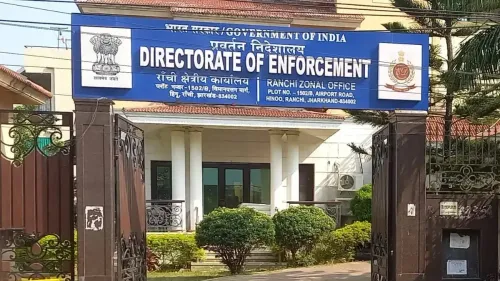
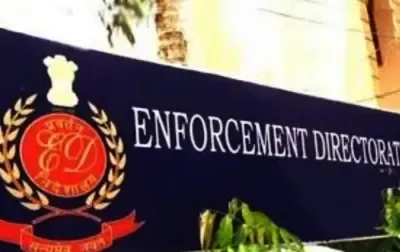
Ranchi, Dec 3 (NationPress) The Enforcement Directorate (ED) has formally begun its investigation into the extensive Jharkhand liquor scam, ramping up efforts in what is regarded as one of the state’s most significant corruption scandals in recent times.
Following the FIR filed by the Jharkhand Anti-Corruption Bureau (ACB), the ED has initiated an Enforcement Case Information Report (ECIR No 10/2025) under the Prevention of Money Laundering Act (PMLA).
The investigative agency has also obtained authorization from the special PMLA court in Ranchi to question and document statements from the individuals arrested by the ACB earlier this year.
The ACB lodged its FIR in May after an initial inquiry uncovered substantial irregularities within the state’s liquor supply and distribution framework.
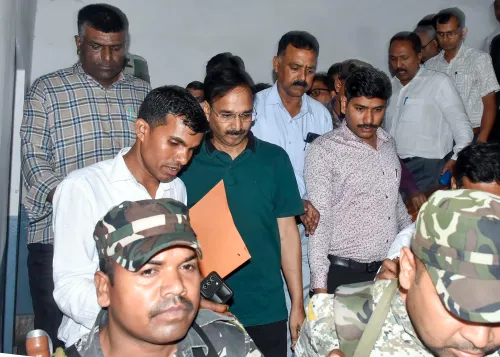
Over a dozen individuals, including several high-ranking bureaucrats, have been implicated in the case. Those apprehended earlier this year comprise IAS officer Vinay Kumar Chaubey, retired IAS officer Amit Prakash, Jharkhand Administrative Service officer Gajendra Singh, Chhattisgarh businessman Siddharth Singhania, and Vidhu Gupta, director of a private enterprise.
However, all accused have subsequently been granted bail after the ACB was unable to present a charge sheet within the required timeframe. To date, four IAS officials have been interrogated concerning the scam.
Investigators indicate that the state government had allocated contracts for operating liquor stores and supplying manpower to seven recruitment agencies. The ACB discovered that these agencies purportedly breached tender regulations on a grand scale, leading to significant revenue losses. Numerous bank guarantees submitted during the bidding process were later revealed to be fraudulent.
An internal audit conducted by the Jharkhand State Beverages Corporation Limited estimated the financial loss to the state at Rs 129.55 crore, attributing this to widespread fraud and manipulation within liquor operations.
As the ED delves into the money-laundering aspect, officials anticipate that the investigation may unveil a broader network of beneficiaries and financial connections related to the alleged scam.
Point of View
The involvement of the Enforcement Directorate in the Jharkhand liquor scam is pivotal. It not only highlights the pressing need for accountability in governance but also underscores the systemic issues within state operations. This investigation could serve as a benchmark for future anti-corruption efforts across the nation.
NationPress
10 Oct 2026
Frequently Asked Questions
What is the Jharkhand liquor scam?
The Jharkhand liquor scam refers to a multi-crore corruption case involving significant irregularities in the state's liquor supply and distribution system.
Who are the key figures involved?
Key figures include IAS officer Vinay Kumar Chaubey, retired IAS officer Amit Prakash, and several others, including bureaucrats and businesspersons.
What action has the ED taken?
The ED has registered an Enforcement Case Information Report (ECIR) under the Prevention of Money Laundering Act and has received court permission to interrogate the accused.
What are the financial implications of the scam?
An internal audit estimated a financial loss of Rs 129.55 crore to the state due to fraud and manipulation in liquor operations.
Why were the accused granted bail?
The accused were granted bail because the ACB failed to submit a charge sheet within the stipulated time.