Vande Mataram Bill: Waris Pathan's remarks draw sharp NDA rebukes, SP and Congress urge context

Synopsis
AIMIM's Waris Pathan invoked Article 25 and a Supreme Court precedent to argue that compulsory Vande Mataram recitation violates Islamic belief — and the political establishment erupted. With the Prevention of Insults to National Honour (Amendment) Bill, 2026 freshly tabled in the Rajya Sabha, this row sits at the sharpest intersection of constitutional rights, religious identity, and nationalist politics.
Key Takeaways
Waris Pathan of AIMIM opposed compulsory recitation of Vande Mataram on 28 July , citing Islamic religious belief and Article 25 of the Constitution.
The Prevention of Insults to National Honour (Amendment) Bill, 2026 was introduced in the Rajya Sabha on 24 July , seeking statutory protection for the national song.
UP Cabinet Ministers Om Prakash Rajbhar and Anil Rajbhar , and BJP spokesperson Guru Prakash sharply condemned Pathan's remarks.
SP leader Udaiveer Singh called for the full context of the remarks to be considered before judgement.
Congress leader Hussain Dalwai said respect for the national song matters, but called for equal focus on all national symbols and the Constitution.
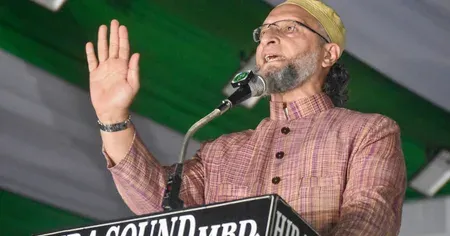
All India Majlis-e-Ittehadul Muslimeen (AIMIM) National Spokesperson Waris Pathan on Tuesday, 28 July sparked a political storm after opposing any move to make the recitation of 'Vande Mataram' compulsory, citing religious constraints under Islam. His remarks drew swift condemnation from National Democratic Alliance (NDA) leaders, while the Samajwadi Party (SP) and Congress urged restraint and called for the full context of his statement to be considered.
What Pathan Said
Waris Pathan stated that while the AIMIM respects Vande Mataram and honours it, certain lines in the song conflict with Islamic belief. 'I have always said that we respect Vande Mataram. We honour it. But there are some lines in Vande Mataram which a Muslim cannot recite. If those lines are spoken, it becomes shirk according to Islamic belief. We do not worship anyone other than Allah, nor will we ever; we would rather die than do so. And this is my constitutional right under Article 25, which the Supreme Court has also upheld,' Pathan said.
He also questioned what legal consequence could follow for those who choose not to recite the national song, and accused the Bharatiya Janata Party (BJP) and the Rashtriya Swayamsevak Sangh (RSS) of using the issue to intimidate people. 'I respect my nation, but if I do not recite it (Vande Mataram), then what will you do? Hang me? Shoot me? The BJP and RSS have nothing to do but to threaten people,' he added.
The Legislative Backdrop
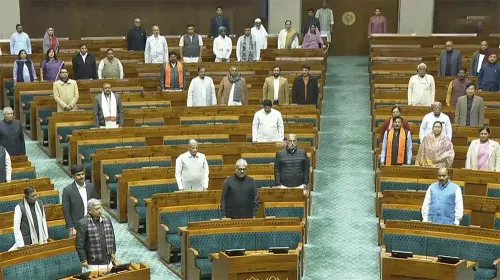
Pathan's remarks followed the introduction of the Prevention of Insults to National Honour (Amendment) Bill, 2026 in the Rajya Sabha on 24 July. The proposed legislation seeks to extend the same legal and statutory protection currently accorded to the national anthem, Jana Gana Mana, to the national song, Vande Mataram. The bill has reignited a long-standing debate over the boundaries of constitutional duty, religious freedom, and national identity.
NDA Leaders Push Back
Uttar Pradesh Cabinet Minister Om Prakash Rajbhar delivered one of the sharpest responses, saying, 'If you want to live in India, then you will have to say Vande Mataram. Otherwise, they can go and live in another country.' Fellow Uttar Pradesh Cabinet Minister Anil Rajbhar argued that legislation on the matter was not only necessary but overdue. 'The government is working on it, and such a law is very important. Statements like these only reinforce the need for such a bill. We do not know how many sons of Mother India sacrificed their lives while singing Vande Mataram during the freedom struggle. Therefore, any form of disrespect towards it should not be accepted,' he said.
BJP National Spokesperson Guru Prakash said respecting the national song is a collective responsibility of every citizen. 'If Waris Pathan or anyone else makes such statements, I believe they are acting against the interests of the nation. Such comments create an atmosphere of discord in society, which is not appropriate,' he said.
Opposition Voices Caution
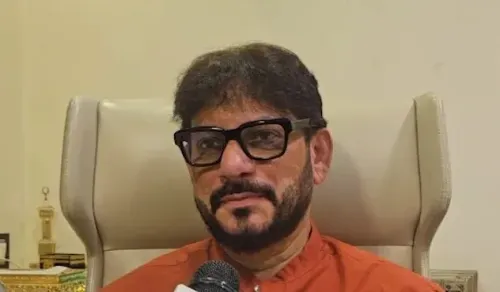
Samajwadi Party leader Udaiveer Singh adopted a more measured tone, urging that the full context of Pathan's remarks be understood before drawing conclusions. 'It is important to know the circumstances in which the statement was made and what concerns were being raised. However, as far as the National Song and the National Anthem are concerned, the country continues to follow the constitutional provisions and the principles laid down by the makers of the Constitution,' he said.
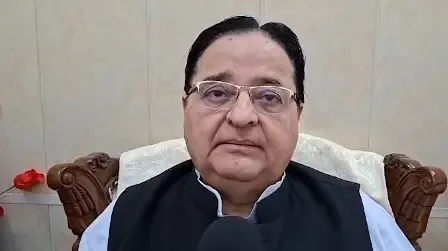
Congress leader Hussain Dalwai said respect for Vande Mataram should not become a matter of controversy, while also broadening the debate. 'The issue is not whether one knows Vande Mataram or not. Showing respect towards it is important. There should be no problem in saying it. However, traditionally only a few stanzas are sung, not the entire composition. At the same time, if there is emphasis on Vande Mataram, then why not also focus on Jana Gana Mana? Why are national flags not displayed at some offices? Why are objections raised to the Ashoka Chakra? Above all, the Constitution should remain at the centre of people's thoughts,' Dalwai said.
What Comes Next
The Prevention of Insults to National Honour (Amendment) Bill, 2026 is now before Parliament, and the political temperature around it is unlikely to cool. The debate touches on a constitutional tension that Indian courts have previously navigated — between the state's interest in promoting national symbols and an individual's right to religious freedom under Article 25. Notably, the Supreme Court ruled in 2016 that playing the national anthem in cinema halls was mandatory, a decision it later moderated. How Parliament and the judiciary will approach the national song's statutory standing remains to be seen.
Point of View
And the Supreme Court's own record on mandatory national-symbol observance is inconsistent. What is politically inconvenient is that his remarks arrived precisely as the government seeks to codify that very compulsion into law. The NDA's 'leave the country' framing conflates civic loyalty with ritual recitation, a distinction the Constitution's framers deliberately preserved. Congress and SP's cautious responses signal that the opposition sees a trap: defending Pathan risks electoral cost, but endorsing the bill risks normalising coercive nationalism. The real question Parliament must answer is not whether Vande Mataram deserves respect — it does — but whether the state can legally compel an act of devotion that one community's theology forbids.
NationPress
26 Oct 2026
Frequently Asked Questions
What did Waris Pathan say about Vande Mataram?
AIMIM National Spokesperson Waris Pathan said that while his party respects and honours Vande Mataram, certain lines in the song conflict with Islamic belief and would constitute 'shirk' if recited by Muslims. He invoked Article 25 of the Constitution and a Supreme Court ruling to argue that compulsory recitation would violate religious freedom.
What is the Prevention of Insults to National Honour (Amendment) Bill, 2026?
It is a proposed law introduced in the Rajya Sabha on 24 July 2026 that seeks to grant the national song Vande Mataram the same legal and statutory protection currently enjoyed by the national anthem Jana Gana Mana. The bill has reignited debate over the limits of compulsory national-symbol observance.
How did NDA leaders respond to Pathan's remarks?
UP Cabinet Ministers Om Prakash Rajbhar and Anil Rajbhar, along with BJP National Spokesperson Guru Prakash, strongly condemned the remarks. Rajbhar said those who do not wish to recite Vande Mataram are free to leave the country, while Guru Prakash called the comments divisive and against the national interest.
What was the Samajwadi Party's position on the controversy?
SP leader Udaiveer Singh urged caution, saying the full context of Pathan's remarks must be understood first. He added that the country continues to follow constitutional provisions and the principles set by the Constitution's framers on national symbols.
What does Article 25 say, and how does it apply here?
Article 25 of the Indian Constitution guarantees freedom of conscience and the right to freely profess, practise, and propagate religion. Pathan cited this provision, along with a Supreme Court ruling, to argue that forcing Muslims to recite lines they consider theologically impermissible would violate this fundamental right.