Vande Mataram Bill: SP accuses BJP of targeting community over mandatory recitation

Synopsis
The proposed Vande Mataram Bill has triggered a sharp political confrontation: SP is accusing BJP of using the legislation to target Muslims, while AIMIM invokes the Supreme Court's own ruling that recitation is not mandatory. At stake is a constitutional distinction the framers of India's Constitution drew deliberately — and which a new law could upend.
Key Takeaways
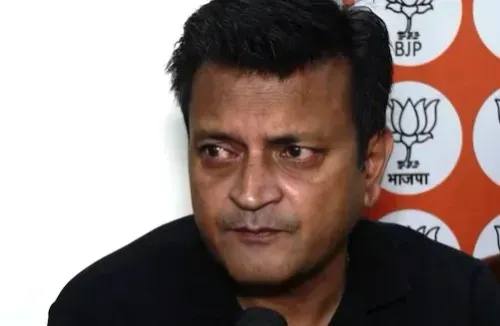
SP spokesperson Ashutosh Verma accused the BJP of using the proposed Vande Mataram Bill to target a specific community on 28 July .
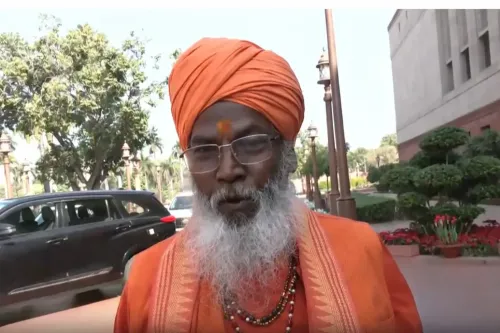
AIMIM National Spokesperson Waris Pathan said the party respects Vande Mataram but opposes making its recitation compulsory, citing lines that Muslims cannot recite.
Pathan noted the Supreme Court had ruled Vande Mataram recitation is not mandatory under Article 51A .
India's Constitution treats Jana Gana Mana (National Anthem) and Vande Mataram (National Song) under separate provisions with distinct obligations.
SP leader Udaiveer Singh called for Pathan's remarks to be read in full context before judgement.
The political row over the proposed Vande Mataram Bill sharpened on 28 July in New Delhi, with the Samajwadi Party (SP) accusing the Bharatiya Janata Party (BJP) of exploiting sentiment-laden issues to target a specific community, after the All India Majlis-e-Ittehadul Muslimeen (AIMIM) publicly opposed making recitation of the National Song compulsory. The controversy has reignited a long-standing constitutional debate over the distinction between India's National Anthem and its National Song.
What SP Said
SP spokesperson Ashutosh Verma argued that the framers of the Constitution had deliberately treated Vande Mataram and Jana Gana Mana differently, establishing separate provisions for each. 'This has repeatedly become a matter of debate: What the guidelines for Vande Mataram should be. When the makers of the Constitution referred to Vande Mataram and the National Anthem, they treated them differently and framed separate provisions,' Verma said.
He further charged that the BJP was using the Bill to target a community that may not recite the song. 'I believe the Bharatiya Janata Party links this entire Bill and Vande Mataram with the country's unity and integrity, but its real target is a particular community that may not say Vande Mataram. Why does the BJP repeatedly bring up such issues that hurt people's sentiments?' Verma said. He also called for adherence to the guidelines laid down when Vande Mataram was accorded the status of the National Song.
SP leader Udaiveer Singh urged that AIMIM National Spokesperson Waris Pathan's remarks be understood in their full context. 'It will be known only after understanding the full context in which he made that statement and what his concern is. But as far as the National Song and the National Anthem are concerned, the existing provisions and the views laid down by the makers of the Constitution have been followed, and the country continues to function accordingly,' Singh said.
AIMIM's Position
Waris Pathan had earlier stated that the AIMIM respects and honours Vande Mataram but is opposed to mandatory recitation. 'The Bill has been introduced, and now we will see what happens when it is discussed. But our position has always been clear, and I have always maintained this, we respect and honour Vande Mataram. However, there are certain lines in it that a Muslim cannot recite…' Pathan said.
Pathan also noted that the Supreme Court had previously clarified that Vande Mataram is not mandatory, citing constitutional provisions under Article 51A. He added that Jana Gana Mana — India's official National Anthem — is recited by Indian Muslims with pride.
The Constitutional Backdrop
The debate centres on a distinction embedded in India's constitutional framework: while Jana Gana Mana carries the status of the National Anthem with binding protocol, Vande Mataram was designated the National Song with guidelines that stop short of making recitation obligatory. Critics of the proposed Bill argue that legislating compulsion would cut against this established framework. Notably, this is not the first time the Vande Mataram question has divided political parties along communal and constitutional lines.
What Comes Next
The proposed Bill is yet to be taken up for full legislative debate, and its precise provisions remain under scrutiny. Political parties across the spectrum are expected to stake out formal positions once the Bill is listed for discussion. The controversy is likely to intensify as Parliament's session calendar progresses.
Point of View
And the opposition knows it. What is missing from the debate is the Bill's actual text: without knowing its enforcement mechanism, much of the political fire is being directed at a target that has not yet fully come into view. The Supreme Court's prior ruling on Article 51A is the real constraint here — any mandatory recitation clause will face an immediate constitutional challenge, which raises the question of whether the Bill is designed to pass or designed to campaign on.
NationPress
26 Oct 2026
Frequently Asked Questions
What is the Vande Mataram Bill?
The Vande Mataram Bill is a proposed legislation that, according to reports, seeks to make recitation of Vande Mataram — India's National Song — compulsory. The Bill has not yet been taken up for full legislative debate, and its precise provisions are still under scrutiny.
Why did AIMIM oppose the Vande Mataram Bill?
AIMIM National Spokesperson Waris Pathan said the party respects Vande Mataram but cannot support mandatory recitation because certain lines in the song are ones that a Muslim cannot recite on religious grounds. He also cited a Supreme Court ruling clarifying that recitation is not mandatory under Article 51A of the Constitution.
What is the difference between India's National Anthem and National Song?
Jana Gana Mana is India's National Anthem and carries binding protocol for recitation. Vande Mataram holds the status of the National Song, accorded with separate guidelines that do not make recitation obligatory — a distinction deliberately framed by the makers of the Constitution.
Why is the Samajwadi Party criticising the BJP over this Bill?
SP spokesperson Ashutosh Verma argued that the BJP repeatedly raises sentiment-linked issues to target a particular community, and that the Vande Mataram Bill follows the same pattern. SP has called for adherence to the constitutional guidelines already in place for the National Song.
What happens next with the Vande Mataram Bill?
The Bill is yet to be listed for full parliamentary debate. Political parties are expected to formally state their positions once it comes up for discussion. Any mandatory recitation clause is likely to face a constitutional challenge given the Supreme Court's earlier ruling on the matter.