CM Samrat Choudhary Backs Modi Govt's New Divyangjan Pension Reforms

Synopsis
Bihar Chief Minister Samrat Choudhary on 26 October 2026 highlighted three central government reforms for persons with disabilities: the pension disability threshold cut from 80% to 40%, removal of age conditions, and a 25% hike in financial assistance — framing them as a BJP priority under PM Modi.
Key Takeaways
Bihar CM Samrat Choudhary on 26 October 2026 publicly backed the Modi government's revised disability pension framework.
The disability threshold for pension eligibility has been reduced from 80% to 40% , potentially doubling the eligible population.
An age condition for disability pension access has been removed entirely , widening coverage to younger adults and late-onset disability cases.
Financial assistance under the disability pension has been increased by 25% .
The reforms build on the Rights of Persons with Disabilities Act, 2016 , which expanded recognised disability categories from 7 to 21.
State-level implementation — particularly in Bihar , one of India's most populous states — will determine whether the policy shifts reach intended beneficiaries.
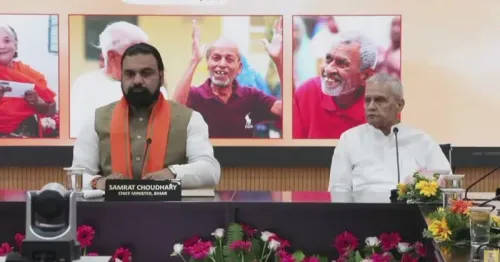
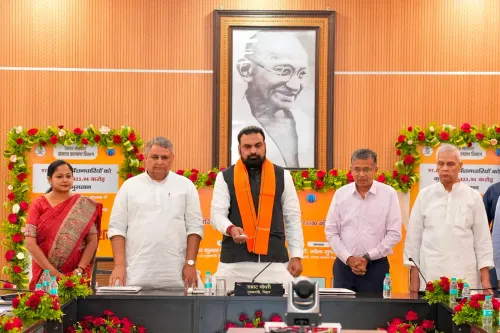
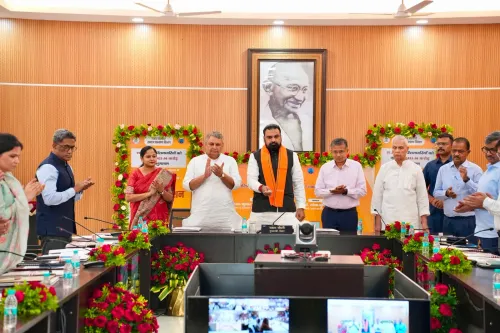
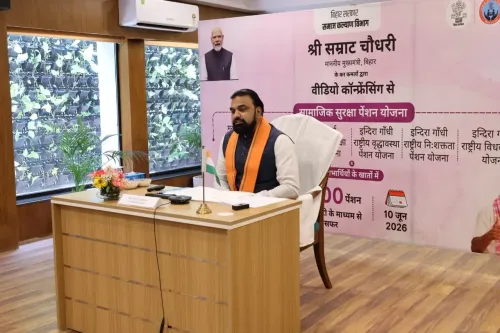
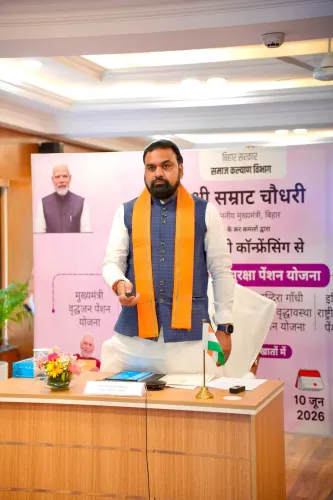
A pension threshold slashed in half, an age bar removed, and monthly support bumped by a quarter — Bihar Chief Minister Samrat Choudhary on Monday, 26 October 2026 spotlighted a set of welfare reforms that could widen the financial safety net for millions of persons with disabilities across India, crediting Prime Minister Narendra Modi with driving the push.
Posting in Hindi, CM Choudhary wrote: 'Divyangjanon ke jeevan ko adhik sugam, surakshit aur aatmanirbhar banane ke liye…' — 'To make the lives of persons with disabilities easier, safer and self-reliant, it is necessary that they receive equal opportunities to move forward with dignity along with economic support.' He went on to outline three specific policy changes under the BJP-led central government: reducing the disability threshold for pension eligibility from 80% to 40%, removing the age condition entirely, and increasing the financial assistance amount by 25%.
What the 40% Threshold Shift Actually Means
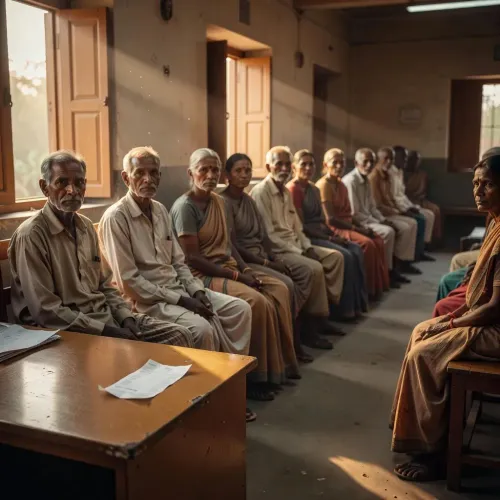
The old 80% disability benchmark for pension access was a steep bar — one that excluded a vast majority of persons with moderate or partial disabilities from any state support. Dropping it to 40% effectively doubles the eligible population in theory, bringing in individuals who face real economic hardship but were previously invisible to the welfare architecture.
The removal of an age condition compounds that expansion. Previously, applicants who fell outside a specified age band were disqualified regardless of need. Erasing that condition means a young adult with a disability, or an elderly person who acquired one late in life, can now access support without bureaucratic age-based gatekeeping.
Bihar's Stake in Disability Welfare
Bihar has one of the highest concentrations of persons with disabilities in absolute terms among Indian states, making any central policy shift on disability pensions acutely relevant to the state CM Choudhary leads. His amplification of these measures signals alignment between Patna and New Delhi on inclusive-development messaging ahead of further budget cycles.
The broader policy foundation for these changes rests on the Rights of Persons with Disabilities Act, 2016, which replaced a 1995 law and significantly expanded the recognised categories of disability — from 7 to 21 — while enshrining rights to education, employment, and social security. Successive welfare refinements, including pension eligibility tweaks, have followed in its wake as the government has sought to translate the law's promise into financial reality.
The Pattern Behind the Post
This is not an isolated gesture. Across multiple union budgets and policy cycles, the central government has signalled a consistent intent to raise both the coverage and the quantum of disability-linked assistance. The 25% hike in assistance amounts announced alongside the threshold change fits squarely into that pattern — incremental, targeted, and politically visible without requiring a new legislative instrument.
The real test, as always, will be state-level implementation: whether revised pension norms reach beneficiaries swiftly, whether the shift to a 40% threshold is adopted uniformly across state-run disability welfare schemes, and whether the 25% increase translates to rupees in hand rather than a circular on a government website.
For the families of India's millions of persons with disabilities, the benchmark has shifted — now the machinery must follow.
Point of View
Mirroring the party's broader 'last-mile beneficiary' messaging. The political arithmetic is clear — wider eligibility means more visible beneficiaries, which translates directly into outreach capital in states like Bihar where disability welfare uptake has historically been uneven.
NationPress
26 Oct 2026
Frequently Asked Questions
What is the new disability percentage required to get a pension in India?
Under the revised norms highlighted by Bihar CM Samrat Choudhary, the disability threshold for pension eligibility has been reduced from 80% to 40% , significantly widening the pool of eligible beneficiaries.
Has the Modi government increased disability pension amounts?
Yes, the central government has announced a 25% increase in the financial assistance amount for disability pension beneficiaries, alongside broader eligibility changes.
What is the Rights of Persons with Disabilities Act 2016?
The Rights of Persons with Disabilities Act, 2016 replaced a 1995 law and expanded recognised disability categories from 7 to 21, while enshrining rights to education, employment, and social security for persons with disabilities in India.
Why did Bihar CM Samrat Choudhary post about divyangjan welfare?
CM Choudhary posted to highlight recent central government reforms on disability pensions — reduced eligibility thresholds, removal of age conditions, and a 25% assistance hike — crediting PM Narendra Modi 's leadership and reinforcing BJP's inclusive-development messaging.
What does removing the age condition for disability pension mean?
Removing the age condition means persons with disabilities are no longer disqualified from pension access based on their age — both young adults and elderly individuals with disabilities can now apply, regardless of when the disability was acquired.