CM Yogi meets Singapore delegation to unlock UP investment
Synopsis
UP Chief Minister Yogi Adityanath met a Singapore delegation on 28 October 2026 to accelerate existing investment projects and attract fresh ASEAN capital, advancing the state's one-trillion-dollar economy target.
Key Takeaways
CM Yogi Adityanath held talks with a Singapore delegation on 28 October 2026 focused on investment in Uttar Pradesh.
The agenda covered three tracks: new investment opportunities, speeding up pipeline projects, and converting committed capital into active production.
CM Yogi credited PM Narendra Modi 's 'Reform, Perform, Transform' framework and improved law-and-order for the state's investment turnaround since 2017 .
UP has hosted two Global Investors Summits — in 2018 and 2023 — to attract domestic and foreign capital under the double-engine model.
The state is targeting a one-trillion-dollar economy , framing every investment cycle as a direct driver of employment and household prosperity.
Singapore's role as an ASEAN financial and logistics hub makes it a strategic partner for UP's manufacturing and supply-chain ambitions.
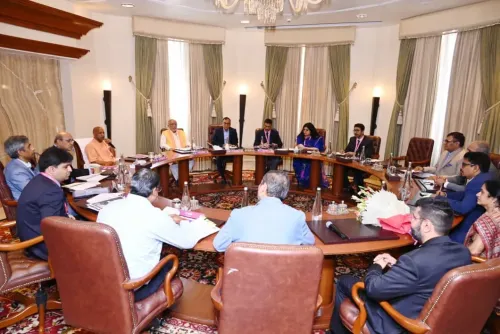
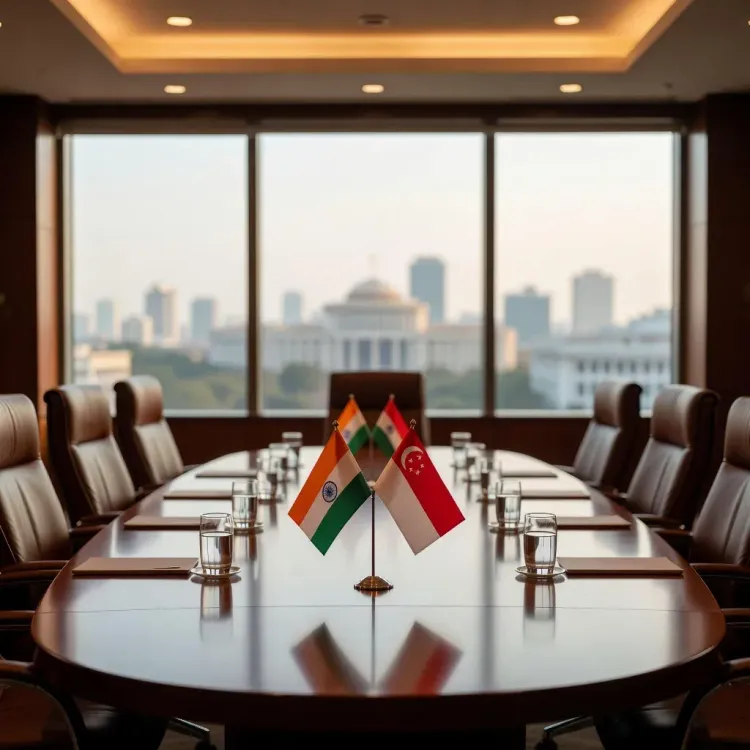
Uttar Pradesh Chief Minister Yogi Adityanath sat down with a Singapore delegation on Wednesday, 28 October 2026 to accelerate investment projects in the state — a meeting he framed as proof that UP has moved from having no coherent investment vision to becoming a magnet for global capital in under a decade.
In his post, CM Yogi drew a sharp before-and-after: 'vर्ष 2017 से पहले उत्तर प्रदेश में वैश्विक निवेश आकर्षित करने की न स्पष्ट दृष्टि थी, न कोई ठोस कार्ययोजना' — 'Before 2017, Uttar Pradesh had neither a clear vision nor a concrete plan to attract global investment.' The contrast he is selling is deliberate: that the BJP-led 'double-engine government' — meaning aligned state and central administrations — reversed that trajectory using Prime Minister Narendra Modi's governing mantra of 'Reform, Perform, Transform.'
From investor-summit promises to on-ground production
The Singapore meeting is not about signing new letters of intent from scratch. CM Yogi described the agenda as focusing on three tracks: exploring fresh investment opportunities in UP, giving momentum to projects already in the pipeline, and — critically — converting committed capital into actual production on the ground. That last point signals a shift from headline-grabbing MoU announcements toward operational accountability.
Uttar Pradesh has hosted two major Global Investors Summits since 2017 — in 2018 and 2023 — pulling in pledges from domestic and foreign investors. The recurring challenge for the state, as with most large Indian states, has been bridging the gap between investment intent and factory chimneys actually running. Wednesday's talks with Singapore, a gateway to ASEAN technology capital and logistics networks, are positioned as part of that implementation push.
Law-and-order as an economic argument
CM Yogi's post explicitly lists 'better law and order, transparent policies, and an investment-friendly environment' as the three pillars behind UP's transformation. This is a recurring political-economic argument from Lucknow: that the security improvements post-2017 are not merely governance wins but prerequisite infrastructure for industrial investment — especially for manufacturers and foreign firms evaluating site risk.
The ASEAN-India corridor has grown in strategic importance as companies seek to diversify supply chains beyond a single geography. Singapore, as a regional financial and logistics hub, is a natural interlocutor for UP to court — particularly for sectors like electronics manufacturing, warehousing, and data infrastructure where the state has been pitching land and incentive packages.
The one-trillion-dollar horizon
CM Yogi closed his post with the arithmetic he returns to repeatedly: 'Every investment creates a new industry, every industry creates new employment, and every employment brings prosperity to families' — the chain he says will carry Uttar Pradesh to a one-trillion-dollar economy. India's most populous state currently contributes roughly $270–300 billion to national GDP; reaching a trillion would require sustained double-digit growth and a structural leap in per-capita income.
Wednesday's Singapore engagement is a single data point in that larger ambition — but the signal it sends to other ASEAN investors watching from the sidelines may matter more than any single project signed in the room.
Frequently Asked Questions
Why is CM Yogi meeting a Singapore delegation in October 2026?
CM Yogi Adityanath met the Singapore delegation on 28 October 2026 to discuss new investment opportunities in Uttar Pradesh, accelerate ongoing projects, and convert already-committed capital into active industrial production.
What is Uttar Pradesh's one-trillion-dollar economy target?
Uttar Pradesh has set a goal of becoming a one-trillion-dollar economy. The state currently contributes roughly $270–300 billion to India's GDP and is pursuing large-scale investment, manufacturing growth, and employment creation to close that gap.
What is the 'double-engine government' CM Yogi refers to?
The 'double-engine government' refers to the BJP being in power both at the state level in Uttar Pradesh and at the centre in New Delhi, enabling policy alignment and faster implementation of industrial and infrastructure projects.
How has Uttar Pradesh changed for investors since 2017?
Since the BJP government took power in Uttar Pradesh in 2017, the state has improved its ease-of-doing-business rankings, introduced land policy reforms, strengthened law and order, and hosted two major Global Investors Summits in 2018 and 2023 to attract domestic and foreign capital.
Why is Singapore important for Uttar Pradesh's investment strategy?
Singapore is a major ASEAN financial and logistics hub and a gateway for technology capital and regional supply-chain networks, making it a strategic partner for UP's ambitions in manufacturing, warehousing, and data infrastructure.