BRICS New Delhi Declaration 2026: PM Modi hails wider reach, stronger purpose
Synopsis
The New Delhi Declaration isn't just another BRICS communiqué — it is India's attempt to position the expanded bloc as a credible platform for AI governance, Digital Public Infrastructure, and Global South advocacy. With commitments spanning the NDB, quantum tech, and supply-chain security, the real question is execution.
Key Takeaways
PM Modi announced the unanimous adoption of the New Delhi Declaration 2026 at the 18th BRICS Summit on 12 September 2026 .
The declaration prioritises cooperation in AI , Digital Public Infrastructure , quantum technologies , startups , and MSMEs .
Plans include strengthening the New Development Bank and joint work on food , health , and energy security .
PM Modi called for the Global South's voice to carry greater weight in the multilateral order.
Two postage stamps commemorating 20 years of BRICS were launched at the summit.
BRICS reaffirmed its stance against terrorism and threats to international stability .
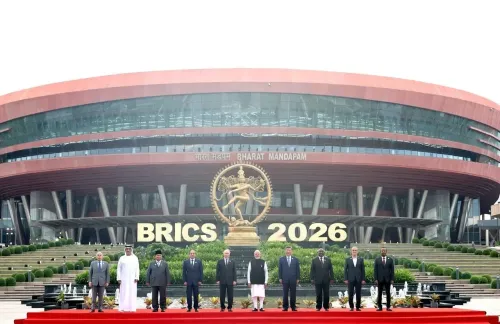
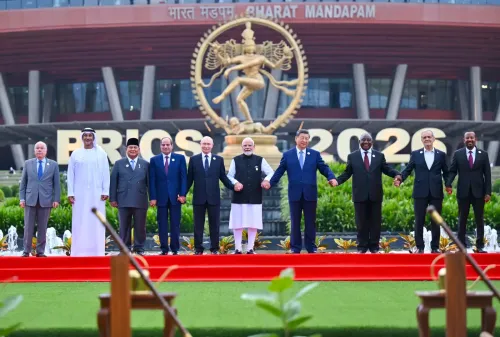
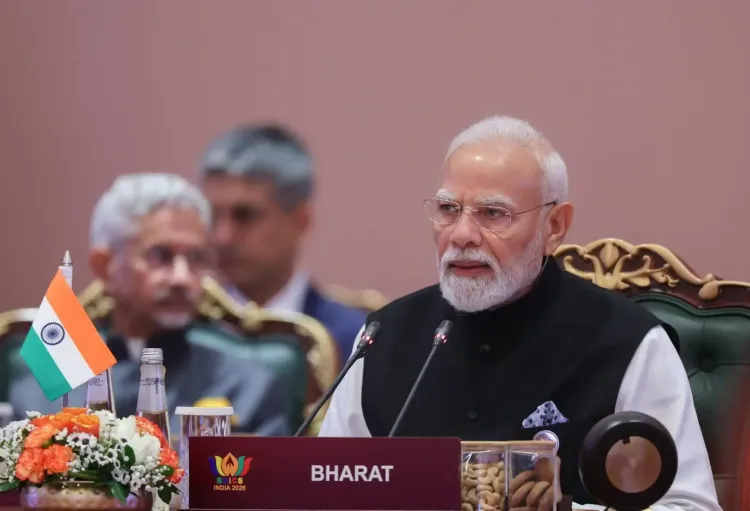
Prime Minister Narendra Modi on Saturday, 12 September 2026, declared that the New Delhi Declaration, adopted unanimously at the 18th BRICS Summit in New Delhi, reflects the confidence of a bloc that is 'wider in reach and stronger in purpose.' The declaration was endorsed by all member and partner nations at the two-day summit held at Bharat Mandapam, marking one of the most substantive outcomes of India's BRICS presidency.
Key Pillars of the New Delhi Declaration
The declaration centres on innovation, sustainability, and people-to-people ties, with an explicit push to make BRICS cooperation more practical and development-oriented. In a post on X, PM Modi stated: 'With a focus on innovation, sustainability, people-to-people ties and more, the endeavour is to make cooperation more practical, development-oriented and responsive to the aspirations of the BRICS nations.'
He added that the declaration 'looks firmly to the future,' outlining deeper collaboration across artificial intelligence, Digital Public Infrastructure, quantum technologies, startups, MSMEs, and scientific research. Strengthening the New Development Bank and joint action on food, health, energy security, supply chains, and sustainable infrastructure also feature prominently.
A Larger Message for the Global South
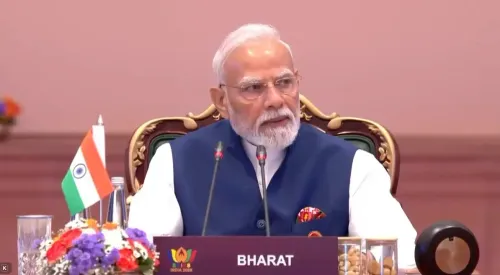
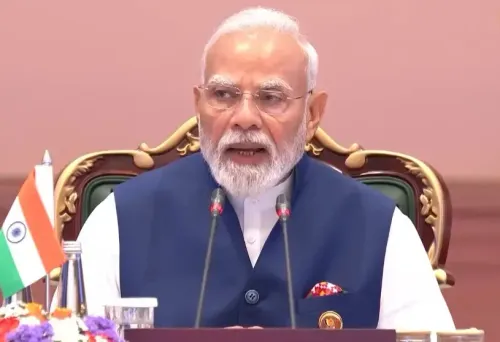
PM Modi underscored that the declaration carries a broader signal about institutional evolution and the Global South's role in shaping the multilateral order. 'In the current global context, the New Delhi Declaration carries a larger message that institutions must evolve with realities. Development must remain at the centre of the global agenda. The voice of the Global South must be heard with greater weight,' he said.
He emphasised that BRICS stands for 'dialogue, reform, peace and a more representative multilateral order,' while adding that the grouping 'will keep speaking firmly against terrorism, double standards and threats to international stability.' This comes amid growing calls from developing nations for reform of bodies such as the UN Security Council and the Bretton Woods institutions — a theme India has championed throughout its presidency.
Summit Sessions and Commemorative Launches
Earlier on Saturday, BRICS leaders attended a session titled 'Inclusive Global Governance and Strengthening Multilateralism' at Bharat Mandapam. In his closing remarks at the session, PM Modi stated: 'The New Delhi Declaration adopted today gives clear direction to our shared resolve. Now it is our responsibility to convert these resolutions into concrete results.'
The Prime Minister also launched two postage stamps commemorating 20 years of BRICS — a symbolic gesture marking the grouping's evolution from an informal economic acronym to a geopolitical platform now comprising an expanded membership.
What Comes Next
Discussions among BRICS leaders reportedly covered key regional and global issues alongside priorities for deepening intra-BRICS cooperation. With the declaration now adopted, the focus shifts to translating its commitments — particularly on AI governance, Digital Public Infrastructure, and NDB reform — into time-bound deliverables. The next BRICS presidency rotation and follow-up mechanisms will likely determine whether the New Delhi Declaration achieves substantive impact or remains aspirational.
Point of View
But BRICS declarations have a mixed track record on follow-through. The real test lies in whether AI governance and Digital Public Infrastructure commitments translate into interoperable frameworks — or remain talking points at the next summit. India's push to centre the Global South in multilateral reform is strategically sound, yet BRICS itself is not a monolith: China and Russia carry starkly different geopolitical priorities. Modi's challenge is to ensure India's presidency leaves a structural legacy — not merely a rhetorical one.
NationPress
28 Oct 2026
Frequently Asked Questions
What is the BRICS New Delhi Declaration 2026?
It is a consensus document adopted unanimously at the 18th BRICS Summit in New Delhi on 12 September 2026. It outlines cooperation on AI, Digital Public Infrastructure, quantum technologies, startups, MSMEs, and strengthening the New Development Bank.
Why does PM Modi say the declaration matters for the Global South?
PM Modi stated that institutions must evolve with realities and that the voice of the Global South must carry greater weight in the global agenda. The declaration calls for a more representative multilateral order, reflecting developing nations' demand for reform of bodies like the UN Security Council.
What are the key areas of cooperation under the declaration?
The declaration covers artificial intelligence, Digital Public Infrastructure, quantum technologies, startups, MSMEs, food security, health, energy security, supply chains, sustainable infrastructure, and reform of the New Development Bank.
What did PM Modi launch at the 18th BRICS Summit?
PM Modi launched two postage stamps commemorating 20 years of BRICS, alongside announcing the unanimous adoption of the New Delhi Declaration 2026.
What is BRICS's stance on terrorism under the new declaration?
BRICS reaffirmed that it will speak firmly against terrorism, double standards, and threats to international stability, while standing for dialogue, reform, and peace.