Chirag Paswan hails Rs 9,585 cr Cabinet nod for Delhi-NCR fleet shift
Synopsis
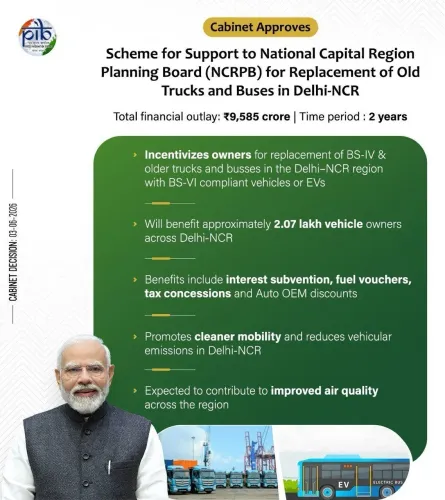
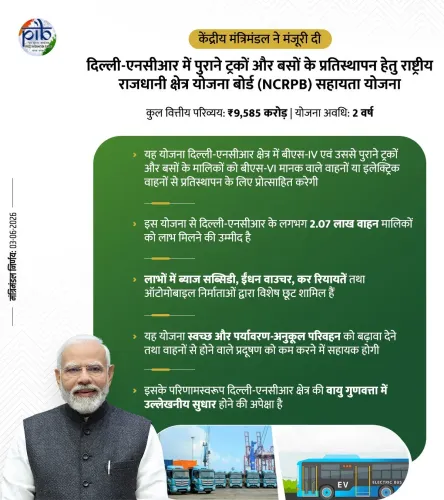
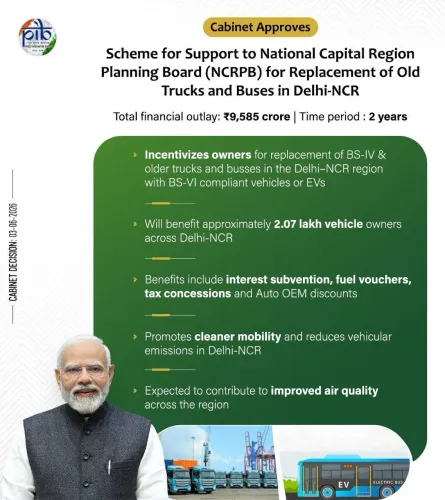
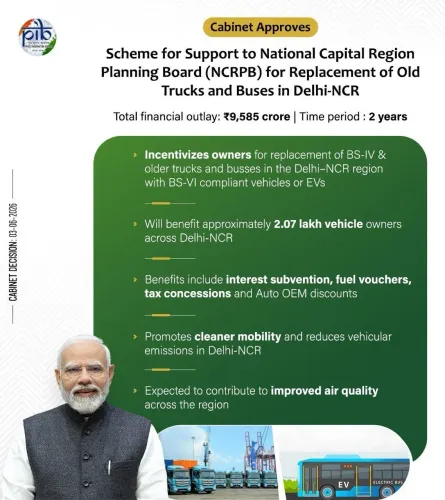
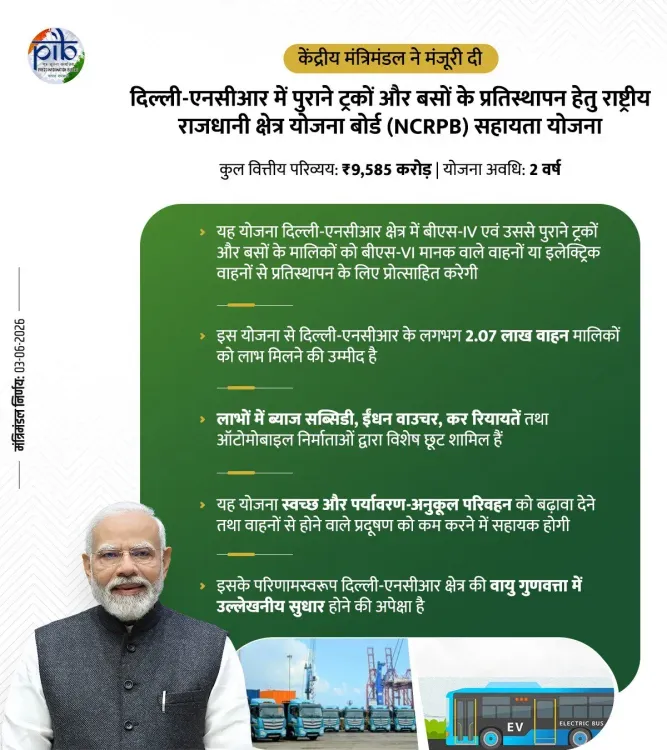
Union Food Processing Minister Chirag Paswan announced a Union Cabinet decision allocating Rs 9,585 crore to phase out petrol and diesel commercial vehicles in Delhi-NCR. Nearly 2 lakh trucks and 16,000 buses will be converted to BS-4, electric and CNG variants in stages, in a bid to reduce vehicular pollution in the National Capital Region.
Key Takeaways
Union Cabinet approved Rs 9,585 crore for converting commercial vehicles in Delhi-NCR, per Chirag Paswan's post.
Nearly 2 lakh trucks and 16,000 buses targeted for phased conversion to BS-4, electric and CNG.
Move builds on the National Clean Air Programme and Commission for Air Quality Management framework.
India transitioned to BS-VI emission norms nationwide in 2020, skipping BS-V.
Implementation timeline, agency roles and subsidy structure are yet to be detailed.
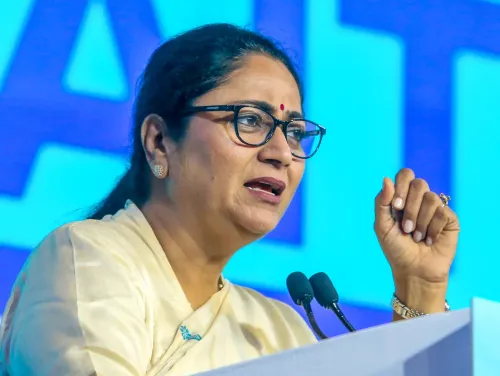
Union Food Processing Minister Chirag Paswan on Wednesday welcomed what he described as a 'historic' Union Cabinet decision to phase out petrol and diesel commercial vehicles across Delhi-NCR, announcing an outlay of Rs 9,585 crore to convert nearly 2 lakh trucks and 16,000 buses to BS-4, electric and CNG variants. The Lok Janshakti Party (Ram Vilas) chief shared the development on X, framing it as a milestone in the capital region's long-running battle with vehicular pollution.
In his post, Paswan said that 'under the leadership of Prime Minister Narendra Modi, the Union Cabinet has taken a historic decision in the direction of making Delhi-NCR pollution-free.' He added that approval of Rs 9,585 crore had been granted for the 'ambitious initiative' to convert around 2 lakh trucks and 16,000 buses running on petrol and diesel into BS-4, electric and CNG vehicles in a phased manner.
Context
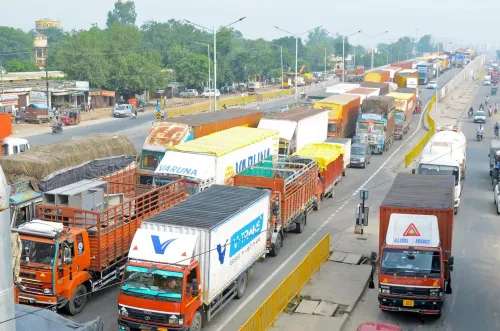
The announcement places commercial heavy vehicles — long identified as a dominant contributor to particulate load in the National Capital Region — at the centre of the next phase of clean-air action. Trucks transiting through Delhi and inter-state bus fleets have repeatedly been flagged in source-apportionment studies as significant emitters of PM2.5 and nitrogen oxides.
Paswan's framing of the decision as 'historic' positions the LJP(RV), an ally within the ruling coalition, alongside the Prime Minister's environmental agenda. The minister did not specify the implementing ministry, the timeline, or the split between conversion to electric, CNG and BS-4 categories.
Policy backdrop
India's vehicular emissions regime has tightened sharply over the past decade. The country leapfrogged from BS-IV to BS-VI norms nationwide in 2020, skipping an intermediate stage to accelerate the transition. Older commercial fleets, however, remain on the road in large numbers, particularly in freight corridors feeding the capital.
The National Clean Air Programme, launched in 2019, set particulate reduction targets for 131 non-attainment cities, with Delhi among the most monitored. The Commission for Air Quality Management, established by ordinance in 2020 and through legislation in 2021, was created specifically to coordinate anti-pollution measures across Delhi, Haryana, Uttar Pradesh and Rajasthan.
Fleet modernisation has been a recurring lever. The Centre's Vehicle Scrappage Policy, rolled out from 2021, incentivises retirement of older commercial and government vehicles, while parallel push for CNG infrastructure and electric mobility under schemes such as FAME has sought to shift the fuel mix for public and goods transport.
Stakeholders and impact
The conversion programme, as outlined in Paswan's post, will directly affect truck operators and inter-city bus fleet owners — many of them small, single-vehicle businesses for whom upfront retrofitting or replacement costs are a sensitive issue. The Rs 9,585 crore allocation suggests a subsidy or assistance component, though the post does not detail eligibility criteria.
For residents of Delhi-NCR, the announcement holds the prospect of reduced tailpipe emissions during the winter months, when meteorological conditions trap pollutants close to the surface. CNG and electric buses also typically run quieter, with implications for urban noise levels along high-density corridors.
State transport undertakings in Delhi, Haryana, Uttar Pradesh and Rajasthan are likely to be key implementing agencies, alongside private fleet operators registered to ply within the NCR boundary.
What's next
Attention will turn to the formal Cabinet note, the implementation timeline, and the agency designated to disburse the Rs 9,585 crore. Phased rollouts of this scale typically require coordination between the Ministry of Road Transport and Highways, the Ministry of Heavy Industries, and state transport departments.
Operators will watch for clarity on whether the support covers retrofitting of existing chassis, outright replacement, or a mix. The pace at which charging and CNG refuelling infrastructure scales up alongside the conversion drive will be decisive in determining whether the targeted fleet shift translates into measurable improvements in NCR air quality.
Point of View
If implemented at the stated scale, would mark one of the largest single interventions in commercial vehicle emissions in the NCR. It also signals a continuing political consolidation around clean-air messaging, with coalition partners such as the LJP(RV) actively amplifying environmental decisions. The real test, however, lies in execution: previous fleet modernisation pushes have stumbled on operator economics and patchy alternative-fuel infrastructure. Watch the fine print on subsidies, retrofit standards and the inter-state coordination machinery.
NationPress
18 Oct 2026
Frequently Asked Questions
What did the Union Cabinet approve for Delhi-NCR pollution control?
According to Union Minister Chirag Paswan, the Cabinet approved Rs 9,585 crore to convert nearly 2 lakh petrol and diesel trucks and 16,000 buses operating in Delhi-NCR to BS-4, electric and CNG vehicles in a phased manner.
How many vehicles will be converted under the Delhi-NCR scheme?
Around 2 lakh trucks and 16,000 buses running on petrol and diesel are to be converted, as per the announcement shared by Chirag Paswan on X.
What is the outlay for the Delhi-NCR vehicle conversion plan?
The announced outlay is Rs 9,585 crore, cleared by the Union Cabinet for the phased conversion programme.
Why is Delhi-NCR targeted for vehicle conversion?
Delhi-NCR consistently records among the highest particulate pollution levels in India, with commercial vehicles identified as significant contributors. The region is covered by the National Clean Air Programme and the Commission for Air Quality Management.
What are BS-4, CNG and electric vehicles in this context?
BS-4 refers to Bharat Stage IV emission norms, while CNG and electric refer to compressed natural gas and battery-powered vehicles. The plan envisages converting older petrol and diesel commercial vehicles into these cleaner categories.