Gadkari: Cabinet clears Rs 9,585 cr Delhi-NCR clean mobility scheme
Synopsis
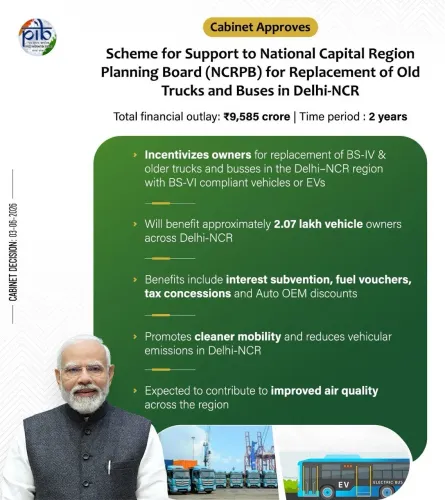
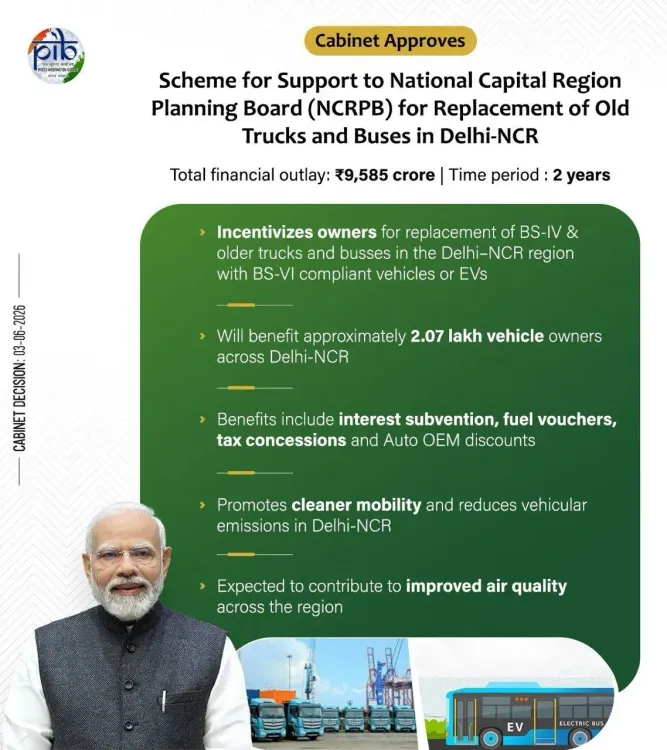
Union Road Transport and Highways Minister Nitin Gadkari announced Cabinet approval for a two-year Rs 9,585 crore Delhi-NCR scheme to replace BS-IV trucks and buses with BS-VI or electric vehicles, benefiting around 2.07 lakh owners across Delhi, Haryana, Rajasthan and Uttar Pradesh with manufacturer discounts and five-year central benefits.
Key Takeaways
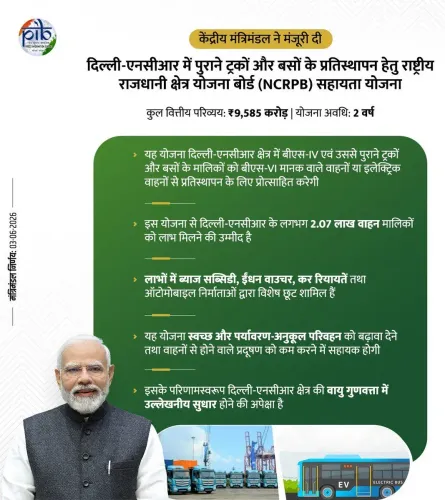
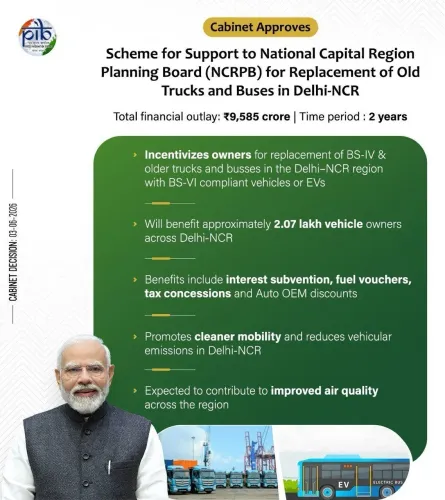
Union Cabinet approved a two-year Delhi-NCR clean mobility scheme with a total outlay of Rs 9,585 crore.
Central Government share is Rs 5,041 crore; participating states will provide Rs 1,601 crore in tax concessions.
Scheme funded via NCRPB under MoHUA; implemented by MoRTH and MoPNG with Delhi, Haryana, Rajasthan and Uttar Pradesh.
Targets replacement of BS-IV and older trucks and buses with BS-VI or electric vehicles.
Approximately 2.07 lakh owners, including 1.91 lakh trucks and 16,329 buses, are expected to benefit.
Manufacturers to offer 8 per cent discount on ex-showroom prices; central benefits extend five years from registration.
Union Road Transport and Highways Minister Nitin Gadkari on June 3, 2026 announced that the Union Cabinet, chaired by Prime Minister Narendra Modi, has approved a two-year scheme to curb air pollution and accelerate cleaner mobility across the Delhi-NCR region. In a post on X, the minister said the initiative carries a total outlay of Rs 9,585 crore and targets replacement of older trucks and buses with BS-VI compliant or electric vehicles. The programme will run in collaboration with Delhi, Haryana, Rajasthan and Uttar Pradesh.
Context
Calling it 'a major push for cleaner air and sustainable mobility in Delhi-NCR', Gadkari said the scheme will be funded through the National Capital Region Planning Board (NCRPB) under the Ministry of Housing and Urban Affairs, and jointly implemented by the Ministry of Road Transport and Highways and the Ministry of Petroleum and Natural Gas.
Of the headline outlay, Rs 5,041 crore will come from the Central Government, while participating states will contribute Rs 1,601 crore in tax concessions. The minister said the structure is designed to align central incentives with state-level fiscal support for vehicle replacement.
Policy backdrop
The scheme builds on India's transition to BS-VI emission norms, rolled out nationally from April 2020, and on the electric mobility push anchored by the FAME-II programme launched in 2019. It also dovetails with the work of the Commission for Air Quality Management in NCR and adjoining areas, established by ordinance in 2020 and given statutory backing the following year.
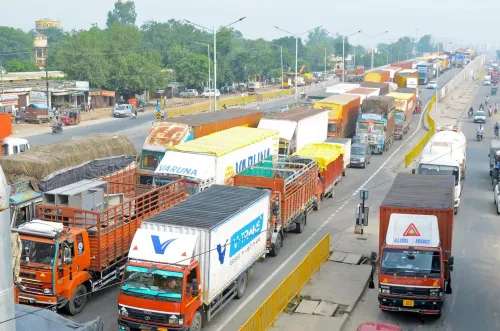
Delhi-NCR has for years faced recurrent winter air-quality emergencies, with the Graded Response Action Plan being invoked repeatedly since 2017. Commercial vehicles running on older diesel engines have consistently figured among the largest contributors to particulate emissions in the region, making fleet replacement a central plank of pollution-control strategy.
Stakeholders and impact
According to Gadkari, the programme is expected to benefit approximately 2.07 lakh vehicle owners, including 1.91 lakh trucks and 16,329 buses across the Delhi-NCR footprint. Participating automobile manufacturers will offer an 8 per cent discount on ex-showroom prices for eligible new vehicles.
Central Government benefits, the minister added, 'will continue for five years from the date of registration, ensuring long-term impact beyond the two-year enrolment period'. The design effectively extends the financial advantage well past the enrolment window, a feature aimed at sustaining replacement momentum even after the initial uptake phase.
Transporters and bus operators in the four states are the most direct beneficiaries, but residents of Delhi and adjoining districts of Haryana, Rajasthan and Uttar Pradesh are positioned as the wider beneficiaries through expected improvements in ambient air quality. Automobile manufacturers stand to gain from a coordinated demand pipeline for BS-VI and electric commercial vehicles.
What's next
Operational rollout will hinge on state-level enrolment portals and the speed at which manufacturers, financiers and transporters align with the discount and registration framework. The two participating central ministries are expected to issue detailed guidelines covering eligibility, documentation and the mechanics of the manufacturer discount and tax concessions.
Tracking will likely focus on the actual number of trucks and buses retired and replaced during the enrolment window, alongside movements in Delhi-NCR's PM2.5 and PM10 readings. With the National Capital Region's air-quality record continuing to shape political and public-health debate, the scheme's measurable outcomes over the next two years will be closely watched as a test of whether large fiscal incentives can shift commercial fleets at the pace the region needs.
Point of View
And signals that pollution policy is shifting from emergency curbs to structural replacement. Routing money through the NCRPB while splitting implementation between road transport and petroleum ministries reflects an attempt to align vehicle, fuel and regional planning levers in one package. The five-year tail on central benefits is a quiet but important design choice, aimed at preventing the post-enrolment cliff that has dogged earlier scrappage pilots. Execution will hinge on how quickly the four states stand up enrolment systems and whether transporters find the combined discount and concession attractive enough to retire ageing diesel fleets.
NationPress
17 Oct 2026
Frequently Asked Questions
What is the Delhi-NCR clean mobility scheme approved by the Cabinet?
It is a two-year scheme approved by the Union Cabinet to reduce air pollution in Delhi-NCR by incentivising replacement of BS-IV and older trucks and buses with BS-VI or electric vehicles, with a total outlay of Rs 9,585 crore.
How much money has the Centre allocated for the Delhi-NCR pollution scheme?
The Central Government will contribute Rs 5,041 crore, while participating states will provide Rs 1,601 crore in tax concessions, taking the total outlay to Rs 9,585 crore.
Who is eligible to benefit from the new truck and bus replacement scheme?
Approximately 2.07 lakh vehicle owners across Delhi, Haryana, Rajasthan and Uttar Pradesh, including 1.91 lakh truck owners and 16,329 bus owners, are expected to benefit from the scheme.
What discount will manufacturers offer under the Delhi-NCR scheme?
Participating automobile manufacturers will offer an 8 per cent discount on the ex-showroom price of eligible new BS-VI or electric trucks and buses bought under the scheme.
How long will the central benefits under the scheme last?
Central Government benefits will continue for five years from the date of vehicle registration, even though the enrolment period for the scheme itself is two years.