Delhi Police busts Agra matrimonial cyber fraud ring; advocate mastermind arrested
Synopsis
A practising advocate allegedly ran a pan-India matrimonial fraud ring from an Agra call centre, deliberately capping each victim at ₹15,000 to stay below the radar — and used his own Bar Council credentials both to legitimise the operation and to handle police complaints when bank accounts were frozen. Delhi Police's cyber wing cracked the case by following the money to a single Central Bank of India account linked to six NCRP complaints nationwide.
Key Takeaways
Delhi Police's Central District Cyber Police raided a fraudulent tele-calling centre in Sikandra, Agra on 4 September 2025 , arresting 9 individuals initially.
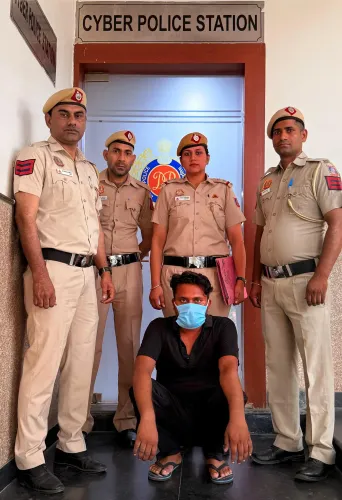
Alleged mastermind Amit Kumar, 29 , a practising advocate, was arrested on 8 September 2025 after going underground post-raid.
The syndicate operated under the cover of matrimonial portal shaadipartner.com , capping fraud per victim at ₹15,000 to minimise detection.
A single Central Bank of India bank account was linked to six NCRP complaints from across India.
Tele-callers received monthly salaries of ₹6,000–₹7,000 plus a 10% incentive on every amount extracted, with individual monthly fraud targets of ₹15,000 .
78/2025 was registered under the Bharatiya Nyaya Sanhita (BNS) ; a total of 10 accused have been named.
Delhi Police's Central District Cyber Police have dismantled a pan-India matrimonial cyber fraud syndicate operating out of a tele-calling centre in Agra, Uttar Pradesh, arresting its alleged mastermind — a practising advocate — on 8 September 2025. The racket ran under the guise of a branded matrimonial portal, shaadipartner.com, and is believed to have targeted male matrimonial seekers across multiple Indian states for approximately one year.
How the Fraud Worked
The syndicate operated on a deliberate low-exposure model, capping individual victims at a maximum of ₹15,000 — a calculated approach investigators describe as 'cheat small, cheat many'. Fraudsters used photographs of women sourced from the internet, staged WhatsApp conversations, and arranged fabricated conference calls in which female tele-callers impersonated prospective brides and even family members.
Once a victim developed an emotional connection, payments were extracted under a series of pretexts: registration charges, profile access fees, profile activation charges, and contact-unlocking fees. After enough money was collected, alliances were rejected on manufactured grounds — including claims of Manglik Dosh, family disapproval, or that the woman had become engaged elsewhere.
The investigation was triggered by a complaint filed on the National Cyber Crime Reporting Portal (NCRP), leading to the registration of FIR No. 78/2025 at the Cyber Police Station, Central District, under Sections 318(4), 317(5), 61(2), and 3(5) of the Bharatiya Nyaya Sanhita (BNS).
Financial Trail and Call Centre Raid
Technical analysis of the financial trail revealed that fraud proceeds were funnelled into a current account at the Central Bank of India (account number 0512190), registered in the name of commercial entity 'M/s Shaadi Partner Com'. Banking and KYC records identified Jaya Shakya, also known as Shashi, as the sole proprietor and authorised signatory of this account.
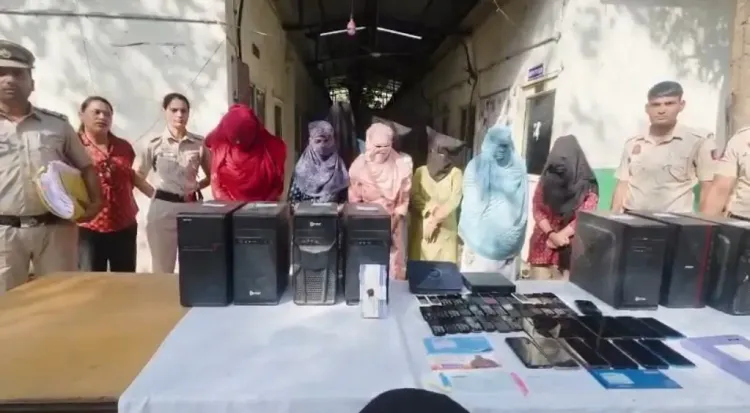
Cross-referencing the NCRP database linked the same bank account to six complaints filed from different parts of the country. On 4 September 2025, a police team raided an operational call centre at Property No. 25, Ramaji Dham Apartment, Sikandra, Agra. Jaya Shakya, 44, was arrested at the premises along with eight female tele-callers.
The Mastermind Behind the Front
Sustained interrogation of Shakya led investigators to the alleged real architect of the operation: Amit Kumar, 29, a BA LLB graduate and practising advocate registered with the Uttar Pradesh State Bar Council. According to investigators, Kumar deliberately structured the business so that all banking channels and SIM card procurements were registered in the name of the proprietorship firm, ensuring that any initial scrutiny would point to Shakya rather than him. He presented himself as the firm's 'Legal Advisor' to establish plausible deniability.
After learning of the 4 September raid, Kumar switched off his mobile phones and went underground. Technical surveillance eventually tracked him to the Kala Kunj area of Agra, where he was intercepted on 8 September 2025 while travelling in a black Hyundai Creta bearing an 'Advocate' sticker. He displayed his Bar Council credentials and claimed to be acting only as legal counsel, but investigators said digital evidence contradicted this account. He was arrested the same day.
Recruitment, Incentives and Internal Pressure
Female tele-callers were recruited through platforms such as WorkIndia and Apna App, as well as newspaper advertisements. Recruits were allegedly shown legitimacy documents — an MSME Udyam certificate, Uttar Pradesh Labour Department registration, a franchise agreement, and Kumar's own Bar Council credentials — to convince them the operation was lawful.
According to police, each tele-caller received a monthly salary of approximately ₹6,000 to ₹7,000 and a 10% incentive on every amount successfully extracted. Each caller also carried a monthly fraud-collection target of at least ₹15,000, with salary deductions for shortfalls and termination for repeated failures. Investigators alleged that some employees eventually realised the operation was fraudulent but remained involved for the financial incentive.
The syndicate also had a damage-control mechanism: whenever tele-callers sensed a victim was about to file a complaint, they would quietly refund the amount. When a complaint nonetheless reached the NCRP and triggered a bank account freeze, Kumar allegedly stepped in using his legal credentials to manage the situation.
Accused and What Comes Next
Police have named 10 individuals in the case. Beyond Kumar and Shakya, eight female tele-callers have been identified: Jyoti Kumari, 27 (Agra); Karishma Sharma, 24 (Agra); Rashmi, 24 (Agra); Anshu Kumari, 32 (originally from Bhagalpur, Bihar); Meghna Parashar, 23 (Agra); Padma, 26 (Agra); and Aashika, 21 (Agra). Investigators are likely to examine whether the racket's reach extends beyond the six NCRP-linked complaints, as the low per-victim amount means many victims may not have reported the fraud at all.
Point of View
000 per victim is deliberately small — but the structural sophistication. An advocate allegedly weaponised his own Bar Council credentials to both legitimise the racket during recruitment and extinguish complaints after bank freezes, exploiting the gap between formal legal standing and actual conduct. This is consistent with a broader pattern in Indian cybercrime where professional credentials are used as shields, not just as cover. The low per-victim ceiling also means a significant dark figure: many victims would have quietly absorbed the loss rather than report it, making the six NCRP complaints almost certainly an undercount of the true reach.
NationPress
15 Sept 2026
Frequently Asked Questions
What was the shaadipartner.com matrimonial fraud and how did it operate?
The shaadipartner.com fraud was a pan-India cyber racket run from a call centre in Agra that used fake female profiles, internet-sourced photographs, and staged phone conversations to deceive men seeking matrimonial alliances. Victims were charged fees at multiple stages — registration, profile access, contact-unlocking — before the alleged alliance was rejected on manufactured grounds such as Manglik Dosh or family disapproval.
Who are the key accused arrested in the Agra matrimonial fraud case?
The alleged mastermind is Amit Kumar, 29 , a practising advocate arrested on 8 September 2025 . Jaya Shakya, 44 , who served as the operational manager and on-paper proprietor of the firm, was arrested during the initial raid on 4 September 2025 along with eight female tele-callers.
Why did the fraudsters cap the amount taken from each victim at ₹15,000?
According to police, the syndicate deliberately limited individual fraud amounts to ₹15,000 to apply the 'cheat small, cheat many' principle — keeping losses low enough that many victims would not bother filing a complaint, thereby reducing police scrutiny and sustaining the operation across a larger number of targets nationwide.
How did Delhi Police trace and catch the mastermind Amit Kumar?
After the 4 September raid on the Agra call centre, Kumar switched off his phones and went underground. Investigators deployed technical surveillance to track his movements and intercepted him on 8 September 2025 in the Kala Kunj area of Agra while he was travelling in a black Hyundai Creta. Digital evidence gathered during the probe contradicted his claim that he was merely the firm's legal advisor.
What legal sections have been invoked and how many complaints are linked to this syndicate?
FIR No. 78/2025 was registered at the Cyber Police Station, Central District, under Sections 318(4) , 317(5) , 61(2) , and 3(5) of the Bharatiya Nyaya Sanhita (BNS). The syndicate's bank account was linked to at least six complaints registered on the National Cyber Crime Reporting Portal from different parts of India.