Delhi Cyber Police arrest MCA grad for fake Parivahan website fraud
Synopsis
A 24-year-old MCA graduate from Etawah allegedly built 'Parivahan.online' — a near-perfect clone of India's official transport portal — and supplied ready-to-deploy fake website source files to fraudsters nationwide. Delhi's Cyber Police unravelled the pan-India network through IP logs, domain records, and financial transaction trails, recovering laptops, credentials, and source files from the accused's residence.
Key Takeaways
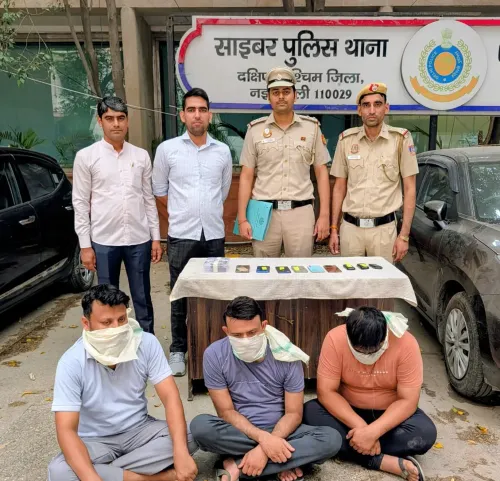
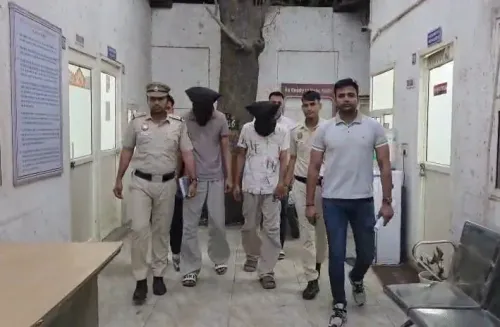
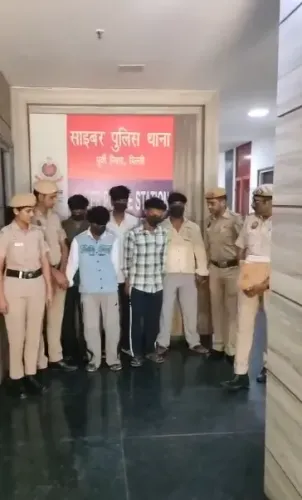
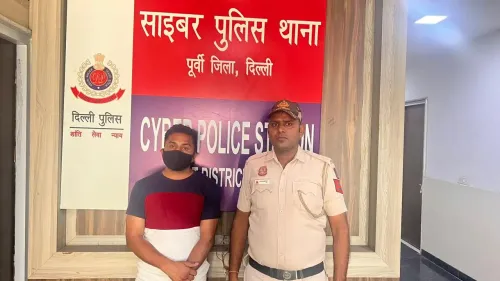
Delhi Cyber Police arrested Anshul Yadav , 24, from Etawah, Uttar Pradesh on 26 May 2025 for operating a fake government transport portal.
The fraudulent site 'Parivahan.online' was designed to impersonate official government transport portals and collected payments from unsuspecting citizens.
The initial victim paid ₹1,099 for a vehicle number plate booking before further demands raised suspicion.
Yadav allegedly created and supplied ready-to-deploy fake website ZIP and source files to criminal associates across India.
Police recovered two laptops , two mobile phones , saved credentials, and domain-related evidence during the raid in Etawah.
Investigation is continuing to identify co-accused, trace additional fake portals, and locate more victims of the pan-India network.
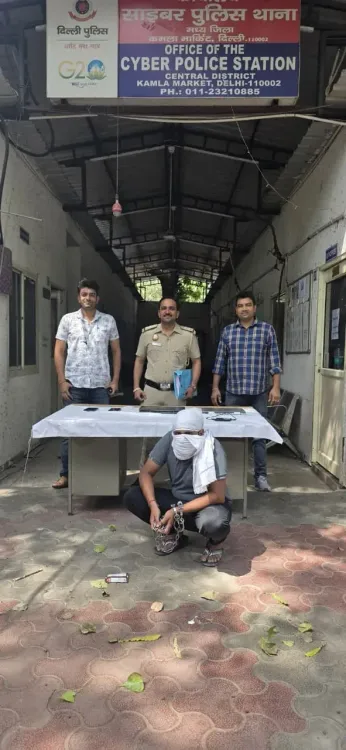
Delhi's Cyber Police Station of the Central District on Tuesday, 26 May 2025, dismantled a technically sophisticated cyber fraud network and arrested Anshul Yadav, a 24-year-old MCA graduate from Bangali Colony, Etawah, Uttar Pradesh, for allegedly building and operating a fraudulent portal — 'Parivahan.online' — crafted to impersonate official government transport service websites. The racket, which spanned multiple states, used fake websites, mule bank accounts, and ready-to-deploy source files to defraud citizens seeking routine transport services online.
How the Fraud Came to Light
The case surfaced after a complainant searched on Google for a vehicle number plate booking service and landed on the fraudulent site, mistaking it for a legitimate government portal. He entered his vehicle details and made an online payment of ₹1,099. The fraudsters subsequently demanded additional payments on various pretexts, raising his suspicion. He promptly filed a complaint on the National Cyber Crime Reporting Portal (NCRP), triggering a formal investigation.
FIR No. 64/2025, dated 24 June 2025, was registered at Police Station Cyber Central under Section 318(4) of the Bharatiya Nyaya Sanhita (BNS).
Investigation and Arrest
A dedicated team comprising Sub-Inspector Ravinder Kumar and Head Constables Deepak and Jai Kishan was constituted under the supervision of SHO Cyber Inspector Yograj Dalal and ACP Operations Padam Singh Rana. Investigators conducted detailed technical analysis covering IP logs, domain registration records, financial transaction trails, and digital surveillance.
The technical probe linked the domain's registrant details and administrative access logs to mobile numbers registered in Yadav's name. Financial investigation further established that money collected from victims was routed through multiple beneficiary bank accounts before being transferred to the accused's account, confirming direct financial involvement. Raids were subsequently conducted in Etawah, and Yadav was apprehended from his residence.
Accused's Modus Operandi
During interrogation, Yadav allegedly disclosed that his MCA degree gave him advanced expertise in website design, backend management, domain hosting, and payment gateway integration. He reportedly confessed to creating several fake websites mimicking official government portals and commercial service platforms for cyber fraudsters operating across the country.
Notably, investigators found that Yadav preserved and circulated ready-to-use ZIP and source files of fake websites, enabling criminal associates to rapidly redeploy similar portals whenever an existing one was taken down. He allegedly retained administrative credentials and backend control of these fraudulent sites throughout.
Scale and Recoveries
Investigators linked several complaints from different parts of India to fake websites and beneficiary bank accounts allegedly operated by Yadav and his associates, pointing to a wider interstate fraud network. Delhi Police described the operation as highly organised and technically sophisticated, noting that it actively undermined public confidence in legitimate digital governance services.
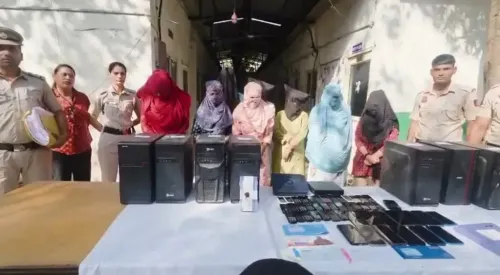
During the operation, police recovered two laptops, two mobile phones, fake website ZIP and source files, screenshots of saved passwords and login credentials, and multiple domain and website-related details.
What Happens Next
Investigation is ongoing to identify and arrest co-accused, trace additional fake websites and linked bank accounts, analyse transaction trails, and identify further victims. Authorities have warned citizens to verify URLs carefully and use only official government domains for transport-related services.
Point of View
Lowering the technical barrier for criminals nationwide. The case also highlights a structural vulnerability: citizens searching for government services on Google are routinely intercepted by SEO-optimised fake portals before they reach official domains. Until government agencies aggressively register and protect look-alike domains — and platforms enforce stricter ad and search policies around government-impersonation sites — arrests like this will remain reactive rather than preventive.
NationPress
24 Sept 2026
Frequently Asked Questions
What is the fake Parivahan.online website case?
'Parivahan.online' was a fraudulent website designed to closely resemble India's official government transport portal. It was used to collect payments from citizens seeking vehicle number plate bookings and other transport services, according to Delhi Police.
Who was arrested in the Delhi fake government website case?
Delhi Cyber Police arrested Anshul Yadav, a 24-year-old MCA graduate from Bangali Colony, Etawah, Uttar Pradesh. He was allegedly the developer and operator of the fake portal and reportedly supplied fake website source files to fraudsters across India.
How did the cyber fraud operate?
Victims searching online for transport services landed on the fake portal, made payments, and were then pressured for additional money on various pretexts. Proceeds were routed through multiple mule bank accounts before reaching the accused, according to investigators.
What evidence did Delhi Police recover?
Police recovered two laptops, two mobile phones, fake website ZIP and source files, screenshots of saved passwords and login credentials, and multiple domain and website-related details from the accused's residence in Etawah.
How can citizens avoid falling victim to fake government portals?
Citizens should always verify that government service URLs end in '.gov.in' or '.nic.in' and avoid clicking on sponsored or unfamiliar links in search results. Suspected fraud can be reported on the National Cyber Crime Reporting Portal (NCRP) at cybercrime.gov.in.