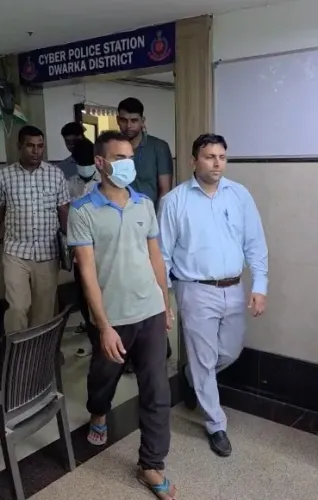
Delhi cyber fraud: 3 arrested in Jhunjhunu under Operation Pre CyHawk

Synopsis
A single suspicious link on a mobile phone led to ₹99,000 drained from a Delhi resident's account — and ultimately to three arrests in Rajasthan. The case exposes how mule account networks operate across state lines, and how Delhi Police's Operation Pre CyHawk is using digital forensics to dismantle them.
Key Takeaways
Delhi Police arrested three persons — Rajat , Mitesh , and Manoj Kumar — from Jhunjhunu district, Rajasthan on 16 June 2026 .
The fraud involved the unauthorised withdrawal of ₹99,000 from victim Anoop Haldhar's Kotak Mahindra Bank account via UPI and Google Pay after he clicked a malicious link.
330/2026 was registered on 12 June 2026 under Sections 318(4) and 3(5) of the BNS at Okhla Industrial Area Police Station .
Accused allegedly used a mule bank account to route stolen funds and communicated via WhatsApp while switching off phones to avoid detection.
Police recovered ₹21,000 in cash, WhatsApp chats, a bank passbook, and an Aadhaar card as evidence.
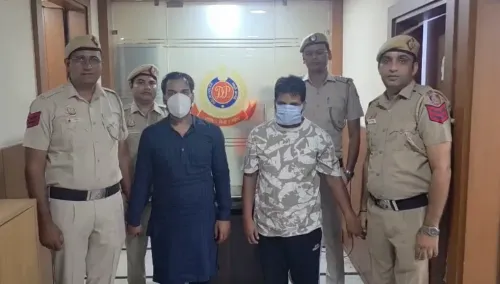
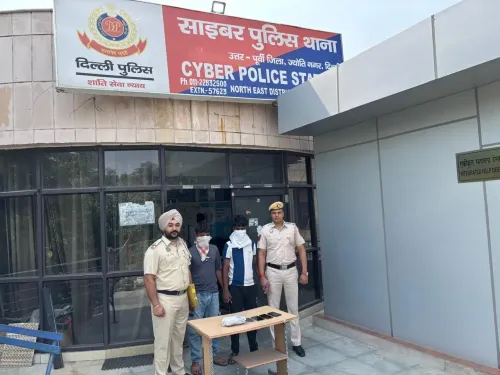
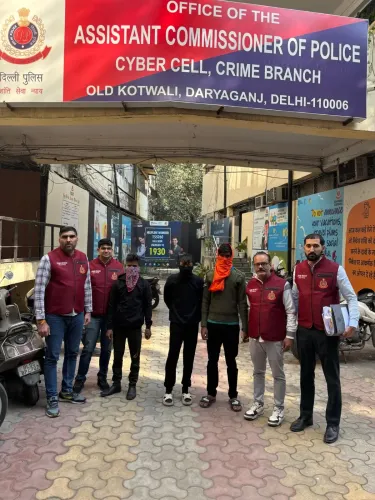
Delhi Police arrested three persons from Jhunjhunu district, Rajasthan, in a cyber fraud case involving the unauthorised withdrawal of ₹99,000 from a New Delhi resident's bank account, the force said on 16 June 2026. The arrests were made under 'Operation Pre CyHawk', a targeted cyber crime initiative run by the Okhla Industrial Area Police Station.
How the Fraud Unfolded
The victim, Anoop Haldhar, a resident of Okhla Phase-I, received a suspicious link on his mobile phone. After clicking on it, his device was allegedly compromised, enabling the fraudsters to siphon ₹99,000 from his Kotak Mahindra Bank account through UPI and Google Pay transactions. Haldhar promptly reported the incident to the National Cyber Crime Helpline 1930.
Digital Trail Leads to Rajasthan
Investigators traced the digital money trail to a beneficiary account in Jhunjhunu, Rajasthan. FIR No. 330/2026, dated 12 June 2026, was registered at the Okhla Industrial Area Police Station under Sections 318(4) and 3(5) of the Bharatiya Nyaya Sanhita (BNS). The case was assigned to Sub-Inspector Sanjay Meena.
Arrests and Key Disclosures
A police team comprising Sub-Inspector Sanjay Meena, Head Constable Dharampal, and Constable Jai Ram travelled to Rajasthan and apprehended the primary beneficiary account holder, identified as Rajat. During interrogation, Rajat allegedly disclosed the involvement of two associates — Mitesh and Manoj Kumar — who reportedly arranged and operated the account as a mule account to route the stolen funds.
The remaining two accused had allegedly attempted to evade detection by communicating exclusively through voice and WhatsApp calls and frequently switching off their mobile phones. However, sustained technical surveillance and digital analysis, supported by ASI Rakhi and Head Constable Abhay, enabled the team to track and arrest Mitesh and Manoj Kumar from a rented accommodation in Nawalgarh, Rajasthan.
Evidence Recovered
Police recovered ₹21,000 in cash, WhatsApp chat records linking the three conspirators, the beneficiary's bank passbook, and an Aadhaar card. All recovered materials are expected to serve as crucial evidence in the ongoing investigation.
What This Case Signals
The use of mule accounts — legitimate-looking bank accounts operated by third parties to layer and conceal stolen funds — is a growing vector in Indian cyber fraud. This is among a series of arrests Delhi Police have made under Operation Pre CyHawk, which specifically targets such digital financial crime networks. The case underscores the effectiveness of the National Cyber Crime Helpline 1930 as an early-response mechanism for victims. Further investigation is underway to determine whether the three accused are linked to a wider network.
Point of View
The mule account is in Jhunjhunu, and the operators were hiding in Nawalgarh. That geography is not accidental; fraudsters deliberately recruit account holders in districts with low digital literacy and weak local enforcement. Operation Pre CyHawk's ability to pursue the trail across state lines is notable, but the deeper question is supply-side: as long as mule accounts can be rented cheaply, the economics of this fraud remain attractive. Disrupting the network means going after recruiters, not just end-users.
NationPress
15 Sept 2026
Frequently Asked Questions
What is Operation Pre CyHawk?
Operation Pre CyHawk is a targeted cyber crime enforcement initiative run by the Delhi Police, focused on tracing and arresting perpetrators of digital financial fraud. The Okhla Industrial Area Police Station used it to crack a ₹99,000 UPI fraud case, leading to three arrests in Rajasthan.
How did the cyber fraud in Okhla happen?
Victim Anoop Haldhar received a suspicious link on his mobile phone. Clicking it allegedly compromised his device, allowing fraudsters to withdraw ₹99,000 from his Kotak Mahindra Bank account through UPI and Google Pay transactions without his authorisation.
What is a mule account and how was it used here?
A mule account is a bank account operated by a third party — often recruited — to receive and layer stolen funds, making it harder to trace the actual fraudsters. In this case, the accused allegedly used such an account in Jhunjhunu, Rajasthan, to route the money drained from the victim's account.
Who were the three persons arrested?
The three accused are Rajat, the primary beneficiary account holder, and his two associates Mitesh and Manoj Kumar, who allegedly arranged and operated the mule account. Mitesh and Manoj Kumar were arrested from a rented accommodation in Nawalgarh, Rajasthan.
What should someone do if they fall victim to cyber fraud in India?
Victims should immediately report the incident to the National Cyber Crime Helpline 1930, as was done in this case. Early reporting helps police trace digital money trails before funds are transferred further, improving the chances of recovery and arrest.