Delhi Police bust interstate cyber fraud ring; 3 arrested for supplying bank kits, SIM cards
Synopsis
Delhi's Cyber Police dismantled an interstate racket supplying bank account kits and SIM cards to online fraudsters — the invisible plumbing behind India's cyber fraud surge. Three men from Haryana, Punjab, and Himachal Pradesh were arrested on 19 May after a tea seller lost ₹90,000 to a fake Paytm KYC update. The case exposes how commission-driven mule networks quietly power large-scale digital fraud across state lines.
Key Takeaways
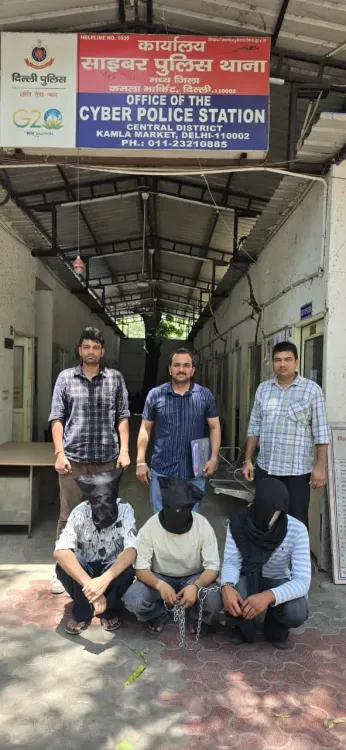
Delhi's Cyber Police Station (Central District) busted an interstate cyber fraud supply network on 19 May 2026 .
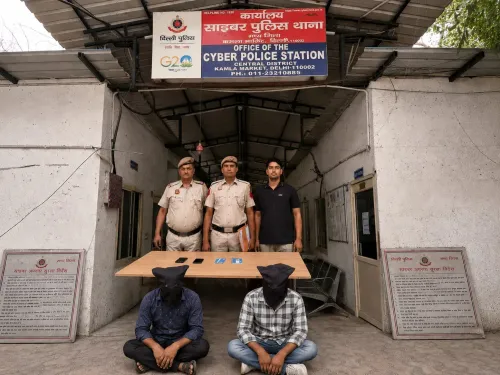
Three accused — Vishesh Singh (22) , Sachin Maurya (22) , and Ashish Sharma (27) — were arrested from Haryana , Punjab , and Himachal Pradesh .
The network supplied bank account kits , SIM cards , and ATM cards to cyber fraudsters operating across multiple states via mule accounts .
The case was triggered by a ₹90,000 fraud on a South Patel Nagar tea seller , whose phone was accessed by a man posing as a Paytm employee.
Four mobile phones were seized; digital evidence includes WhatsApp chats on commission distribution and mule account credentials.
Investigation into additional co-accused and recovery of cheated funds is ongoing.
The Cyber Police Station of Central District, Delhi on Wednesday dismantled an interstate cyber fraud network that was systematically supplying bank account kits, SIM cards, and ATM cards to online fraudsters across multiple states. Three operatives have been arrested from Haryana, Punjab, and Himachal Pradesh in connection with the racket.
How the Fraud Operated
According to police, the network's frontline operatives targeted ordinary citizens by impersonating Paytm employees. Fraudsters approached victims in person, offering to update KYC details or Paytm settings on their mobile phones. Once handed the device, they would covertly transfer funds from the victim's linked bank account.
The case came to light after a tea seller from South Patel Nagar, Delhi, filed a complaint alleging that a man posing as a Paytm representative had visited his stall and, under the guise of a KYC update, fraudulently transferred ₹90,000 from his account. FIR No. 26/2026, dated 15 May 2026, was subsequently registered at PS Cyber Central under Section 318(4) of the Bharatiya Nyaya Sanhita (BNS).
The Investigation Trail
A dedicated team comprising SI Ravinder Kumar, HC Deepak, and HC Jai Kishan was constituted under the supervision of SHO/Cyber Inspector Yograj Dalal and ACP/OPS/Central Padam Singh Rana. Investigators deployed technical surveillance, CCTV footage analysis, bank transaction mapping, digital profiling, and financial trail examination.
The probe revealed that the defrauded amount had been routed through a Punjab National Bank account. Further scrutiny of KYC documents, transaction records, and registered mobile numbers led investigators to Vishesh Singh, a resident of Panchkula, Haryana. Subsequent raids in Panchkula, Zirakpur (Mohali), and adjoining areas of Haryana and Punjab culminated in three arrests on 19 May 2026.
The Arrested Accused
The three accused identified by police are:
Vishesh Singh, 22, of Panchkula, Haryana — allegedly acted as a beneficiary bank account holder and supplied bank account kits and SIM cards to the fraud network.
Sachin Maurya, 22, also of Panchkula — allegedly worked as a facilitator, collecting bank account kits and distributing them to other cyber fraud operatives.
Ashish Sharma, 27, of Kottla Kallan, Una district, Himachal Pradesh — allegedly handled and supplied multiple bank account kits to cyber fraud associates operating across different locations.
Mule Accounts and Digital Evidence
During interrogation, the accused disclosed that they received commissions for arranging and supplying bank accounts, ATM cards, registered SIM cards, and banking credentials — all of which were subsequently used by fraudsters to route and withdraw stolen money. Police described the trio as intermediaries between bank account providers and organised cyber fraud syndicates operating via mule bank accounts.
Analysis of four seized mobile phones uncovered incriminating digital evidence: WhatsApp chats related to bank account supply and commission distribution, contact details of suspected associates, social media communications, and details of mule accounts and SIM cards. Investigators noted that Instagram and WhatsApp were extensively used for coordination and transfer of banking kits within the network.
What Comes Next
Technical examination has reportedly revealed possible links to several other cyber fraud complaints and interstate fraud modules. Police say the investigation into additional co-accused persons, recovery of cheated funds, and identification of further victims is ongoing. This arrest is part of a broader pattern of Delhi Police crackdowns on mule account networks, which have emerged as a critical enabler of India's growing cyber fraud ecosystem.
Point of View
And law enforcement has been slow to disrupt them at scale. The Paytm impersonation angle is also telling: as digital payments deepen into semi-urban and informal economies, fraudsters are exploiting the KYC anxiety that platforms themselves have created. Without coordinated inter-state enforcement and proactive bank-level flagging of mule accounts, arresting intermediaries will remain a game of whack-a-mole.
NationPress
21 Sept 2026
Frequently Asked Questions
What was the Delhi cyber fraud network busted in May 2026?
Delhi Police dismantled an interstate cyber fraud network that supplied bank account kits, SIM cards, and ATM cards to online fraudsters. Three operatives were arrested on 19 May 2026 from Haryana, Punjab, and Himachal Pradesh.
How did the fraudsters target victims?
The accused and their associates impersonated Paytm employees and approached victims in person, offering to update KYC details on their mobile phones. Once they gained access to the device, they fraudulently transferred money from the victim's bank account.
Who are the three arrested accused?
The arrested persons are Vishesh Singh (22) of Panchkula, Haryana; Sachin Maurya (22) also of Panchkula; and Ashish Sharma (27) of Kottla Kallan, Una district, Himachal Pradesh. Each allegedly played a distinct role in procuring and supplying banking credentials to the fraud network.
What is a mule bank account and why does it matter here?
A mule bank account is a legitimate bank account used — often for a commission — to receive and route proceeds of fraud, making it harder to trace the actual fraudsters. In this case, the accused allegedly supplied such accounts, SIM cards, and ATM kits to cyber fraud syndicates across states.
What evidence did police recover?
Police seized four mobile phones containing WhatsApp chats on bank account supply and commission distribution, contact details of suspected associates, and details of mule accounts and SIM cards. The cheated amount was traced to a Punjab National Bank account linked to the accused.