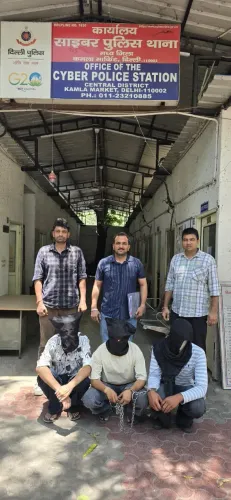
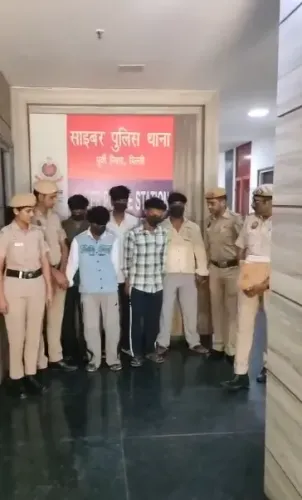
Delhi Cyber Police bust mule account gang, arrest 10 in East District crackdown

Synopsis
Delhi's East District Cyber Police have cracked a multi-state mule bank account supply racket — the kind of invisible infrastructure that keeps cyber fraud running. Ten arrests, 11 POS machines, and a ₹2 lakh Kerala fraud complaint that unravelled an entire organised network spanning Delhi, UP, and Haryana.
Key Takeaways
Delhi Police's East District Cyber Police Station arrested 10 persons on 16 June 2026 for running a mule bank account supply racket.
The case originated from a ₹2 lakh cyber fraud complaint by a woman from Kerala ; the money was traced to a Yes Bank mule account.
Recovered items include 11 POS machines , 27 cheque books , 17 ATM cards , and 12 mobile phones .
Accused span three states — Delhi , Uttar Pradesh , and Haryana — and were produced before the competent court.
The gang targeted unemployed individuals with false employment offers to obtain control of their bank accounts.
Further investigation is underway to trace additional associates and the cyber fraudsters who used the accounts.
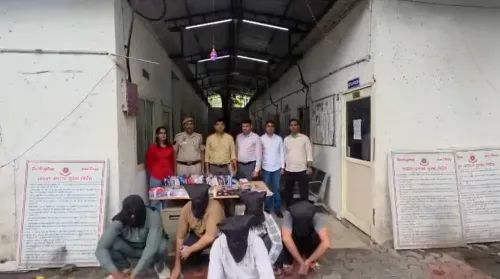
Delhi Police's Cyber Police Station, East District, on Tuesday, 16 June 2026, dismantled a well-organised mule bank account supply racket that had been facilitating cyber frauds across multiple states, arresting ten persons and recovering 11 POS machines, 27 cheque books, 17 ATM cards, and 12 mobile phones. The bust follows a complaint by a woman from Kerala who lost ₹2 lakh to online fraudsters.
How the Racket Came to Light
The case was registered as FIR No. 49/2026 under Sections 112(2) and 318(4) of the Bharatiya Nyaya Sanhita (BNS) at PS Cyber East. Investigators traced the defrauded ₹2 lakh to a mule bank account maintained with Yes Bank, which, on deeper scrutiny, turned out to be part of a larger organised network supplying accounts to cybercriminals for receiving and routing illicit proceeds.
A dedicated investigative team comprising Woman SI Rinki, Head Constables Kuldeep and Paras, and Woman Head Constable Poonam was constituted under the supervision of SHO Inspector Pawan Yadav and the overall guidance of ACP (Operations) Pawan Kumar. The team conducted financial analysis, technical investigations, banking transaction scrutiny, mobile phone examination, and field verification.
The Accused and Their Locations
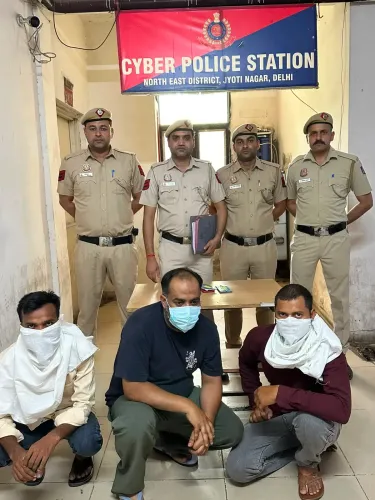
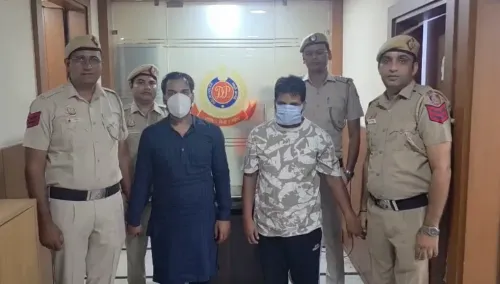
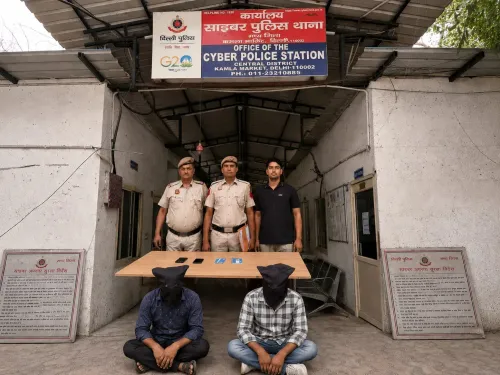
Ten individuals were identified and arrested across Delhi, Uttar Pradesh, and Haryana. Those arrested include Vijay Kumar (31, JJ Colony, Old Seemapuri, Delhi), Pradeep Kumar (42, Azadpur village, Delhi), Gaurav Nahar (22, Ram Nagar, Shahdara, Delhi), Laxman (33, Kewal Park, Azadpur, Delhi), Yatender Kumar (23, Salarpur, Noida, UP), Suraj Yadav (24, village Salarpur, Gautam Budh Nagar, UP), Mukesh (24, Ram Nagar, Karnal, Haryana), Vinesh (37, Chaman Garden, Karnal, Haryana), Gurbaj Singh (27, Shiv Colony, Kaithal Road, Karnal, Haryana), and Aman (27, Gandhi Nagar, Karnal Rural, Haryana). All have been produced before the competent court.
How the Mule Network Operated
According to police, the gang systematically targeted unemployed and financially vulnerable individuals, luring them with false promises of employment and monetary incentives. Victims were persuaded to open bank accounts in their own names, after which the accused seized control by collecting ATM cards, cheque books, registered mobile numbers, and internet banking credentials.
These accounts were then sold to cyber fraudsters operating across various states to receive and route proceeds from online scams. POS machines were used alongside ATM cards and cheque books to transfer and withdraw fraud proceeds, deliberately obscuring the money trail and making it harder for agencies to trace the actual beneficiaries. Notably, this is a method increasingly used by organised cybercrime syndicates to insulate the primary fraudsters from detection.
The initial account holder, Yogendra Kumar, a resident of Janakpuri in Sahibabad, Ghaziabad, disclosed during questioning that he had been introduced to Vijay Kumar, who facilitated the account opening under the guise of an employment opportunity. Upon learning of the illegal use, Yogendra Kumar reportedly distanced himself from the network; appropriate legal action was taken and he was bound over in the case.
Police Advisory and Next Steps
East District Police urged citizens not to share, sell, or allow third parties to use their bank accounts, ATM cards, cheque books, bank-linked mobile numbers, or internet banking credentials, warning that doing so can attract serious legal consequences. Further investigation is underway to identify additional associates, beneficiaries, and the cyber fraudsters who used the supplied accounts.
Point of View
While significant, is a node, not the source. The real perpetrators who commissioned these accounts remain at large, and the investigation's own disclosure that 'further probe is underway' signals how far up the chain Delhi Police has yet to go. The recurring pattern of unemployed youth being recruited as unwitting account holders points to a structural vulnerability: financial desperation is being industrialised by organised crime. Until banks implement stricter real-time behavioural monitoring of newly opened accounts, arresting the mules will remain a game of whack-a-mole.
NationPress
22 Sept 2026
Frequently Asked Questions
What is a mule bank account and how was it used in this case?
A mule bank account is a legitimate bank account controlled by criminals to receive and route proceeds of fraud, keeping the actual fraudsters hidden. In this case, the gang convinced vulnerable individuals to open accounts in their own names and then handed over all credentials — ATM cards, cheque books, and internet banking access — which were sold to cyber fraudsters operating across India.
What triggered the Delhi Cyber Police investigation?
The investigation began after a woman from Kerala filed a cyber fraud complaint. Police traced the defrauded ₹2 lakh to a Yes Bank mule account registered under FIR No. 49/2026 at PS Cyber East, which then led them to uncover the larger supply network.
Who are the ten people arrested and where are they from?
The ten accused are from Delhi, Uttar Pradesh, and Haryana. They include Vijay Kumar, Pradeep Kumar, Gaurav Nahar, and Laxman from Delhi; Yatender Kumar and Suraj Yadav from Uttar Pradesh; and Mukesh, Vinesh, Gurbaj Singh, and Aman from Karnal and Kaithal districts of Haryana.
What items were recovered during the operation?
Police recovered 11 POS machines, 27 cheque books belonging to various banks, 17 ATM cards, and 12 mobile phones — all believed to have been used to operate mule accounts and facilitate the withdrawal and transfer of cyber fraud proceeds.
What should citizens do to avoid becoming mule account holders?
Delhi Police have advised citizens never to share, sell, or allow others to use their bank accounts, ATM cards, cheque books, bank-linked mobile numbers, or internet banking credentials. Doing so — even under the pretext of employment offers — can result in serious criminal liability under the Bharatiya Nyaya Sanhita.