Bhupender Yadav: Cabinet clears NCRPB plan to phase out old trucks, buses in NCR
Synopsis
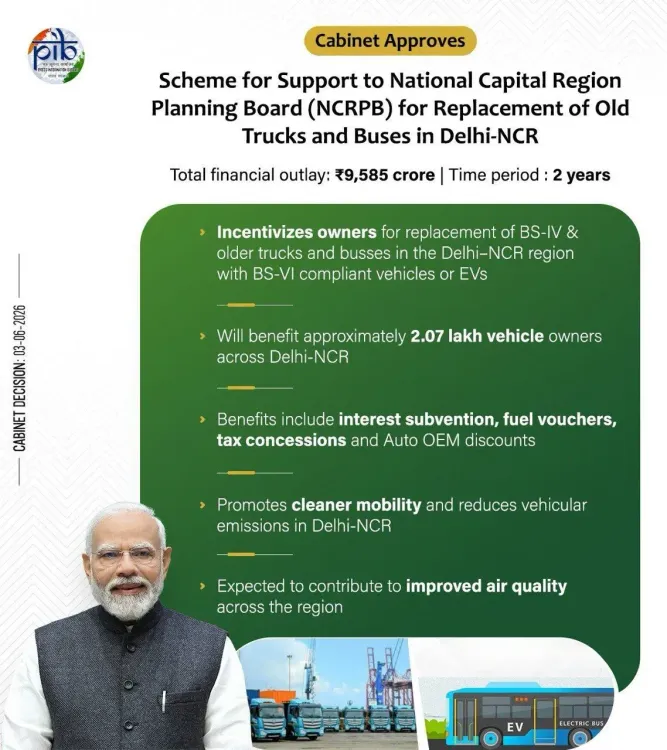
Union Environment Minister Bhupender Yadav has announced Union Cabinet approval for NCRPB-backed support to phase out ageing trucks and buses across Delhi-NCR over two years, framing the move as a push to cut vehicular emissions, improve air quality and accelerate adoption of cleaner mobility solutions in the capital region.
Key Takeaways
Union Cabinet has approved support for NCRPB to phase out ageing trucks and buses in Delhi-NCR.
The initiative is structured as a two-year programme focused on cutting vehicular emissions.
Bhupender Yadav linked the decision to the goal of cleaner air and sustainable transport.
The measure builds on the National Clean Air Programme (2019), BS-VI norms (2020) and the 2021 Vehicle Scrappage Policy.
NCRPB routing allows coordinated action across Delhi, Haryana, Uttar Pradesh and Rajasthan districts in the NCR.
Roll-out guidelines, outlay and eligibility criteria are yet to be detailed publicly.
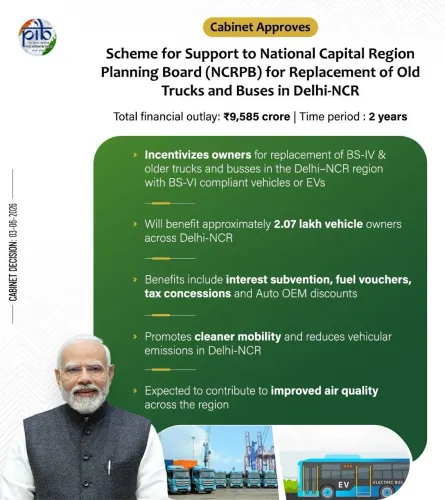
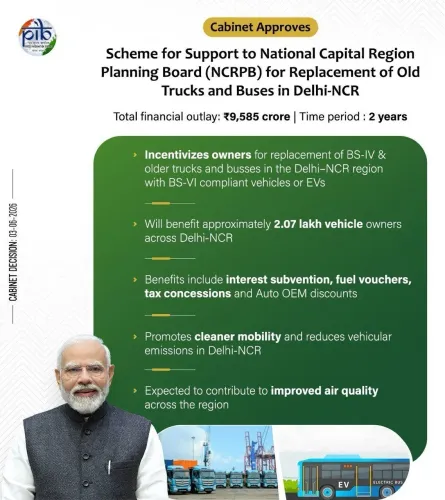
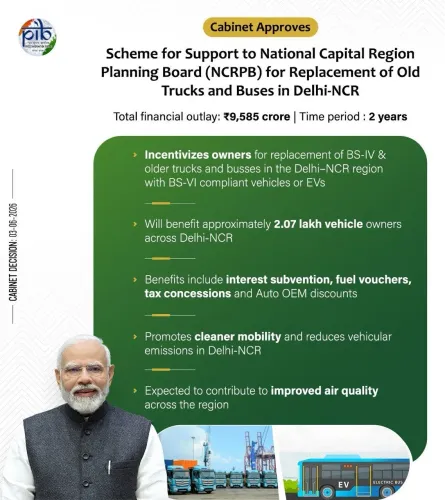
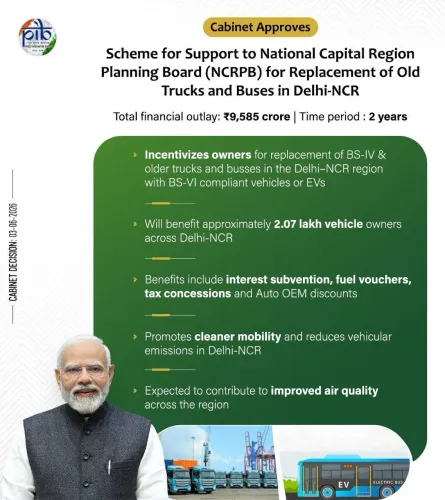
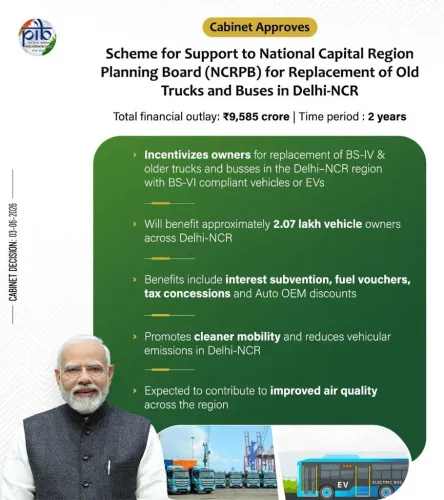
Union Environment Minister Bhupender Yadav announced on June 3, 2026 that the Union Cabinet has approved support for the National Capital Region Planning Board (NCRPB) to enable the phased replacement of ageing trucks and buses across the Delhi-NCR region. The minister framed the two-year initiative as a step towards 'cleaner air and sustainable transport', linking it to the broader push to cut vehicular emissions in the capital region.
In his post, Yadav said the decision was taken 'under the visionary leadership of PM Shri Narendra Modi ji' and would 'help reduce vehicular emissions, improve air quality, and promote the adoption of cleaner and greener mobility solutions, paving the way for a healthier and more sustainable future'.
Context
The Delhi-NCR airshed is consistently ranked among the most polluted urban regions in the world, with vehicular exhaust, crop residue burning and industrial activity identified as the dominant contributors. Heavy-duty diesel trucks and ageing buses are flagged in successive source-apportionment studies as outsized emitters of particulate matter and nitrogen oxides.
Routing the programme through the NCRPB — the statutory body that coordinates infrastructure and environmental planning across Delhi and the adjoining districts of Haryana, Uttar Pradesh and Rajasthan — allows the Centre to align fleet replacement with cross-state transport corridors rather than confining action to Delhi alone.
Policy backdrop
The Cabinet decision sits within a decade-long arc of central interventions on air quality. The National Clean Air Programme, launched in 2019, set reduction targets for particulate pollution across 131 non-attainment cities, including Delhi. Nationwide BS-VI emission norms came into force in April 2020, tightening standards for new vehicles sold in India.
The Vehicle Scrappage Policy, announced in the 2021 Union Budget, created a framework for retiring older commercial vehicles through fitness tests and fiscal incentives. The latest NCRPB-routed programme extends those tools into a time-bound, region-specific replacement push for trucks and buses operating in and through the capital region.
It also dovetails with the wider national pivot to cleaner mobility under schemes such as FAME and various state-level electric vehicle policies, where bus fleets have emerged as an early focus for electrification.
Stakeholders and impact
Truck and bus operators in the NCR are the primary parties affected, with the prospect of accelerated retirement of older fleets balanced against the cost of acquiring newer, cleaner vehicles. Operators in inter-state freight corridors that pass through the region are likely to weigh the programme against existing scrappage incentives and lending conditions.
For residents of Delhi and adjoining urban centres such as Gurugram, Noida, Ghaziabad and Faridabad, the stated payoff is lower exposure to tailpipe emissions, particularly during the winter months when the NCR routinely records severe air-quality readings. State transport undertakings that run public bus fleets stand to benefit if the support is calibrated to cover heavy-duty replacements.
What's next
Detailed roll-out guidelines, the financial outlay routed through the NCRPB and eligibility criteria for vehicle replacement will determine the programme's reach. Quarterly air-quality data covering PM2.5 and NOx across NCR monitoring stations over the two-year window will be the most visible test of impact.
The decision signals that the Centre intends to keep treating fleet renewal as a primary lever for NCR air-quality management, complementing — rather than replacing — measures aimed at agricultural burning, construction dust and industrial emissions.
Point of View
The Cabinet is signalling that the capital's airshed must be governed at a regional scale, with trucks transiting through neighbouring states brought into the same regulatory net. The framing also stitches the move into Modi-era continuity on clean air — from NCAP to BS-VI to scrappage — rather than presenting it as a standalone intervention. The real test will be disbursement speed and whether monitoring stations register measurable PM2.5 and NOx declines within the two-year window.
NationPress
19 Oct 2026
Frequently Asked Questions
What did the Union Cabinet approve for Delhi-NCR?
The Union Cabinet has approved support for the National Capital Region Planning Board (NCRPB) to enable the phased replacement of ageing trucks and buses across the Delhi-NCR region, as announced by Union Environment Minister Bhupender Yadav.
How long will the NCR truck and bus replacement programme run?
The initiative is structured as a two-year programme aimed at reducing vehicular emissions and accelerating the shift to cleaner mobility in the Delhi-NCR region.
Why is NCRPB being used to implement the scheme?
NCRPB is the statutory body that coordinates infrastructure and environmental planning across Delhi and adjoining districts of Haryana, Uttar Pradesh and Rajasthan, making it suited to manage a region-wide fleet replacement effort that spans state boundaries.
How does this fit with India's earlier air pollution measures?
It builds on the National Clean Air Programme launched in 2019, the nationwide BS-VI emission norms enforced from April 2020 and the Vehicle Scrappage Policy announced in the 2021 Union Budget, extending those tools into a targeted NCR push.
Who will be affected by the phased replacement of old trucks and buses?
Truck and bus operators running ageing fleets in and through the NCR are most directly affected, while residents of Delhi, Gurugram, Noida, Ghaziabad and Faridabad are the intended beneficiaries through cleaner air.