CM Rekha Gupta Flags Delhi's Infrastructure Push in Year One
Synopsis
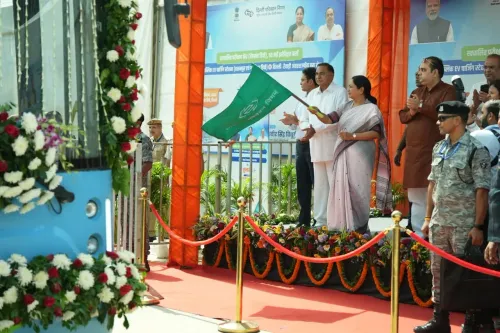
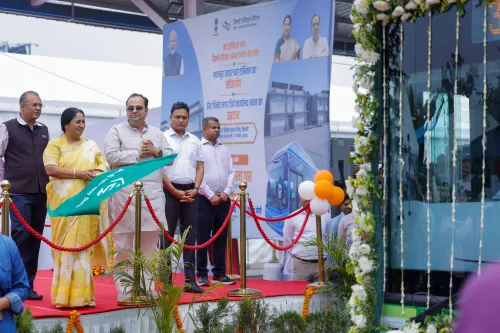
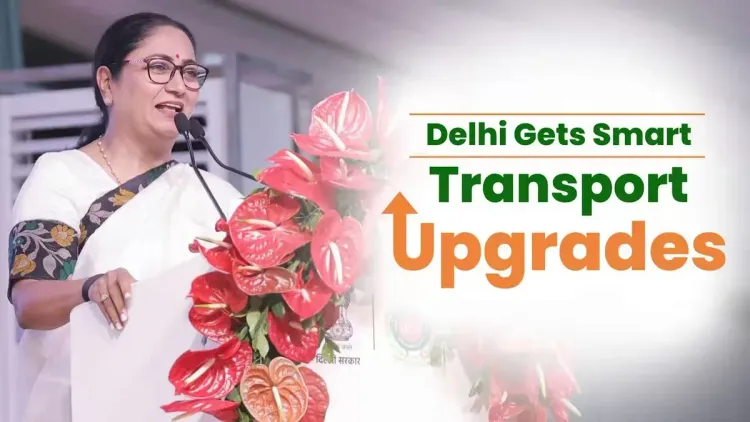
Delhi Chief Minister Rekha Gupta marked her government's first anniversary on 7 July 2026 by inaugurating an automated vehicle testing station in Nand Nagri capable of checking 72,000 vehicles a year, three new electric bus depots, and laying the foundation stone of a high-security prison in Narela.
Key Takeaways
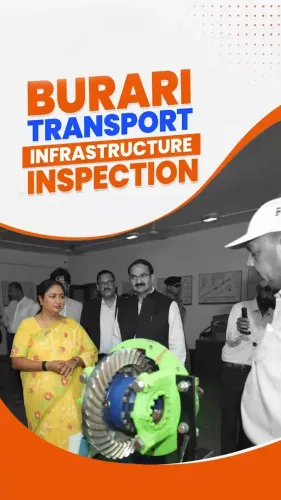
Automated Testing Station inaugurated in Nand Nagri will conduct fully automated fitness checks on up to 72,000 vehicles annually .
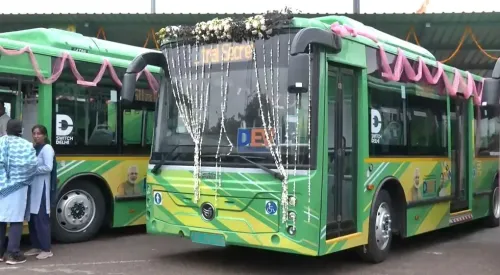
Three new electric bus depots were commissioned on 7 July 2026 , taking the total modern bus depots and terminals opened in the past year to seven .
All seven new bus depots are equipped with EV infrastructure , supporting Delhi's electric bus fleet expansion under the Delhi EV Policy 2020 .
Foundation stone laid for a high-security prison in Narela , aimed at strengthening the capital's correctional and security infrastructure.
CM Rekha Gupta framed the announcements as a one-year account of her government's delivery record, using the hashtags #ViksitDelhi and #MissionGreenDelhi .
Delhi Chief Minister Rekha Gupta on Tuesday, 7 July 2026 highlighted a clutch of infrastructure milestones completed in her government's first year, citing a new automated vehicle testing station, three electric bus depots, and the foundation-laying of a high-security prison in Narela as evidence of accelerated urban development under the Viksit Delhi agenda.
Context
Posting in Hindi on X, CM Gupta credited voters for the pace of change, writing — 'The power of your one vote has given Delhi a new speed of development in the past one year.' The post listed four discrete infrastructure deliveries, framing them as a first-anniversary account of her administration's promises kept. The hashtags #ViksitDelhi and #MissionGreenDelhi signal alignment with both the state government's branding and the broader national Viksit Bharat infrastructure narrative.
Policy Backdrop
The electric bus depot additions build on the Delhi Electric Vehicle Policy 2020, which set binding targets for fleet electrification and supporting charging infrastructure across the capital. The Delhi Transport Corporation (DTC), the state agency managing bus operations, has been working to expand EV-ready depot capacity over several budget cycles. The post states that three new electric bus depots were inaugurated on 7 July, bringing the total number of modern bus depots and terminals commissioned in the preceding year to seven, all equipped with EV infrastructure.
The Automated Testing Station in Nand Nagri — described as Delhi's most advanced — is designed to conduct fully automated fitness checks on up to 72,000 vehicles annually, addressing long-standing concerns about manual inspection irregularities and road safety compliance. Automated testing stations form part of a central government push to standardise vehicle fitness certification nationwide. The National Electric Mobility Mission Plan 2013 provided the original central framework within which both EV promotion and associated testing infrastructure have since evolved.
Stakeholders and Impact
Delhi commuters stand to benefit most directly from expanded EV bus depot capacity, which supports faster induction of electric buses and more reliable services across routes. Vehicle owners across the capital — particularly commercial fleet operators — will be affected by the automated testing mandate at Nand Nagri, where the shift from manual to machine-driven fitness assessment is expected to reduce processing time and curb corruption at inspection centres.
The foundation-laying of a high-security prison in Narela addresses a separate but equally pressing urban governance concern: overcrowding and security gaps in the capital's existing correctional infrastructure. Law enforcement agencies and the judiciary have flagged Delhi's prison capacity as a systemic pressure point. The Narela project mirrors a national trend of high-security jail modernisation undertaken by multiple states since the mid-2010s.
What's Next
The phased commissioning timeline for the Narela High Security Prison and the expansion of additional EV depot capacity are expected to feature prominently in the 2026-27 Delhi municipal budget cycle. The government's use of the #MissionGreenDelhi tag suggests further green-mobility announcements are likely as the administration builds toward its second year. Analysts will watch whether the automated testing station model is replicated in other high-density zones beyond Nand Nagri, and whether the seven depots commissioned so far translate into measurable increases in electric bus frequency on Delhi's busiest corridors.
Point of View
And to a law-and-order constituency that BJP has historically prioritised. Anchoring the messaging in voter agency — 'your one vote' — is a standard BJP mobilisation frame, but its use here also pre-empts opposition claims that the administration has been slow to act. The broader pattern fits the national 'Viksit Bharat' arc, where state-level BJP governments are incentivised to show infrastructure velocity ahead of the next electoral cycle.
NationPress
6 Oct 2026
Frequently Asked Questions
What is the new automated testing station in Nand Nagri Delhi?
Delhi's automated testing station in Nand Nagri is a state-of-the-art facility designed to conduct fully automated vehicle fitness checks on up to 72,000 vehicles every year, replacing manual inspection processes to improve accuracy and reduce delays.
How many electric bus depots does Delhi have now after the July 2026 inauguration?
Delhi inaugurated three new electric bus depots on 7 July 2026. According to CM Rekha Gupta's post, seven modern bus depots and terminals equipped with EV infrastructure have been commissioned in the preceding one year.
What is the Narela high-security prison project in Delhi?
The Narela high-security prison is a new correctional facility whose foundation stone was laid on 7 July 2026 by the Delhi government. It is intended to strengthen the capital's security infrastructure and address overcrowding in existing jails.
What is Delhi's Viksit Delhi and Mission Green Delhi initiative?
'Viksit Delhi' and 'Mission Green Delhi' are branding frameworks used by the BJP-led Delhi government to describe its urban development and green-mobility agenda, aligned with the national 'Viksit Bharat' push for sustainable infrastructure.
Who is Rekha Gupta and when did she become Delhi Chief Minister?
Rekha Gupta is a BJP leader who serves as Delhi Chief Minister. Her government completed one year in office around July 2026, which she marked with a series of infrastructure inauguration events across the capital.