CM Rekha Gupta Thanks PM Modi for Green Delhi Push
Synopsis
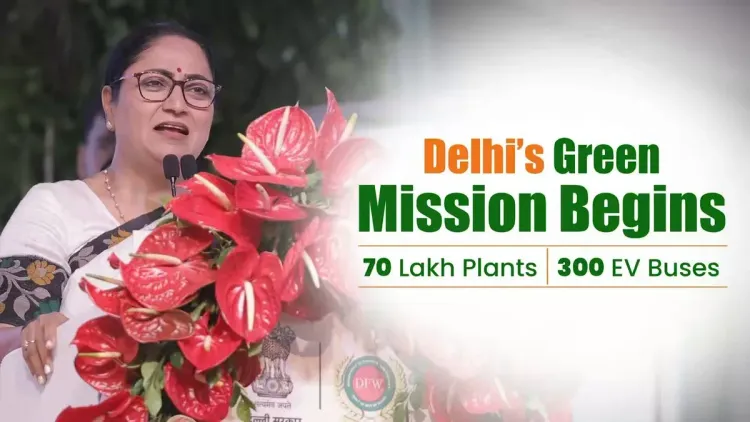
Delhi Chief Minister Rekha Gupta thanked PM Modi and Home Minister Amit Shah on 7 July 2026 for launching a 70-lakh tree plantation drive and deploying 300 new electric buses in Delhi, framing both as milestones in the capital's push for green growth and clean transport.
Key Takeaways
Delhi CM Rekha Gupta publicly credited PM Narendra Modi and Home Minister Amit Shah for two new environment initiatives in the capital.
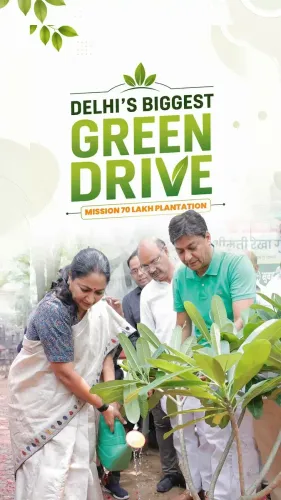
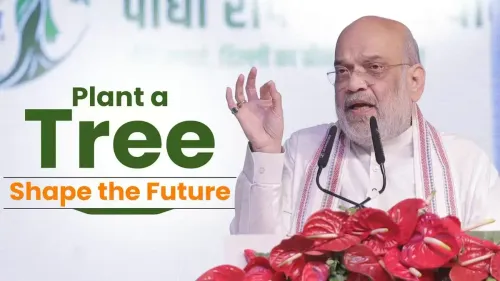
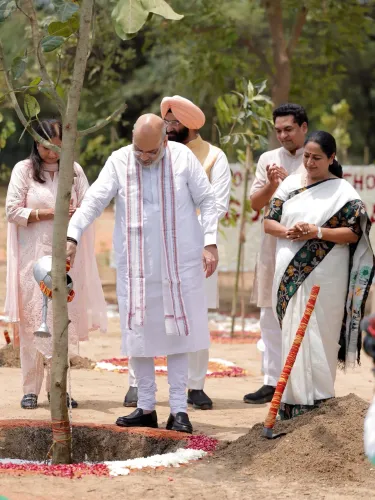
A 70-lakh (7 million) sapling plantation drive has been launched in Delhi under the national Ek Ped Maa Ke Naam campaign.
300 new electric buses have been added to Delhi's public transport network to reduce vehicular emissions.
The initiatives align with the central government's FAME-II scheme and the National Mission for a Green India .
The announcement underscores close policy coordination between the BJP-led Delhi government and the Union government.
Rollout timelines and sapling survival rates will be key metrics to watch in subsequent official reports.
Delhi Chief Minister Rekha Gupta on Tuesday, 7 July 2026, publicly thanked Prime Minister Narendra Modi and Union Home Minister Amit Shah for two major initiatives aimed at greening the capital — a 70-lakh tree plantation drive and the addition of 300 new electric buses to Delhi's public transport fleet.
Context
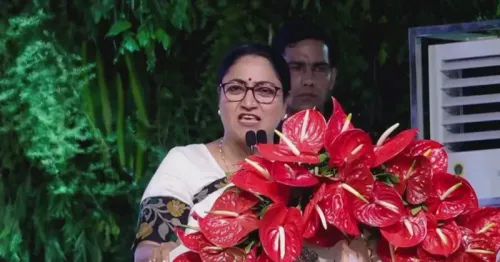
Posting on X in Hindi, CM Gupta credited PM Modi's 'doordarshi netritva' (visionary leadership) and Home Minister Shah's 'satat margdarshan' (continuous guidance) for propelling Delhi forward on two fronts: green cover expansion and clean public transport. She conveyed gratitude on behalf of all Delhi residents, tagging the initiatives under #MissionGreenDelhi and #EkPedMaaKeNaam.
The post marks a formal acknowledgement by the city's administration of central government support — significant given that Delhi, as a Union Territory, relies heavily on coordination between the elected state government and the Union Home Ministry for major policy rollouts.
Policy Backdrop
The Ek Ped Maa Ke Naam campaign is a nationally driven afforestation initiative associated with PM Modi, encouraging tree plantation across states as part of broader climate commitments. Delhi's participation in the drive, with a stated target of 70 lakh (7 million) saplings, represents one of the larger urban plantation targets under the campaign.
On the electric mobility front, the addition of 300 electric buses builds on a pattern of central funding for EV adoption in high-density cities. The FAME-II scheme, extended from 2019, provided structured central financing for electric bus procurement in cities including Delhi, targeting a reduction in vehicular emissions — a chronic problem for the capital.
The National Mission for a Green India, part of the National Action Plan on Climate Change approved in 2014, set long-term targets for expanding forest and tree cover, providing the policy lineage within which drives like #MissionGreenDelhi are positioned.
Stakeholders and Impact
Delhi commuters stand to benefit most directly from the 300 new electric buses, which would add zero-emission capacity to a city whose air quality routinely breaches safe limits, particularly in winter months. Residents in areas with low green cover may see localised environmental benefits if the 70-lakh plantation target translates into sustained survival rates for saplings.
The announcement also carries political weight: with BJP now governing Delhi after years in opposition at the state level, crediting central leadership publicly reinforces the alignment between the state and Union governments — a contrast to the frequent friction that marked the previous administration's relationship with the Centre.
What's Next
Attention will now turn to implementation timelines — specifically when the 300 electric buses will be inducted into service and what monitoring mechanisms will track sapling survival rates from the 70-lakh plantation drive. Municipal and transport department reports in the coming months will be the primary indicators of on-ground progress.
If both initiatives deliver at scale, they could position Delhi as a benchmark for coordinated centre-state urban environment policy — a model other BJP-governed states may seek to replicate ahead of national climate review cycles.
Point of View
Crediting the Centre loudly is also a way of demonstrating that the state-Centre friction of the previous era is over. Whether the 70-lakh plantation and 300-bus targets hold up under scrutiny will determine how durable this messaging proves to be.
NationPress
6 Oct 2026
Frequently Asked Questions
What is the 70-lakh tree plantation drive in Delhi?
It is a large-scale afforestation initiative launched in Delhi under the national Ek Ped Maa Ke Naam campaign, targeting the planting of 70 lakh (7 million) saplings to expand the capital's green cover.
How many new electric buses has Delhi received?
Delhi has received 300 new electric buses as part of efforts to expand clean public transport and reduce vehicular emissions in the city.
What is the Ek Ped Maa Ke Naam campaign?
Ek Ped Maa Ke Naam is a national tree plantation campaign associated with PM Narendra Modi , encouraging afforestation across India as part of the country's climate and green cover commitments.
What is Mission Green Delhi?
Mission Green Delhi is an initiative by the Delhi government to enhance the capital's green cover and environmental quality, with the 70-lakh plantation drive being one of its key components.
Why is Amit Shah involved in Delhi's environment policy?
As Union Home Minister , Amit Shah oversees administration in Delhi as a Union Territory, making the Home Ministry a key coordinating body for major infrastructure and environment policy in the capital.