CM Rekha Gupta Welcomes 300 E-Buses, 3 Depots for Delhi
Synopsis
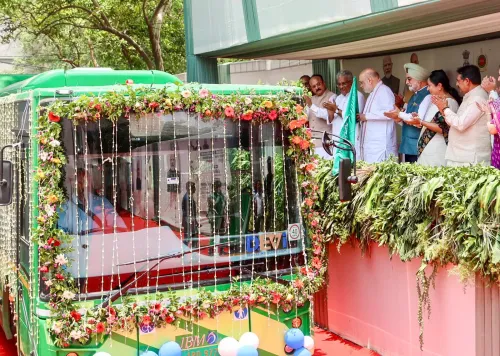
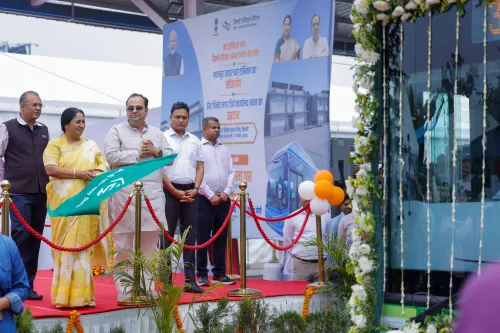
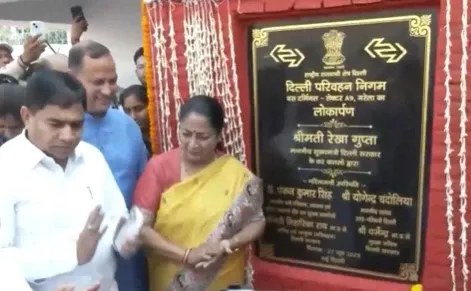
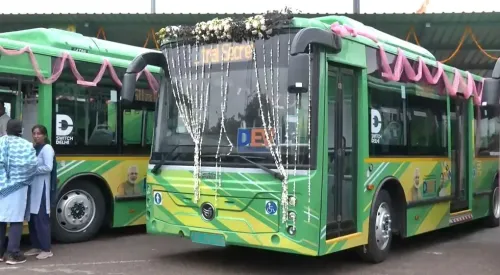
Union Home Minister Amit Shah gifted Delhi 300 electric buses, 3 EV bus depots, and a modern automated testing station at Nand Nagri, while e-laying the foundation of the Narela High Security Prison. Delhi CM Rekha Gupta called the announcements a milestone in building a clean, safe, and self-reliant capital.
Key Takeaways
300 new electric buses were announced for Delhi's public transport fleet by Union Home Minister Amit Shah on 7 July 2026 .
Three state-of-the-art electric bus depots will support the expanded EV fleet with dedicated charging and maintenance infrastructure.
A modern automated testing station at Nand Nagri was inaugurated to streamline vehicle fitness certification in the capital.
The e-foundation stone of the Narela High Security Prison was laid, marking the start of a major correctional facility upgrade in north Delhi.
The event was attended by Union Environment Minister Bhupendra Yadav , Union MoS Harsh Malhotra , and Lieutenant Governor Taranjit Singh Sandhu , reflecting central-UT coordination.
The announcements align with Mission Green Delhi and India's broader FAME-II -backed electric mobility push.
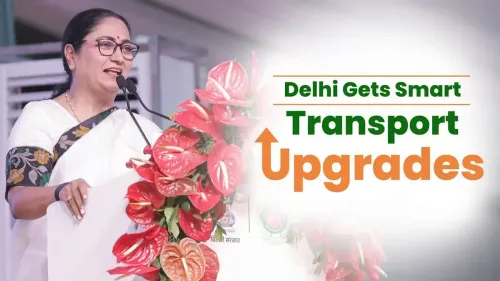
Delhi Chief Minister Rekha Gupta on Tuesday, 7 July 2026, hailed a cluster of infrastructure announcements made by Union Home Minister Amit Shah for the capital, calling them a decisive step toward a cleaner, safer, and self-reliant Delhi. The package includes 300 new electric buses, three state-of-the-art electric bus depots, a modern automated testing station at Nand Nagri, and the e-foundation-laying of the Narela High Security Prison.
Context
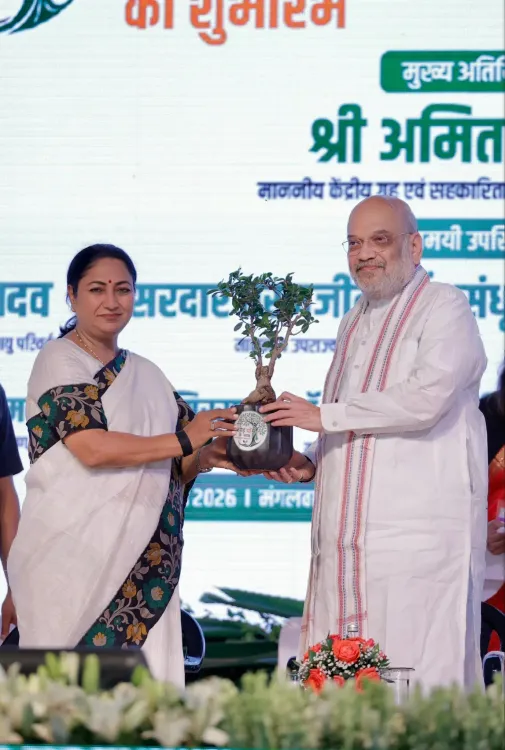
Posting on X, CM Gupta wrote that under the guidance of Prime Minister Narendra Modi and the leadership of Home Minister Amit Shah, the resolve of a 'Viksit Delhi' (developed Delhi) is steadily reaching new heights. She described the day's announcements as direct proof of 'far-sighted leadership, strong resolve, and an unwavering commitment to public service.' The event was also attended by Union Environment Minister Bhupendra Yadav, Delhi BJP president and Union Minister of State Harsh Malhotra, and Lieutenant Governor Taranjit Singh Sandhu, alongside Delhi government ministers and elected representatives.
The simultaneous presence of central ministers, the Lieutenant Governor, and the elected state government at a single launch underscores the coordinated model of governance that has characterised Delhi's infrastructure rollout since the BJP came to power in the Union Territory.
Policy Backdrop
The induction of electric buses into Delhi's public transport fleet fits within India's broader electric mobility agenda, which gained formal shape with the National Electric Mobility Mission Plan and the FAME-II scheme launched in 2019. FAME-II extended central funding support to state transport undertakings — including Delhi Transport Corporation (DTC) — for procuring electric buses, making the Centre a direct financial partner in fleet modernisation.
The three new electric bus depots address a longstanding infrastructure gap: without dedicated charging and maintenance facilities, large-scale EV bus operations remain operationally constrained. The automated testing station at Nand Nagri is designed to streamline vehicle fitness certification, reducing manual bottlenecks in the capital's transport regulatory chain.
The Narela High Security Prison project reflects a parallel push to modernise correctional infrastructure in Delhi, a domain that falls under central oversight given the city's Union Territory status. Similar high-security facility upgrades have been undertaken in other Union Territories as part of a national prison modernisation drive.
Stakeholders and Impact
Delhi commuters stand to be the most immediate beneficiaries. The addition of 300 electric buses to the DTC fleet is expected to expand capacity on existing corridors while cutting tailpipe emissions — a significant concern in a city that consistently records among the worst air quality indices in the country. Mission Green Delhi, referenced in the post's hashtags, aligns these transport investments with the city's air-quality commitments.
For residents near Narela in north Delhi, the high-security prison project signals an upgrade to facilities that have historically faced overcrowding challenges. The e-foundation-laying format — a virtual groundbreaking — also reflects the administration's preference for rapid, digitally-enabled project initiations that allow simultaneous participation across venues.
What's Next
The phased induction of the 300 electric buses into active DTC service will be the most visible near-term milestone, with fleet integration and route assignments expected to unfold over the coming months. Progress on the three bus depots — including land readiness and construction timelines — will determine how quickly the full fleet can be operationalised. The Narela High Security Prison is a longer-horizon project, with construction milestones likely to be tracked over the next 12 to 18 months. The convergence of green mobility and security infrastructure in a single announcement suggests the Delhi government intends to maintain a high tempo of project launches through the remainder of 2026.
Point of View
Through the Home Ministry and the Lieutenant Governor's office, acts as the primary engine of capital expenditure in the Union Territory, with the elected government playing a welcoming and amplifying role. By bundling green mobility assets with a high-security prison project, the BJP signals that its 'Viksit Delhi' pitch spans both quality-of-life improvements and law-and-order modernisation — two planks with distinct voter appeal. The scale of the electric bus addition, if inducted on schedule, could meaningfully shift Delhi's public transport narrative ahead of any future electoral cycle. The template — central minister inaugurates, CM credits PM and Home Minister — is also a studied display of political hierarchy that reinforces Modi and Shah's visibility in the capital.
NationPress
6 Oct 2026
Frequently Asked Questions
How many electric buses did Delhi get from the central government in July 2026?
300 new electric buses were announced for Delhi on 7 July 2026 by Union Home Minister Amit Shah , as part of a broader infrastructure package for the capital.
What is the Narela High Security Prison project in Delhi?
The Narela High Security Prison is a new correctional facility planned for Narela in north Delhi. Its e-foundation stone was laid by Home Minister Amit Shah on 7 July 2026, with construction expected to be tracked over the next 12 to 18 months.
What is the automated testing station at Nand Nagri?
The modern automated testing station at Nand Nagri is a facility designed to streamline vehicle fitness certification in Delhi, reducing manual processing and improving efficiency in the capital's transport regulatory system.
What is Mission Green Delhi?
Mission Green Delhi is the Delhi government's initiative to reduce air pollution and improve environmental quality in the capital, with electric bus induction and green mobility infrastructure forming key components of the programme.
What is the FAME-II scheme and how does it relate to Delhi's electric buses?
FAME-II (Faster Adoption and Manufacturing of Electric Vehicles, Phase II), launched in 2019 , provides central government funding support to state transport undertakings for procuring electric buses. Delhi's DTC has been among the beneficiaries, making the Centre a financial partner in the capital's fleet modernisation.