Modi's New Zealand visit first in 40 years as India-NZ FTA reshapes bilateral ties
Synopsis
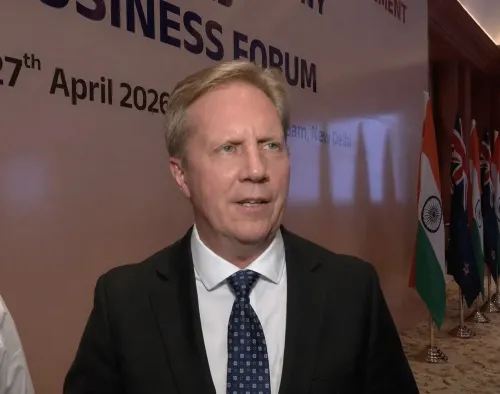
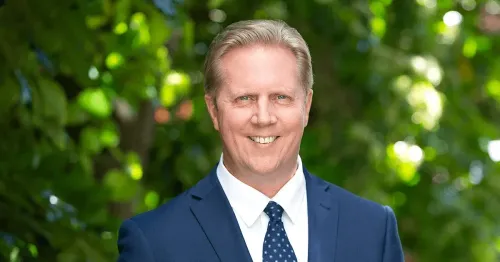
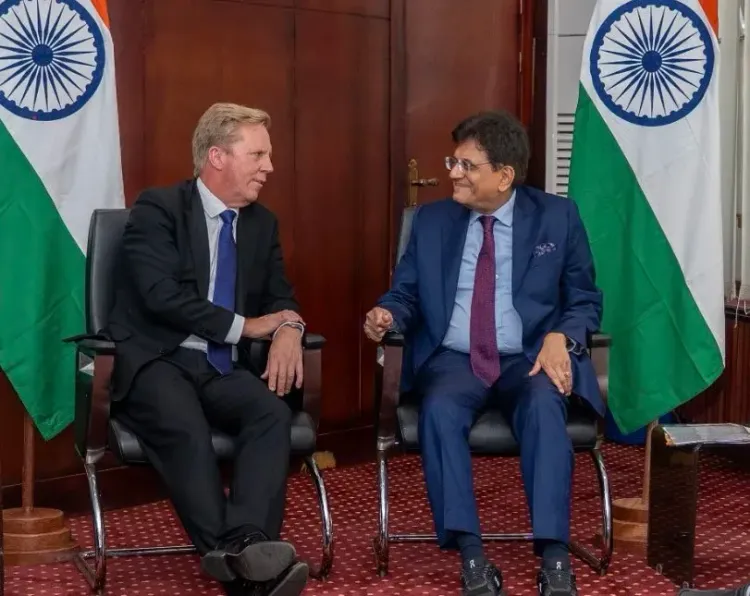
For the first time in 40 years, an Indian Prime Minister is heading to New Zealand — and this visit lands just months after the two countries signed a landmark FTA. New Zealand's Trade Minister Todd McClay calls it a transformative moment, flagging UPI expansion, agri-tech partnerships, and deepening air connectivity as the real deliverables behind the diplomatic pageantry.
Key Takeaways
PM Modi's upcoming visit to New Zealand is the first by an Indian Prime Minister in 40 years .
The visit follows the signing of the India-New Zealand Free Trade Agreement (FTA) , described by NZ Trade Minister Todd McClay as one of the highest-quality agreements either country has negotiated.
The Indian diaspora is New Zealand's third-largest ethnic community ; a major public celebration is planned in Auckland .
Air New Zealand is opening three offices in India ; Air India and Air New Zealand have sought approval to cooperate on flights.
McClay indicated openness to UPI expanding to New Zealand, calling the country's regulatory framework a manageable challenge.
New Zealand's agri-tech expertise is flagged as a key area where the FTA can support Indian farm productivity and farmer incomes.
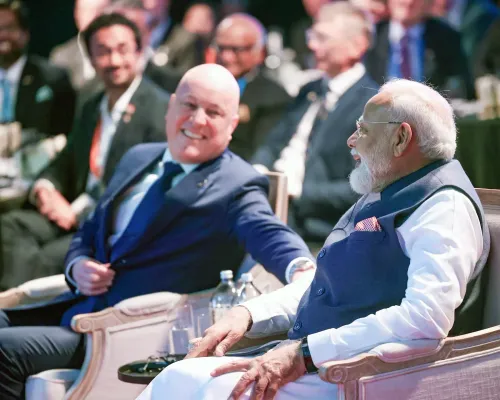
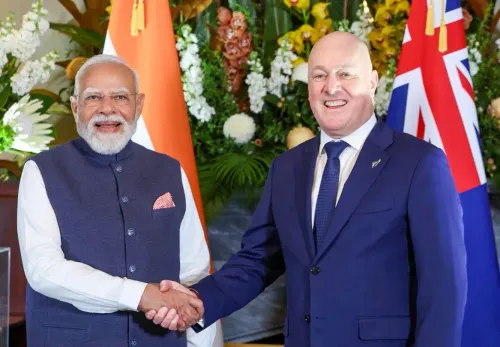
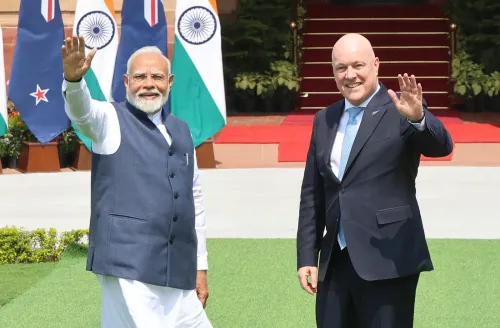
Prime Minister Narendra Modi's upcoming visit to New Zealand will mark the first trip by an Indian Prime Minister to the country in 40 years, arriving just months after both nations signed the India-New Zealand Free Trade Agreement (FTA) — a development that New Zealand's Minister for Trade and Investment, Todd McClay, described as a transformative moment in the bilateral relationship.
A Historic Visit at a Pivotal Moment
McClay said the visit carries deep significance, not just diplomatically but also for the Indian diaspora, which he identified as New Zealand's third-largest ethnic community. A major public celebration is planned in Auckland, New Zealand's largest city, where the Indian-New Zealand community is expected to turn out in large numbers to welcome the Prime Minister.
The visit follows the signing of the India-New Zealand FTA, which McClay described as 'one of the highest-quality trade agreements either of our countries has negotiated.' He said the agreement creates a trusted, rules-based framework that gives businesses the confidence to forge long-term partnerships across sectors including information and communications technology, agriculture, critical minerals, and MSMEs.
Digital Cooperation and UPI's Potential Role
McClay indicated openness to India's digital public infrastructure entering the New Zealand market. On the possibility of UPI expanding to New Zealand, he said the country's open economy and regulatory framework do not pose a fundamental barrier. He noted that as investment flows deepen on both sides, conversations around platforms such as UPI and other digital innovations are expected to grow. The FTA, he said, creates greater certainty that underpins such discussions.
Navigating Geopolitical Uncertainty Together
Asked about the impact of Middle East tensions and rising oil prices on global supply chains, McClay expressed hope for a peaceful resolution through dialogue while underscoring that the FTA provides a buffer of certainty for bilateral trade. He pointed to strengthening air connectivity as a concrete signal: Air New Zealand is opening three offices in India to promote connectivity, while Air India and Air New Zealand have sought regulatory approval to cooperate on flights between the two countries.
India's Economic Transformation and Agriculture Opportunity
McClay praised India's sustained economic growth, attributing it to large-scale domestic investment in roads, infrastructure, universities, and airports. He described India as 'a confident nation that is increasingly engaging with the rest of the world.' He specifically highlighted agriculture as a sector where New Zealand's agri-tech expertise could support India's efforts to improve farm productivity and raise farmers' incomes — an area the FTA is expected to facilitate.
Modi's Standing on the Global Stage
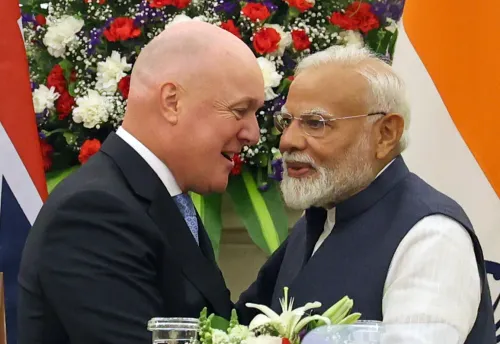
McClay assessed Prime Minister Modi as a respected and trusted figure among world leaders, drawing a parallel with New Zealand Prime Minister Christopher Luxon in describing both as representatives of constructive, responsible leadership. He said New Zealanders' enthusiasm upon Modi's arrival would reflect that standing. This comes amid a broader diplomatic push by India to deepen ties with Pacific and Oceania nations as part of its evolving foreign policy posture.
The visit is expected to set the tone for a new chapter in India-New Zealand relations, with the FTA providing the structural foundation for deeper engagement across trade, technology, and people-to-people ties.
Point of View
But the substance beneath it is worth tracking. The India-New Zealand FTA is a genuinely ambitious agreement, and the 40-year gap in prime ministerial visits underscores how underdeveloped this relationship has been relative to its potential. The real test will be whether the FTA's high-quality framing translates into measurable trade volumes — India's FTAs have a mixed record on utilisation. The UPI conversation is the most forward-looking signal here: if New Zealand becomes an early Pacific adopter, it could accelerate India's push to internationalise its digital payment stack, a strategic objective that goes well beyond bilateral trade.
NationPress
8 Oct 2026
Frequently Asked Questions
When is PM Modi visiting New Zealand and why is it historic?
PM Modi's upcoming visit to New Zealand will be the first by an Indian Prime Minister in 40 years. It follows the signing of the India-New Zealand Free Trade Agreement and is expected to include a major public celebration in Auckland, where the Indian diaspora forms the country's third-largest ethnic community.
What is the India-New Zealand Free Trade Agreement?
The India-New Zealand FTA is a bilateral trade agreement described by NZ Trade Minister Todd McClay as one of the highest-quality agreements either country has negotiated. It creates a rules-based framework covering trade, technology, agriculture, critical minerals, and MSMEs, and is intended to give businesses the confidence to build long-term partnerships.
Could UPI expand to New Zealand?
New Zealand's Trade Minister Todd McClay indicated openness to UPI operating in New Zealand, saying the country's open economy and regulatory framework do not pose a fundamental barrier. He said deepening investment flows between the two countries would drive conversations around digital platforms like UPI.
How are India and New Zealand strengthening air connectivity?
Air New Zealand is opening three offices in India to promote bilateral connectivity, while Air India and Air New Zealand have sought regulatory approval to cooperate on flights between the two countries. McClay cited this as a concrete sign of strengthening ties at a time of global geopolitical uncertainty.
How does New Zealand see India's economic growth?
McClay described India as a transformed, confident, and upwardly mobile nation, attributing its sustained growth to large-scale domestic investment in infrastructure, education, and connectivity. He identified agriculture as a key sector where New Zealand's agri-tech expertise can support Indian farm productivity under the FTA framework.