Pradhan Highlights India's Civilisational Diplomacy in Asia
Synopsis
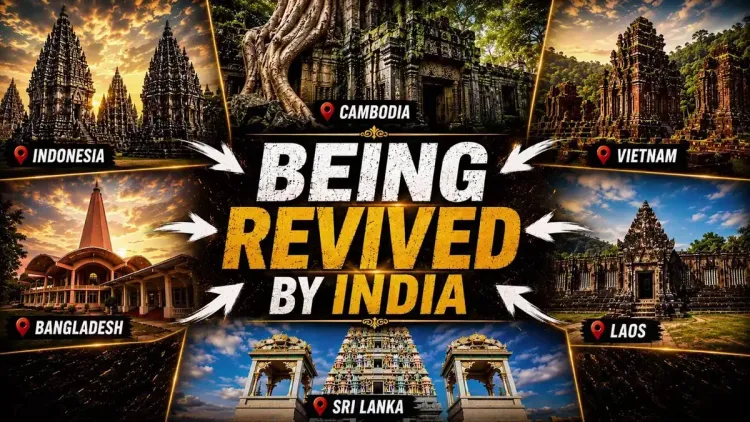
Union Education Minister Dharmendra Pradhan on 10 July 2026 championed India's civilisational diplomacy, calling cultural partnerships across Asia a testament to India's commitment to heritage stewardship and regional cooperation — echoing the country's Act East Policy and decades of conservation collaboration.
Key Takeaways
Dharmendra Pradhan posted on 10 July 2026 highlighting India's civilisational diplomacy and cross-border cultural partnerships in Asia.
India's Act East Policy (upgraded 2014) includes cultural and people-to-people ties as a formal pillar alongside economic engagement.
India has a 1980 agreement with Cambodia for restoration of the Ta Prohm temple , a landmark model of heritage diplomacy.
The 2015 India-ASEAN Cultural Cooperation Agreement formalised joint heritage preservation and museum exchange across ten nations.
The Indian Council for Cultural Relations (ICCR) , founded in 1950 , is the primary government body for international cultural outreach.
The next ASEAN-India Summit is a key moment to watch for new heritage memoranda of understanding.
Union Education Minister Dharmendra Pradhan on Friday, 10 July 2026, invoked India's tradition of civilisational diplomacy, underlining the country's commitment to preserving shared Asian heritage through cross-border cultural partnerships aimed at future generations.
Context
Posting on X, Pradhan described the effort as 'India's civilisational diplomacy in action,' framing ongoing cultural partnerships as a testament to India's 'enduring commitment to cultural stewardship, regional cooperation and civilisational continuity.' The post, accompanied by a video, did not name a specific country or site but carried unmistakable references to India's long record of heritage collaboration across Asia.
The minister's remarks come at a moment when India has been systematically deepening people-to-people and cultural ties with its eastern neighbourhood as part of a broader soft-power strategy that complements economic and security engagement.
Policy Backdrop
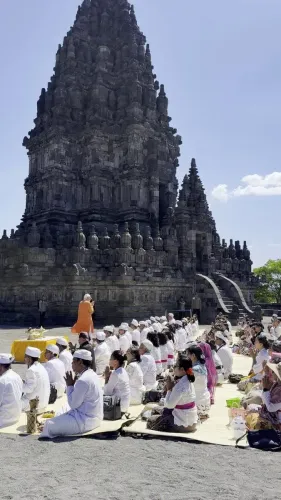
India's Act East Policy, upgraded in 2014, placed cultural and people-to-people connectivity alongside trade and investment as pillars of engagement with Southeast and East Asia. The policy gave fresh momentum to heritage diplomacy that India had practised for decades — most notably through a 1980 agreement with Cambodia for the restoration of the Ta Prohm temple, a project that became a defining model for Indian conservation assistance abroad.
A 2015 India-ASEAN Cultural Cooperation Agreement formalised joint work on heritage preservation and museum exchanges across the ten-nation ASEAN bloc. The Indian Council for Cultural Relations (ICCR), founded in 1950, remains the government's primary institutional vehicle for such international cultural outreach, coordinating exchange programmes, fellowships and restoration initiatives across the region.
Successive governments have paired temple restoration projects, Buddhist circuit development and museum collaborations with strategic outreach, highlighting shared Buddhist, Hindu and maritime heritage to build goodwill across Asia without overt geopolitical framing.
Stakeholders and Impact
The beneficiaries of India's civilisational diplomacy span a wide arc — from heritage bodies and local communities at restored sites to governments across Southeast and East Asia that share historical and cultural linkages with the subcontinent. For India, such partnerships serve as a durable channel of goodwill that outlasts shifts in bilateral political relations.
As Education Minister, Pradhan has sought to weave cultural-educational linkages into India's international engagement, positioning institutions and knowledge systems as instruments of soft power alongside the more traditional tools of aid and trade. His ministry oversees several programmes that connect Indian universities and cultural bodies with counterparts abroad.
What's Next
Observers will watch the next ASEAN-India Summit and any forthcoming East Asia Summit cultural ministerial meeting for the announcement of new heritage memoranda of understanding or joint conservation projects. Pradhan's statement signals that cultural stewardship will remain a visible plank of India's regional diplomacy, with the Education Ministry playing an increasingly active role in projecting that agenda internationally.
Point of View
Not a ceremonial afterthought — fitting a government that has consistently paired temple restoration and Buddhist circuit projects with its Act East outreach. By invoking 'civilisational continuity,' the minister frames India's soft-power effort in terms that resonate domestically while projecting a non-threatening identity abroad. The timing, absent a named event or country, suggests this may be a prelude to a formal announcement — possibly ahead of an ASEAN or East Asia Summit engagement. It also reflects a broader BJP pattern of grounding foreign policy in cultural and historical narratives rather than purely transactional frameworks.
NationPress
8 Oct 2026
Frequently Asked Questions
What is India's civilisational diplomacy?
India's civilisational diplomacy refers to the use of shared cultural, religious and historical heritage — particularly Buddhist, Hindu and maritime links — to build goodwill and partnerships across Asia, complementing economic and security ties.
What did Dharmendra Pradhan say about India's cultural partnerships?
On 10 July 2026, Pradhan described ongoing Asian cultural partnerships as 'India's civilisational diplomacy in action,' calling them a testament to India's commitment to cultural stewardship, regional cooperation and civilisational continuity.
What is India's Act East Policy and how does it relate to culture?
India's Act East Policy, upgraded in 2014, formally includes cultural and people-to-people connectivity alongside trade and investment as pillars of engagement with Southeast and East Asia, providing the framework for heritage diplomacy initiatives.
What is the role of ICCR in India's cultural diplomacy?
The Indian Council for Cultural Relations (ICCR), founded in 1950, is the government's primary agency for international cultural exchange, coordinating heritage preservation, fellowships and museum collaborations across Asia and beyond.
What is India's heritage cooperation agreement with ASEAN?
India and ASEAN signed a Cultural Cooperation Agreement in 2015 that formalised joint work on heritage preservation and museum exchanges across the ten-member Southeast Asian bloc.