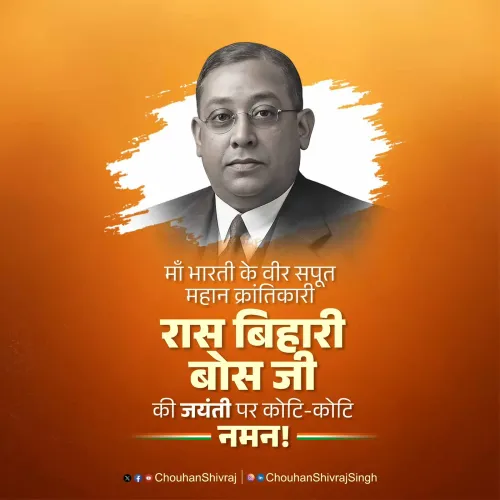
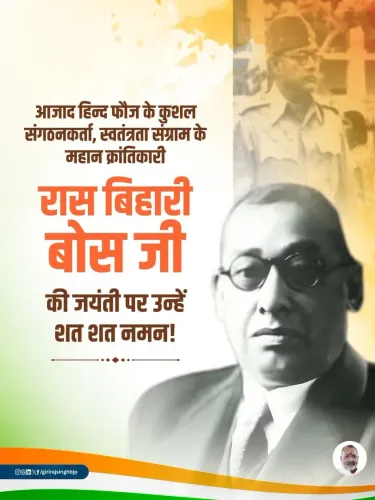
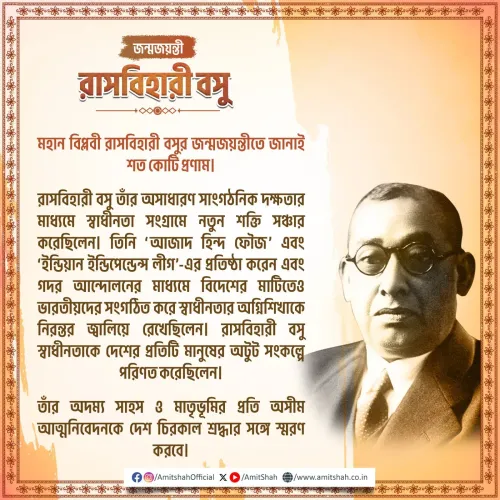
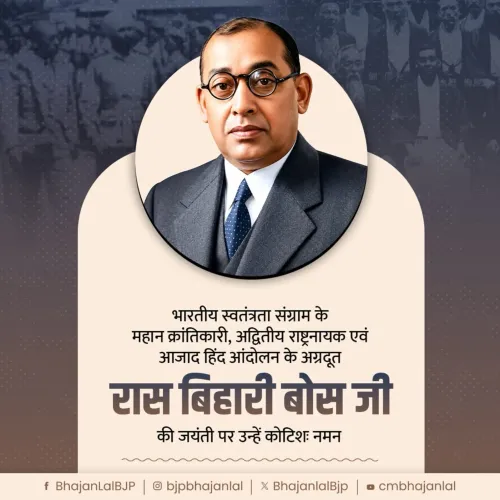
CM Nayab Saini pays tribute to Rash Behari Bose on birth anniversary
Synopsis
Haryana Chief Minister Nayab Singh Saini paid tribute to revolutionary freedom fighter Rash Behari Bose on his birth anniversary on 25 May 2026, honouring his role in organising the Azad Hind Fauj and championing Indian independence on the global stage.
Key Takeaways
Haryana CM Nayab Singh Saini paid tribute to Rash Behari Bose on his birth anniversary on 25 May 2026 .
Rash Behari Bose (1886–1945) organised the Azad Hind Fauj in Southeast Asia in 1942 with Japanese support.
In 1943 , Bose transferred INA command to Subhas Chandra Bose at a ceremony in Singapore .
Saini described Bose as having 'strengthened the nation's voice on the world stage through irrefutable arguments and firm resolve.' The tribute aligns with a broader BJP practice of commemorating revolutionary nationalists to foreground the armed-resistance strand of India's freedom movement.
The central government observes Parakram Diwas on 23 January annually to honour the INA legacy.
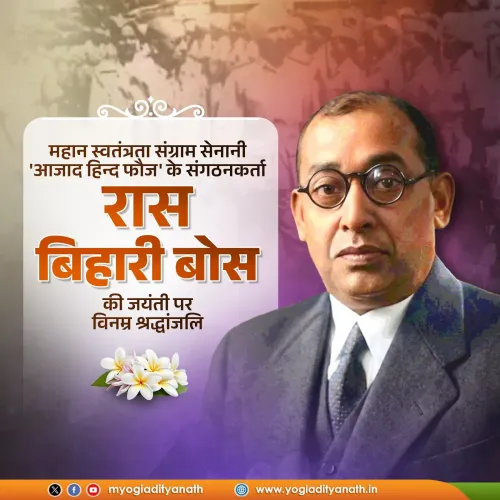
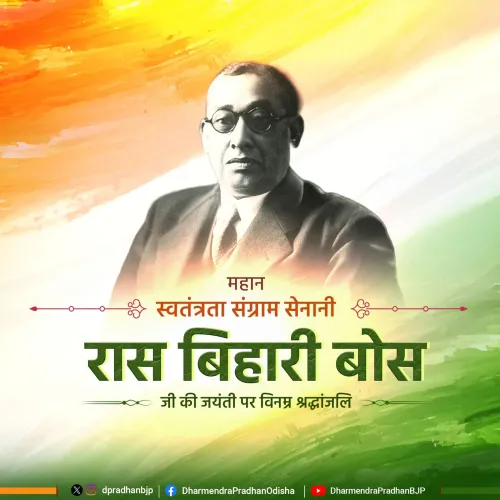
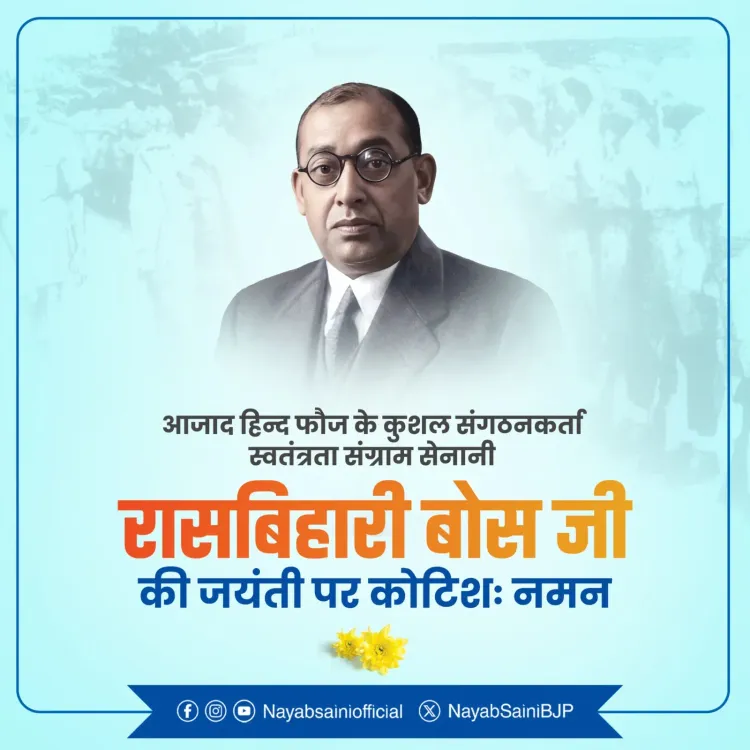
Haryana Chief Minister Nayab Singh Saini on Monday, 25 May 2026, paid tribute to revolutionary freedom fighter Rash Behari Bose on his birth anniversary, honouring his role as a key organiser of the Azad Hind Fauj and a tireless voice for Indian independence on the world stage.
Context
Saini's post, written in Hindi, offered a salute to Bose with the words 'कोटिशः नमन' ('a million salutations'), describing him as a skilled organiser of the Indian National Army and a stalwart of the freedom struggle. The Chief Minister noted that Bose 'strengthened the nation's voice on the world stage through his irrefutable arguments, ideas, and firm resolve' and 'awakened the consciousness of Swaraj and patriotism across the entire nation.'
Saini added that Bose's contribution to national interest and public service 'will always be remembered,' situating the tribute within a broader official acknowledgement of revolutionary nationalists whose stories gained renewed prominence in recent years.
Policy Backdrop
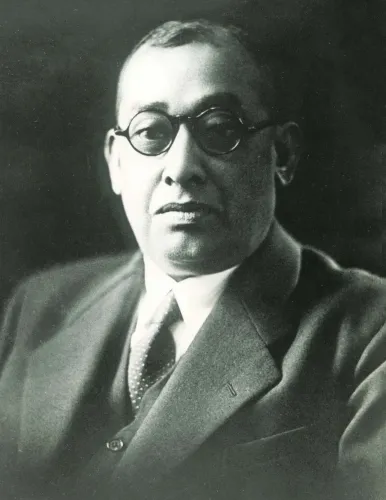
Rash Behari Bose (1886–1945) was one of the most consequential yet lesser-celebrated architects of armed resistance against British rule. After orchestrating the 1912 Delhi Conspiracy Case — a bold attempt on the life of the then Viceroy — he evaded arrest and fled to Japan, where he spent decades building an international network in support of Indian independence.
In 1942, with Japanese backing, he established the Indian Independence League and gave shape to the Azad Hind Fauj (Indian National Army) in Southeast Asia. In 1943, at a landmark ceremony in Singapore, he formally handed over the INA's command to Subhas Chandra Bose, who then led its campaigns in Burma and Northeast India. The INA's legacy is now commemorated annually by the central government through Parakram Diwas on 23 January, the birth anniversary of Subhas Chandra Bose.
Stakeholders and Impact
State-level BJP leaders have made a consistent practice of marking birth and death anniversaries of revolutionary nationalists on social media, foregrounding the armed-resistance strand of the freedom movement alongside figures outside the Congress mainstream. These tributes complement central-government initiatives such as Parakram Diwas and form part of a sustained communication strategy linking contemporary governance to pre-1947 anti-colonial networks.
For Haryana's history educators and nationalist communities, such official acknowledgements serve to keep figures like Rash Behari Bose in public memory. The state's school curriculum and district-level commemorative programmes are spaces where this official recognition can translate into tangible educational outreach.
What's Next
Attention will turn to whether Haryana marks 18 August — Rash Behari Bose's death anniversary — with state or district-level commemorative programmes. Any references to INA history in upcoming Haryana assembly sessions or revisions to the state's school curricula would signal a deeper institutional commitment beyond social-media tributes. The broader pattern of BJP-governed states elevating revolutionary nationalist figures suggests such steps remain a policy possibility worth watching.
Point of View
The post draws an implicit line connecting pre-Independence armed diplomacy to the current government's emphasis on assertive national identity. This is not merely ceremonial: repeated official acknowledgements build the groundwork for curriculum and policy decisions that reshape how the freedom movement is taught and remembered. The consistency of this approach across state capitals signals a coordinated, long-term cultural agenda rather than ad-hoc social media activity.
NationPress
9 Oct 2026
Frequently Asked Questions
Who was Rash Behari Bose and what did he do for Indian independence?
Rash Behari Bose (1886–1945) was an Indian revolutionary who fled to Japan after the 1912 Delhi Conspiracy Case and went on to found the Azad Hind Fauj (Indian National Army) in Southeast Asia in 1942 , later handing its command to Subhas Chandra Bose in 1943 .
Why is Rash Behari Bose's birth anniversary observed?
His birth anniversary is observed to honour his pivotal role in organising armed resistance against British rule from abroad and for building the international network that gave rise to the Indian National Army , a milestone in India's freedom struggle.
What did Haryana CM Nayab Singh Saini say about Rash Behari Bose?
CM Nayab Singh Saini stated that Bose 'strengthened the nation's voice on the world stage through irrefutable arguments, ideas, and firm resolve' and 'awakened the consciousness of Swaraj and patriotism across the entire nation,' offering him 'a million salutations.'
What is the connection between Rash Behari Bose and Subhas Chandra Bose?
The two were not related by blood. Rash Behari Bose founded and led the Azad Hind Fauj before formally transferring its command to Subhas Chandra Bose at a ceremony in Singapore in 1943 , enabling the INA's subsequent campaigns in Burma and Northeast India.
What is Parakram Diwas and how does it relate to the INA?
Parakram Diwas is observed annually on 23 January — the birth anniversary of Subhas Chandra Bose — to commemorate his courage and the legacy of the Indian National Army . The central government instituted the observance in 2021 .