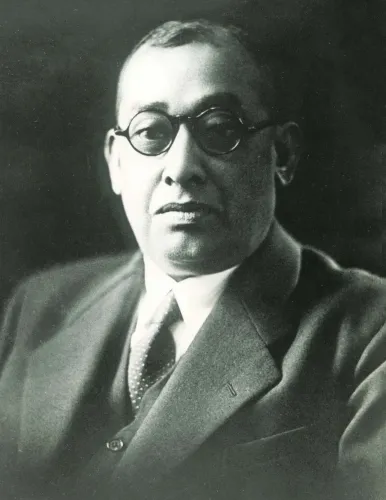
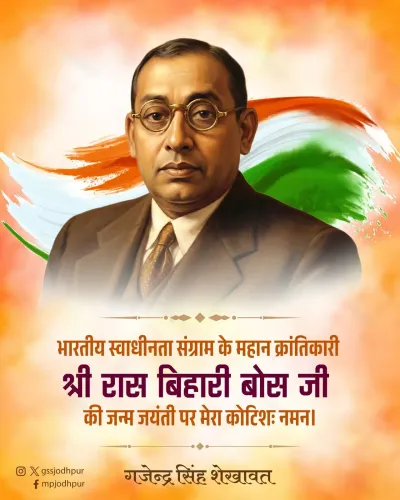
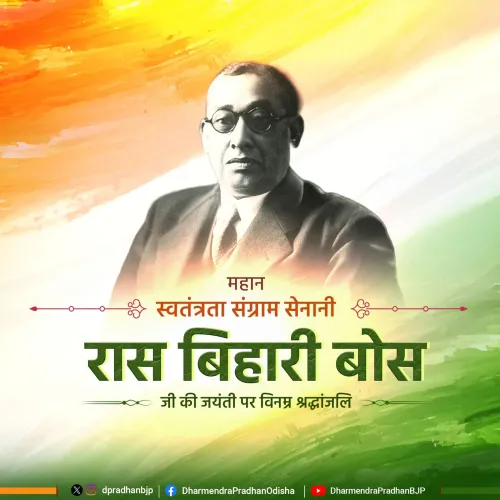
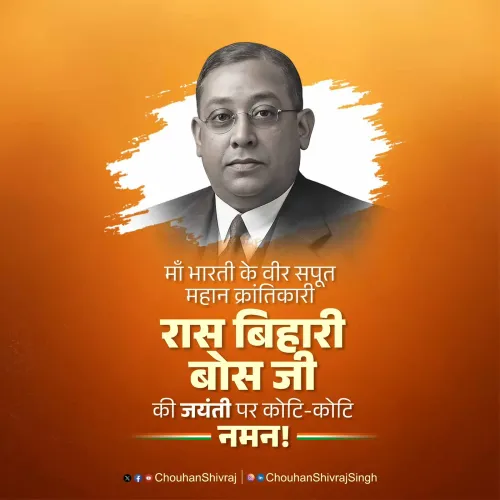
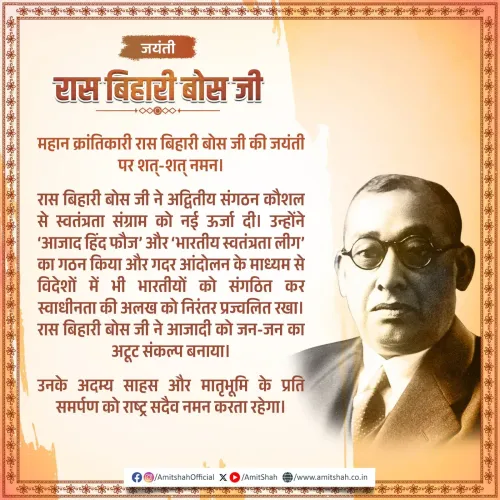
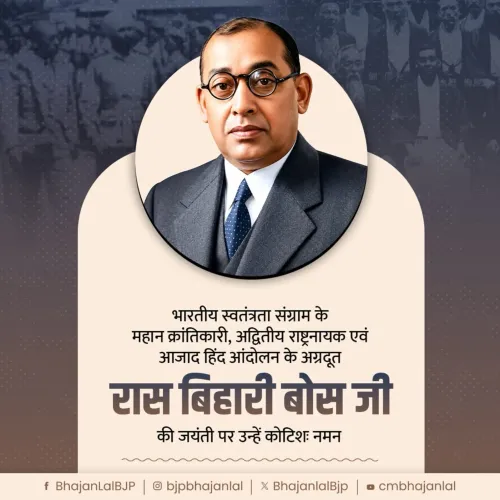
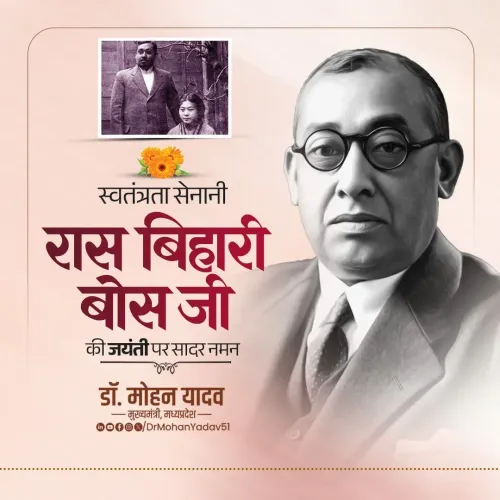
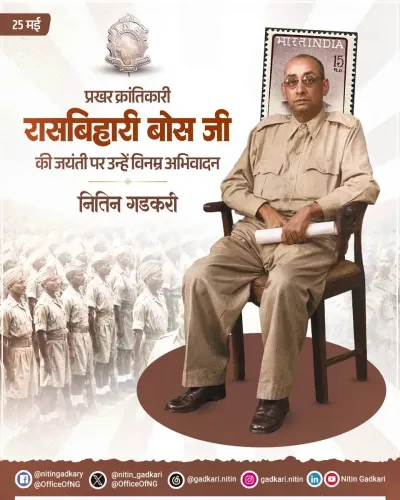
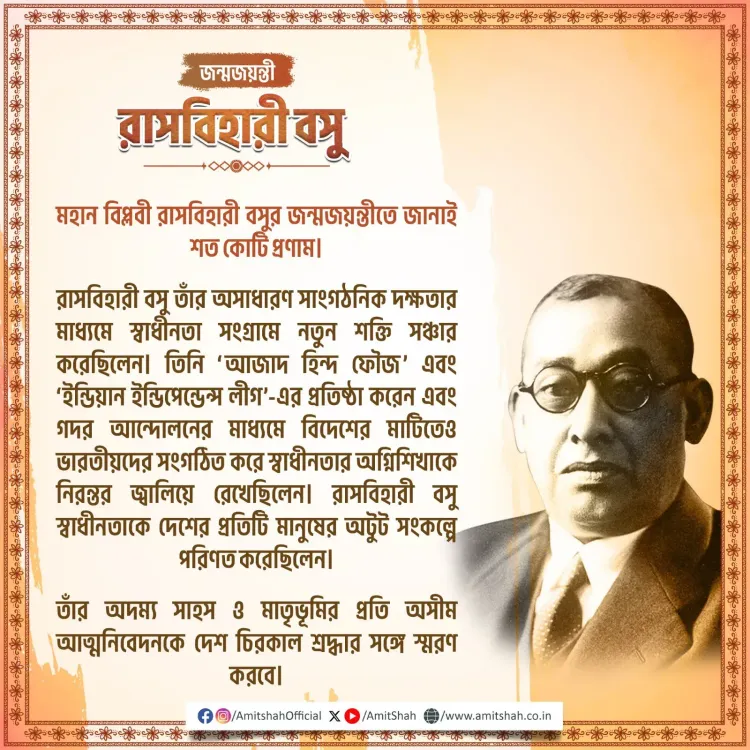
Amit Shah Pays Tribute to Revolutionary Rash Behari Bose on Birth Anniversary
Synopsis
Union Home Minister Amit Shah on 25 May 2026 offered tribute to revolutionary Rash Behari Bose on his birth anniversary, honouring the Bengal-born leader who founded the Azad Hind Fauj and Indian Independence League and kept India's freedom movement alive from Japanese soil.
Key Takeaways
Union Home Minister Amit Shah posted a tribute in Bengali on 25 May 2026 , marking Rash Behari Bose's birth anniversary.
Rash Behari Bose , born in 1886 in Bengal , fled India after the 1912 Delhi Conspiracy Case and continued his revolutionary activities from Japan .
He founded the Azad Hind Fauj (Indian National Army) and the Indian Independence League in 1942 , with Japanese support.
Bose was also associated with the Ghadar movement , which organised Indian diaspora communities in North America and East Asia against British rule.
Shah credited Bose's 'extraordinary organisational ability' with infusing new energy into the independence struggle beyond India's borders.
The tribute is part of a broader official pattern of recognising overseas and revolutionary nationalists from Bengal and the Indian diaspora.
Union Home Minister Amit Shah on Monday, 25 May 2026 paid tribute to revolutionary freedom fighter Rash Behari Bose on his birth anniversary, offering what he described as a hundred crore salutations to the leader who helped organise India's independence struggle from abroad.
Posting in Bengali, Shah wrote: 'মহান বিপ্লবী রাসবিহারী বসুর জন্মজয়ন্তীতে জানাই শত কোটি প্রণাম' ('On the birth anniversary of the great revolutionary Rash Behari Bose, I offer a hundred crore salutations'). He credited Bose's 'extraordinary organisational ability' with infusing new energy into the freedom struggle.
Context
Rash Behari Bose, born in 1886 in Bengal, became one of India's most consequential overseas revolutionaries. He was forced to flee India following the 1912 Delhi Conspiracy Case, in which he was implicated in a bomb attack on the Viceroy's procession. He eventually settled in Japan, from where he continued to organise resistance against British rule for decades.
Shah's post highlighted Bose's role in keeping the 'flame of independence burning continuously even on foreign soil' through the Ghadar movement — an early revolutionary network active among the Indian diaspora in North America and East Asia between approximately 1913 and 1917 that sought the armed overthrow of British rule.
Policy Backdrop
Rash Behari Bose founded the Indian Independence League in 1942 to coordinate Indian expatriate support for independence across Southeast Asia. He also established the first formation of the Azad Hind Fauj (Indian National Army) that same year with Japanese support, before its leadership subsequently passed to Subhas Chandra Bose.
The Government of India has marked birth anniversaries of overseas revolutionaries through official events and postal commemorations since at least the 1970s. Ministerial tributes on social media have become a consistent extension of this tradition, amplifying contributions from Bengal and the Indian diaspora in a broader retelling of the freedom struggle.
Stakeholders and Impact
Shah's tribute is directed at the wider citizenry and the overseas Indian community, both of whom figure as stakeholders in the legacy of diaspora-led revolutionary nationalism. Posts of this nature form part of a sustained official emphasis on freedom fighters who pursued international or armed routes to independence — figures who complement the domestic icons already central to national memory.
The choice to post in Bengali carries its own resonance, acknowledging the linguistic and cultural roots of Rash Behari Bose and signalling recognition of Bengal's outsized contribution to the revolutionary strand of the independence movement.
What's Next
Observers will watch for state-level commemorations or curriculum references around 25 May in coming years, as well as any new memorials, archival releases, or institutional naming decisions tied to the history of the Indian National Army and the Indian Independence League. Shah closed his tribute by affirming that Bose's 'indomitable courage and boundless dedication to the motherland will be remembered by the nation with reverence forever.'
Point of View
Broadening the official canon beyond Gandhian non-violence. Highlighting the Azad Hind Fauj's origins with Rash Behari Bose — rather than exclusively with Subhas Chandra Bose — also adds historical texture to a figure the ruling dispensation has long sought to foreground. Cumulatively, such posts serve as low-friction, high-visibility tools for shaping historical memory among a social-media audience.
NationPress
19 Sept 2026
Frequently Asked Questions
Who was Rash Behari Bose?
Rash Behari Bose was an Indian revolutionary born in 1886 in Bengal who organised armed resistance against British rule. After fleeing India following the 1912 Delhi Conspiracy Case , he settled in Japan and founded both the Azad Hind Fauj and the Indian Independence League in 1942 .
What is the Azad Hind Fauj and who founded it?
The Azad Hind Fauj , also known as the Indian National Army, was first established in 1942 by Rash Behari Bose with Japanese support to fight for India's independence. Leadership of the force later passed to Subhas Chandra Bose .
What was the Ghadar movement?
The Ghadar movement was an early revolutionary network active roughly between 1913 and 1917 among the Indian diaspora in North America and East Asia . It sought the armed overthrow of British rule and was one of the key transnational efforts in India's freedom struggle.
Why did Amit Shah post in Bengali?
Amit Shah posted his tribute in Bengali to acknowledge the linguistic and cultural roots of Rash Behari Bose , who was from Bengal. The choice of language also reflects a broader recognition of Bengal's significant contribution to the revolutionary strand of India's independence movement.
What is the Indian Independence League?
The Indian Independence League was an organisation founded by Rash Behari Bose in 1942 to coordinate support for Indian independence among expatriate communities across Southeast Asia . It worked alongside the Azad Hind Fauj in pursuit of ending British colonial rule.