China builds asteroid early warning system to shield Earth

Synopsis
China is building a ground-and-space asteroid detection network after revealing only 45% of city-killing 140-metre near-Earth asteroids have been found — the most dangerous gap in global planetary defence.
Key Takeaways
China National Space Administration (CNSA) is developing a planetary defence early warning system combining ground telescopes and an orbital satellite constellation.
Only 45 per cent of near-Earth asteroids measuring around 140 metres (460 feet) — large enough to devastate a small country — are believed to have been discovered.
More than 95 per cent of near-Earth asteroids larger than 1 kilometre in diameter, capable of triggering global catastrophes, have already been identified.
Chief scientist Li Mingtao warned that undiscovered mid-size asteroids are 'very faint before their approach' and can arrive from the sun's direction, limiting detection windows.
The announcement was made on 30 June 2026 , the United Nations -designated International Asteroid Day .
No confirmed asteroid collision course with Earth has been identified among objects discovered to date, according to Li .
China is developing a dedicated planetary defence network to detect asteroids on potential collision courses with Earth, according to Li Mingtao, chief scientist at the asteroid monitoring and early-warning research centre under the China National Space Administration (CNSA). The announcement, made on 30 June 2026 — the date the United Nations designates as International Asteroid Day — outlines a hybrid detection architecture combining ground-based telescopes with an orbital satellite constellation.
The Detection Architecture
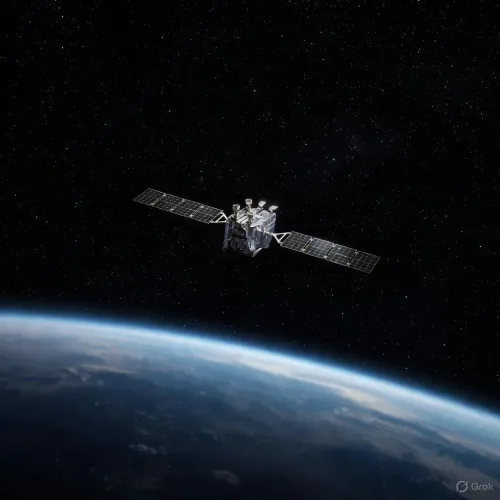
China plans to deploy multiple telescopes across ground stations while simultaneously launching a constellation of satellites into orbit, Li said, as quoted by state-run Science and Technology Daily. The dual-layer approach is designed to maximise sky coverage and reduce blind spots — particularly from asteroids approaching from the direction of the sun, which remain among the hardest to detect in advance.
Why It Matters: The 140-Metre Gap
While more than 95 per cent of near-Earth asteroids larger than 1 kilometre (0.62 miles) in diameter — objects large enough to trigger global catastrophes — have already been identified, the picture for smaller bodies is far less complete. Only about 45 per cent of asteroids measuring around 140 metres (460 feet) across are believed to have been discovered, according to Li. An object of that scale carries enough energy to devastate a small country.
'These undiscovered near-Earth asteroids pose the greatest risk. They are numerous, very faint before their approach and may even suddenly approach from the direction of the sun,' Li said. The warning underscores a well-documented gap in global planetary defence cataloguing that space agencies worldwide are racing to close.
Competitive Backdrop: China vs. NASA
NASA's NEO Surveyor mission, designed specifically to hunt near-Earth objects, is already in development and represents the United States' primary next-generation planetary defence telescope. China's announcement signals that planetary defence is now a domain of active strategic investment for Beijing, sitting alongside its broader space ambitions including a crewed lunar landing and deep-space exploration. None of the asteroids discovered to date are believed to be on a confirmed collision course with Earth, Li noted.
What's Next
No specific launch timeline or budget figure for the warning network was disclosed in Li's remarks. The programme's progress will be closely watched by the international planetary defence community, particularly as China deepens cooperation with the United Nations on space safety frameworks. The degree to which Beijing shares detection data with global partners — or keeps it within national channels — will be a key question as the system matures.
Point of View
But Beijing's choice to highlight it publicly on International Asteroid Day is also a soft-power signal: China as a responsible steward of planetary safety. What mainstream coverage underplays is the data-sharing question — a detection network is only as valuable as the speed and openness with which its alerts reach international deflection planners. Whether CNSA's system feeds into the UN-coordinated International Asteroid Warning Network or operates as a parallel national asset will define its real-world impact.
NationPress
15 Oct 2026
Frequently Asked Questions
What is China's asteroid early warning system?
China is building a planetary defence network that combines multiple ground-based telescopes with a constellation of orbiting satellites to detect near-Earth asteroids before they can threaten Earth . The programme is led by chief scientist Li Mingtao under the China National Space Administration .
How many near-Earth asteroids have been discovered so far?
More than 95 per cent of near-Earth asteroids larger than 1 kilometre in diameter have been identified, but only about 45 per cent of those around 140 metres across — large enough to devastate a small country — are believed to have been found, according to Li Mingtao .
Why are 140-metre asteroids considered the biggest risk?
Asteroids around 140 metres (460 feet) are dangerous because they can cause regional or country-scale devastation, yet are small enough to remain very faint until close approach. Li Mingtao noted they can also approach from the direction of the sun, severely limiting advance detection time.
Is any asteroid currently on a collision course with Earth?
No. None of the asteroids discovered to date are believed to be on a confirmed collision course with Earth , according to Li Mingtao in remarks made on 30 June 2026 .
How does China's system compare to NASA's planetary defence efforts?
NASA is developing the NEO Surveyor space telescope specifically to catalogue near-Earth objects, while China 's programme pairs orbital assets with ground stations. Both programmes target the same detection gap for mid-size asteroids, placing the two space powers in parallel — and potentially competing — efforts on planetary defence.