Shekhawat flags off Delhi–Srinagar–Leh Modball Run
Synopsis
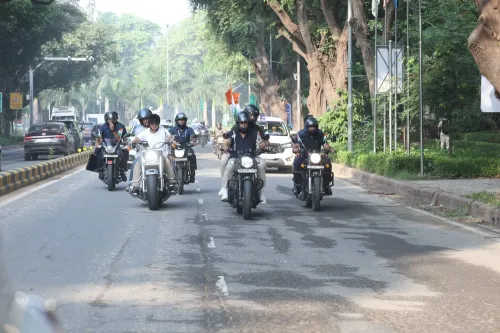
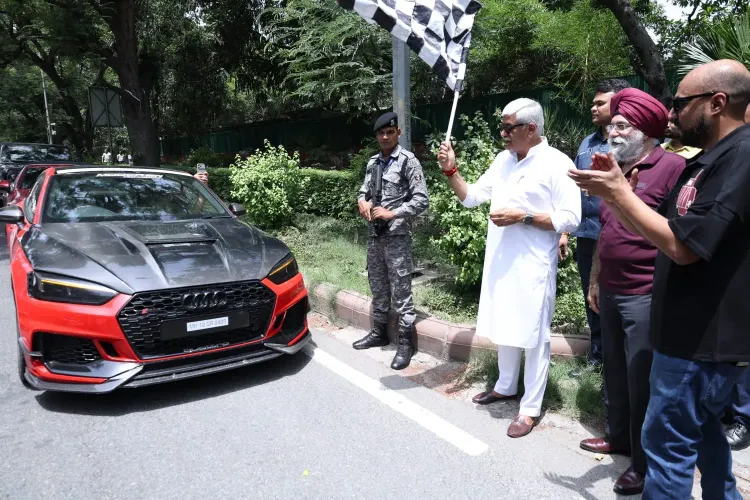
Union Culture and Tourism Minister Gajendra Singh Shekhawat flagged off the Delhi–Srinagar–Leh 'Modball Run' adventure expedition from New Delhi on 16 July 2026, calling it an inspiring effort to cultivate courage, discipline, and national pride among youth while connecting India's diverse geographies.
Key Takeaways
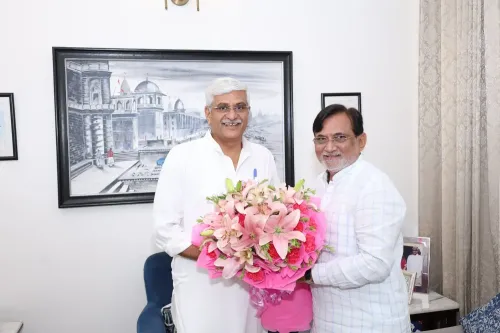
Gajendra Singh Shekhawat , Union Minister of Culture and Tourism, flagged off the Delhi–Srinagar–Leh Modball Run from his official residence in New Delhi on 16 July 2026 .
The expedition route passes through three distinct regions: Delhi , Srinagar (summer capital of Jammu and Kashmir), and Leh (capital of Ladakh).
The campaign aims to foster courage, discipline, national pride, and a spirit of adventure among participating youth.
The initiative aligns with the ministry's Swadesh Darshan scheme and the Ek Bharat Shreshtha Bharat programme, both of which promote national integration through tourism and regional exchange.
The expedition supports domestic tourism and youth outreach in Jammu and Kashmir and Ladakh , building on the post- 2019 administrative reorganisation of the two union territories.
Union Culture and Tourism Minister Gajendra Singh Shekhawat on Thursday, 16 July 2026, flagged off the Delhi–Srinagar–Leh 'Modball Run' adventure expedition from his official residence in New Delhi, launching a campaign aimed at fostering courage, discipline, national pride, and a spirit of adventure among India's youth.
Context
Posting on X in Hindi, Shekhawat described the expedition as 'ek prerak prayas' (an inspiring effort) to connect the country's diverse geographies through a single thread. He wrote that the campaign would encourage in young participants qualities of 'sahas, anushasan, rashtrabhav aur romanch' — courage, discipline, national feeling, and adventure — while wishing all participants a safe, successful, and memorable journey.
The route traverses three distinct regions: the national capital Delhi, the summer capital of Jammu and Kashmir, Srinagar, and the high-altitude union territory headquarters of Leh, Ladakh — a corridor that passes through some of the Himalayas' most challenging terrain.
Policy Backdrop
The Modball Run fits into a broader pattern of Ministry of Tourism and Culture initiatives that blend adventure with national integration messaging. The Swadesh Darshan scheme, launched in 2014–15, had specifically identified Himalayan circuits as priority tourism corridors, investing in infrastructure along routes that include Jammu and Kashmir and Ladakh.
Separately, the Ek Bharat Shreshtha Bharat programme, initiated in 2015, institutionalised cross-regional exchanges to deepen bonds between India's states and union territories. Expeditions such as the Modball Run operationalise that philosophy in an adventure-tourism format, reaching youth demographics that policy documents alone cannot.
The ministry has also leaned into the post-2019 administrative reorganisation of Jammu and Kashmir and Ladakh as a policy opportunity to expand domestic tourism and youth outreach in areas that were previously less accessible to organised programmes.
Stakeholders and Impact
The primary beneficiaries of the Modball Run are the youth participants who undertake the expedition, gaining first-hand exposure to high-altitude geography, cultural diversity, and the logistical discipline that long-distance adventure travel demands. Leh and the surrounding Ladakh region stand to benefit from the visibility and footfall that such campaigns generate for local adventure tourism operators and hospitality providers.
Residents of Srinagar and the Kashmir Valley also stand to gain from the normalisation narrative that organised youth expeditions carry — signalling confidence in the region's safety and connectivity to a wider domestic audience. For the ministry, the campaign reinforces its positioning of adventure tourism as a vehicle for soft national integration.
What's Next
Progress reports from the expedition as it moves through Srinagar and on to Leh will be closely watched by the ministry and adventure tourism stakeholders. Any official assessment or follow-up announcement from the Ministry of Culture and Tourism regarding the campaign's outcomes — participant numbers, route milestones, or plans for future editions — will indicate whether the Modball Run is being institutionalised as a recurring initiative. If successful, it could serve as a template for similar youth-led adventure corridors along India's other border and high-altitude regions.
Point of View
Particularly along the Jammu and Kashmir and Ladakh corridor. By personally flagging off the campaign, Shekhawat lends political visibility to what might otherwise be a routine youth programme, embedding it within the broader BJP government narrative of normalcy and opportunity in the post-2019 reorganised union territories. The alignment with established schemes like Swadesh Darshan and Ek Bharat Shreshtha Bharat suggests the ministry is building an ecosystem of such campaigns rather than treating this as a one-off event. Whether the Modball Run gains institutional permanence will depend on the ministry's follow-through on documentation, outreach, and future editions.
NationPress
15 Oct 2026
Frequently Asked Questions
What is the Modball Run Delhi Srinagar Leh expedition?
The Modball Run is an adventure expedition flagged off by Union Minister Gajendra Singh Shekhawat on 16 July 2026, covering the route from Delhi through Srinagar to Leh, designed to encourage courage, discipline, national pride, and adventure among youth participants.
Who flagged off the Modball Run in 2026?
Union Culture and Tourism Minister Gajendra Singh Shekhawat flagged off the Delhi–Srinagar–Leh Modball Run from his official government residence in New Delhi on 16 July 2026.
What is the purpose of the Modball Run campaign?
The campaign aims to instil qualities of courage, discipline, national feeling, and a spirit of adventure in young participants while also connecting India's diverse geographical regions through a single expedition route.
How does the Modball Run relate to government tourism schemes?
The expedition aligns with the Ministry of Tourism's Swadesh Darshan scheme, which developed Himalayan tourism circuits, and the Ek Bharat Shreshtha Bharat programme, which promotes national integration through cross-regional exchanges.
Why is the Delhi–Srinagar–Leh route significant for Indian tourism?
The route traverses three distinct administrative regions — Delhi, Jammu and Kashmir, and Ladakh — passing through some of the Himalayas' most challenging terrain, making it a high-profile corridor for adventure tourism and national integration messaging.