China-led team builds AI to auto-detect radar-disrupting space hurricanes

Synopsis
A China-led team at Shandong University has built an AI that auto-detects space hurricanes — giant spinning auroras that disrupt radar and satellite signals — using ultraviolet imagery, and has designed it to work directly with the joint China-ESA SMILE satellite.
Key Takeaways
Shandong University -led researchers published a deep-learning space hurricane detection system in the journal Space Weather on May 23, 2026 .
Space hurricanes are massive rotating auroras near Earth's magnetic poles that disrupt radar , radio communications , and satellite signals .
The AI system uses ultraviolet images to automatically identify and locate space hurricanes, replacing slow manual satellite image analysis.
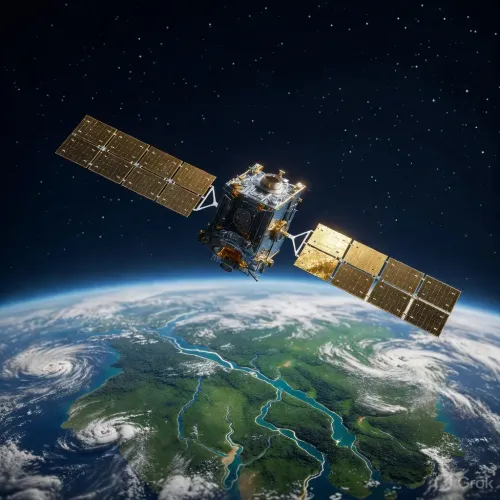
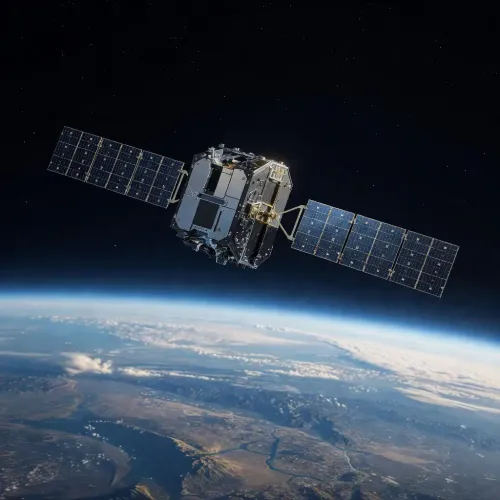
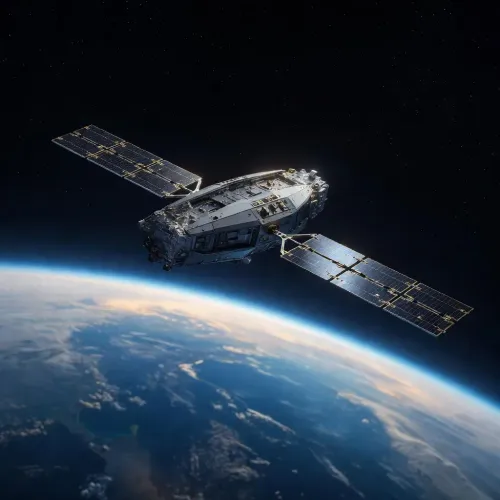
The system is designed to process data from the joint China–European Space Agency SMILE satellite .
The research reflects China's growing strategy of combining AI with space science, even amid broader geopolitical tensions in the space sector.
A China-led research team has developed a deep-learning AI system capable of automatically detecting and pinpointing space hurricanes — massive, spinning auroral events near Earth's magnetic poles that can disrupt satellite signals, radar, and radio communications. The breakthrough, detailed in a paper published in the peer-reviewed journal Space Weather on May 23, 2026, marks a significant advance over the manual, labour-intensive satellite image analysis that researchers have relied on until now.
What Are Space Hurricanes?
Space hurricanes are a recently discovered category of space weather event that manifest as enormous rotating auroras near the North Pole and other geomagnetic polar regions. The team describes them as sharing structural similarities with tropical cyclones in the north Atlantic and northeastern Pacific — the same class of phenomenon known as typhoons in the northwestern Pacific. Despite their dramatic effects on the polar ionosphere, they have remained difficult to study systematically due to detection limitations.
How the AI System Works
The new system processes ultraviolet images to automatically identify and locate space hurricanes, bypassing the slow manual review process previously required. According to the team, the model is specifically designed to be compatible with data from a newly launched China-Europe satellite — a reference to the joint European Space Agency and Chinese Academy of Sciences mission known as SMILE (Solar wind Magnetosphere Ionosphere Link Explorer). The deep-learning architecture enables real-time or near-real-time processing of imagery at a scale that human analysts cannot match.
Why It Matters
Space hurricanes pose a tangible threat to modern infrastructure. Their ability to degrade radar performance, scramble radio communications, and interfere with satellite signals makes them a concern for aviation, military operations, and civilian telecommunications alike. Automated, reliable detection is a prerequisite for issuing timely space weather warnings — analogous to how ground-based meteorological systems underpin storm alerts. The team's work, led out of Shandong University in China, positions AI as a core tool in operational space weather forecasting.
The Competitive Backdrop
The research arrives as China accelerates its investment in both space science and applied AI, often combining the two. The SMILE satellite, a rare collaborative project between China and the European Space Agency, provides a data pipeline that the new AI system is built to exploit. Broader geopolitical tensions in space technology have not prevented this scientific cooperation, underscoring that space weather research remains a domain where international data-sharing persists.
What's Next
The immediate next step is applying the deep-learning model to live data streams from the SMILE mission, which could validate the system's real-world detection accuracy. If performance holds, the framework could be extended to other space weather phenomena and additional satellite platforms. Researchers and space agencies tracking polar ionospheric disruptions will be watching closely to see whether automated detection translates into faster, more reliable public warnings.
Point of View
But for operational leverage. The SMILE satellite gives Beijing and Brussels a shared data asset, and designing the AI specifically around that pipeline means China shapes the analytical layer of a joint mission. Mainstream coverage frames this as a pure science story, but the deeper signal is that whoever controls the detection algorithm controls the space weather narrative for polar regions. As GPS, aviation, and military systems grow more dependent on ionospheric stability, automated space weather AI will shift from academic curiosity to strategic asset.
NationPress
19 Sept 2026
Frequently Asked Questions
What is a space hurricane?
A space hurricane is a recently discovered space weather event that appears as a massive, spinning aurora near Earth's magnetic poles. It is named after tropical cyclones due to its similar rotating structure, and it can disrupt satellite signals, radar, and radio communications.
What did the China-led team develop?
Researchers led by Shandong University developed a deep-learning AI system that automatically detects and pinpoints space hurricanes using ultraviolet satellite imagery. The system was described in a paper published in the peer-reviewed journal Space Weather on May 23, 2026.
Why does space hurricane detection matter?
Space hurricanes can degrade radar performance, disrupt radio communications, and interfere with satellite signals, posing risks to aviation, telecommunications, and military systems. Automated detection is essential for issuing timely space weather warnings.
What satellite will the AI system be used with?
The AI system is designed to analyse data from the SMILE (Solar wind Magnetosphere Ionosphere Link Explorer) satellite, a joint mission between the European Space Agency and the Chinese Academy of Sciences. This makes it immediately applicable to an active, operational data source.
How does this compare to previous space hurricane detection methods?
Until now, detecting space hurricanes required manually studying satellite images, a slow and labour-intensive process. The new AI system automates this entirely, enabling faster and potentially real-time identification of events.