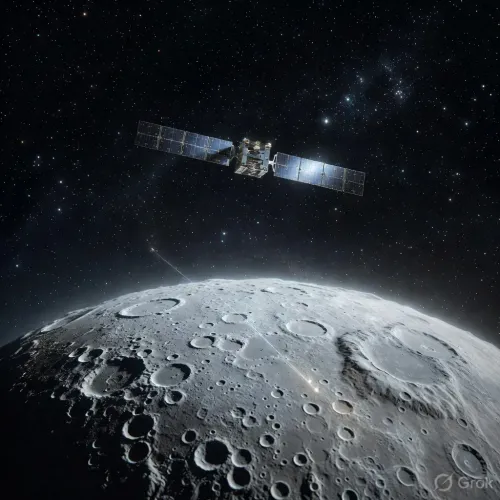
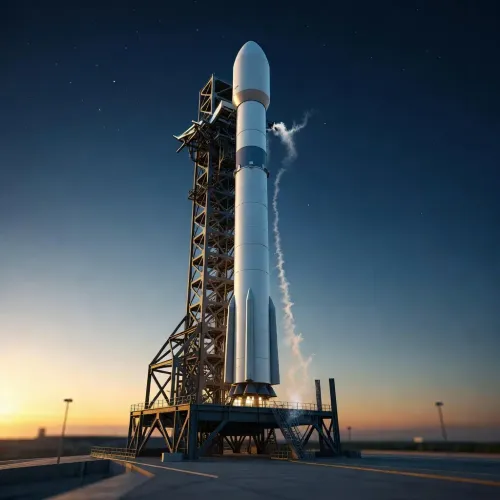
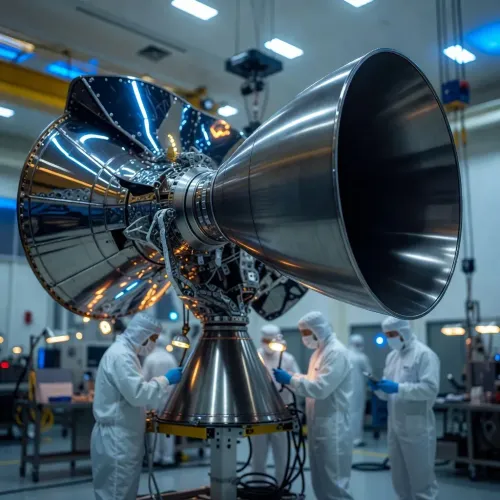
China-EU SMILE satellite launches despite rising trade tensions
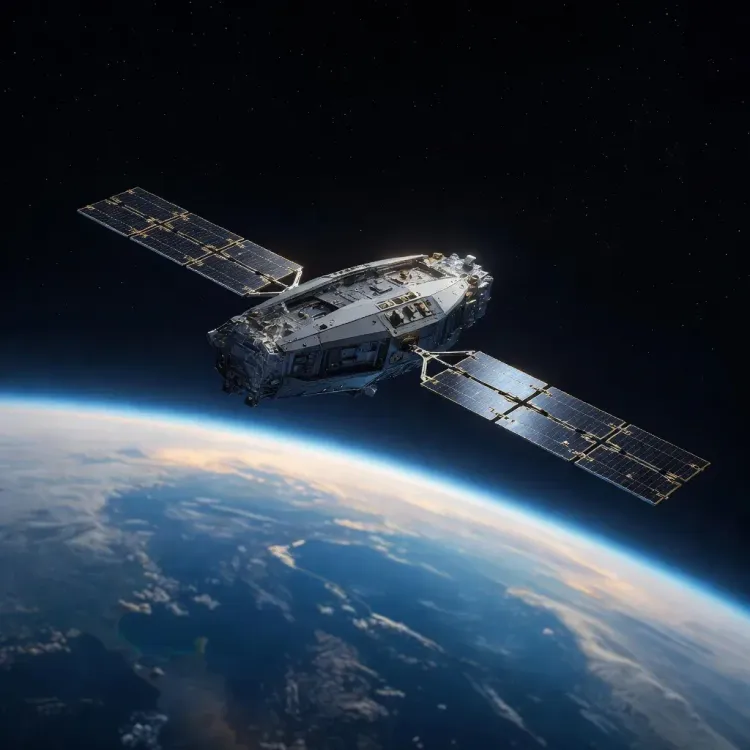
Synopsis
Despite deepening China-EU trade tensions, the jointly built SMILE satellite successfully launched on 20 May 2026 — a decade in the making — to study how Earth's magnetic field deflects solar wind, proving science diplomacy can outlast geopolitical friction.
Key Takeaways
The SMILE (Solar Wind Magnetosphere Ionosphere Link Explorer) satellite launched on Tuesday, 20 May 2026 , becoming the first jointly developed space mission between China and the EU .
The project was initiated in 2015 as a partnership between the Chinese Academy of Sciences (CAS) and the European Space Agency (ESA) .
ESA Director of Science Carole Mundell confirmed the collaboration endured pandemic travel restrictions and geographically distributed teams.
The mission aims to produce the most detailed study yet of Earth's magnetic environment and its interaction with solar wind.
The launch comes amid escalating China-EU trade and geopolitical tensions linked to a large EU trade deficit with China.
Data from SMILE is expected to advance space weather forecasting with implications for satellites, power grids, and global communications.
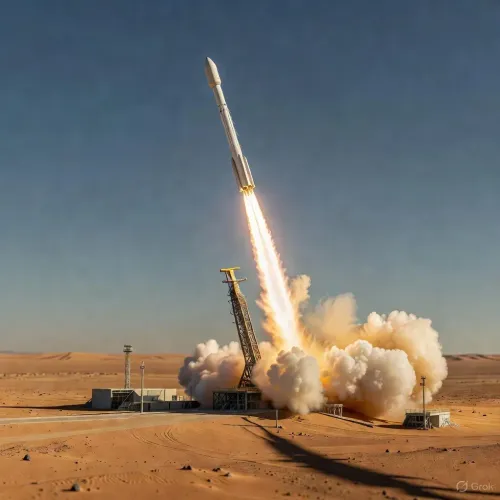
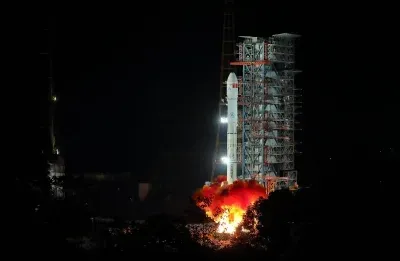
The Solar Wind Magnetosphere Ionosphere Link Explorer (SMILE) satellite lifted off on Tuesday, 20 May 2026, marking the first jointly developed space mission between China and the European Union — a landmark scientific collaboration that has survived years of geopolitical headwinds to study how Earth's magnetic field shields the planet from solar wind.
What SMILE is designed to do
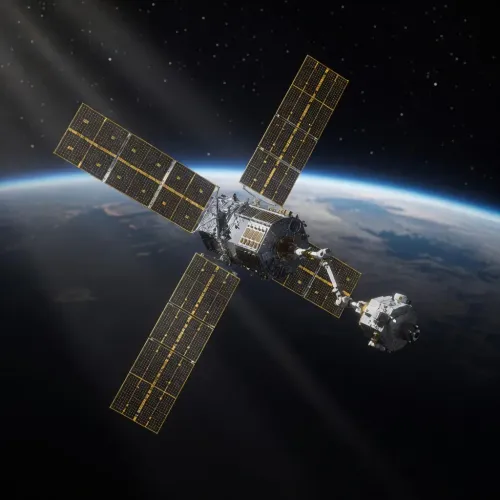
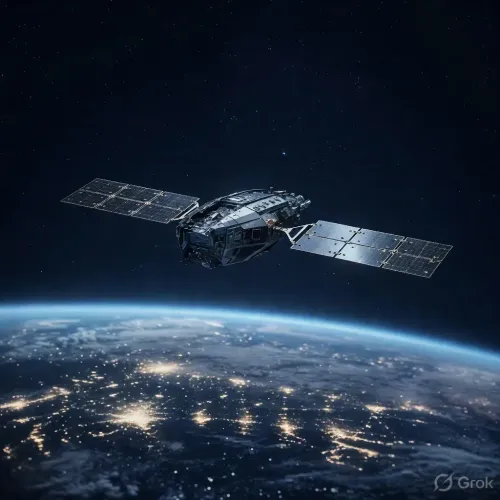
Developed under a project initiated in 2015, SMILE is engineered to be the most powerful instrument yet for mapping Earth's magnetic environment and understanding the precise mechanisms by which it deflects charged particles from the sun. The satellite was jointly designed and built by the Chinese Academy of Sciences (CAS) and the European Space Agency (ESA), combining expertise from two of the world's leading space research institutions.
According to ESA, the mission builds on established technologies from prior space missions, applying them in new configurations to generate unprecedented data on the magnetosphere-ionosphere link.
Why it matters
The successful launch is notable not just for its science but for its symbolism. Beijing and Brussels are currently navigating escalating trade and geopolitical friction, driven in large part by the EU's substantial trade deficit with China. That a decade-long, multi-continent engineering programme survived pandemic travel restrictions, distributed team logistics, and diplomatic strain to reach orbit underscores the resilience of science diplomacy.
Carole Mundell, ESA's Director of Science, said the mission demonstrated the durability of institutional trust. 'The trusted collaboration between our engineering and science teams in Europe and China has endured through global challenges such as pandemic travel restrictions and geographically distributed teams,' she said in an agency press release.
Key voices behind the mission
Mundell added: 'It is exciting to see this all come together today and I am looking forward to the new scientific discoveries SMILE will deliver.' She described the project as building on 'groundbreaking scientific and technological heritage from previous missions … taking tried-and-tested technologies and applying them in a new way to reveal Earth's magnetic environment like never before.'
The competitive backdrop
The launch arrives at a moment when space cooperation between major powers is increasingly complicated by national security concerns and export-control regimes. China remains excluded from the International Space Station, and NASA operates under congressional restrictions that bar direct collaboration with Chinese space entities. ESA's willingness to maintain the SMILE partnership signals that Europe continues to pursue a more independent course in space diplomacy.
What's next
With SMILE now in orbit, scientists from both CAS and ESA will begin commissioning the satellite's instruments before moving into full operational data collection. The mission's findings on solar wind interaction with Earth's magnetosphere are expected to inform space weather forecasting — a field with direct implications for satellite operators, power grids, and communications infrastructure worldwide. Whether the partnership serves as a template for further China-EU scientific ventures will depend heavily on how the broader trade relationship evolves.
Point of View
The latter operating under hard legislative barriers to Chinese collaboration. If SMILE delivers scientifically, expect renewed pressure from European research institutions to deepen space ties with China even as trade friction intensifies — a tension Brussels will find increasingly difficult to manage.
NationPress
5 Oct 2026
Frequently Asked Questions
What is the SMILE satellite and what will it do?
SMILE — the Solar Wind Magnetosphere Ionosphere Link Explorer — is a scientific satellite jointly developed by the Chinese Academy of Sciences (CAS) and the European Space Agency (ESA) to study how Earth's magnetic field interacts with and deflects solar wind. It is described as the most powerful tool built to date for mapping Earth's magnetic environment.
When did the SMILE satellite launch?
The SMILE satellite launched on Tuesday, 20 May 2026 . The project behind it was initiated in 2015 , making it an approximately 11-year development effort between Chinese and European space agencies.
Why is the China-EU SMILE mission significant despite trade tensions?
The launch demonstrates that long-term scientific partnerships between China and Europe can survive geopolitical and trade friction. Beijing and Brussels are currently at odds over a significant EU trade deficit with China, yet the two sides successfully delivered a jointly engineered satellite to orbit.
Who leads the SMILE mission on the European side?
Carole Mundell , ESA's Director of Science , is the senior European figure associated with the mission. She stated that 'the trusted collaboration between our engineering and science teams in Europe and China has endured through global challenges such as pandemic travel restrictions and geographically distributed teams.'
What are the practical applications of SMILE's research?
Beyond fundamental science, SMILE 's data on solar wind and Earth's magnetosphere is expected to improve space weather forecasting. Better space weather prediction has direct practical value for satellite operators, national power grids, aviation, and global communications infrastructure.