Qianfan tops 200 satellites in orbit but deployment lags targets
Synopsis
China's Qianfan constellation hit 201 satellites after three launches in under a week — including a direct-to-cell test payload alongside China Mobile — yet the programme still trails its own official deployment schedule, raising pointed questions about cost and competitive viability against Starlink.
Key Takeaways
Qianfan now has 201 satellites in orbit following a Zhuque-2E rocket launch from the Gobi Desert on Tuesday, 10 June 2026 .
The mission carried Qianfan DTC-01 , a direct-to-cell test satellite, and a China Mobile spacecraft, according to state broadcaster CCTV .
Back-to-back launches the previous Thursday and Friday from Taiyuan and Hainan each added 18 satellites , reflecting an accelerating launch cadence.
Shanghai Spacecom Satellite Technology (SSST) sent a delegation to observe the Jiuquan Satellite Launch Centre launch, a source at the facility confirmed.
Despite the faster pace, Qianfan's total of 201 satellites still lags behind the programme's official deployment targets.
The constellation competes in a market where SpaceX's Starlink already operates over 6,000 active satellites globally.
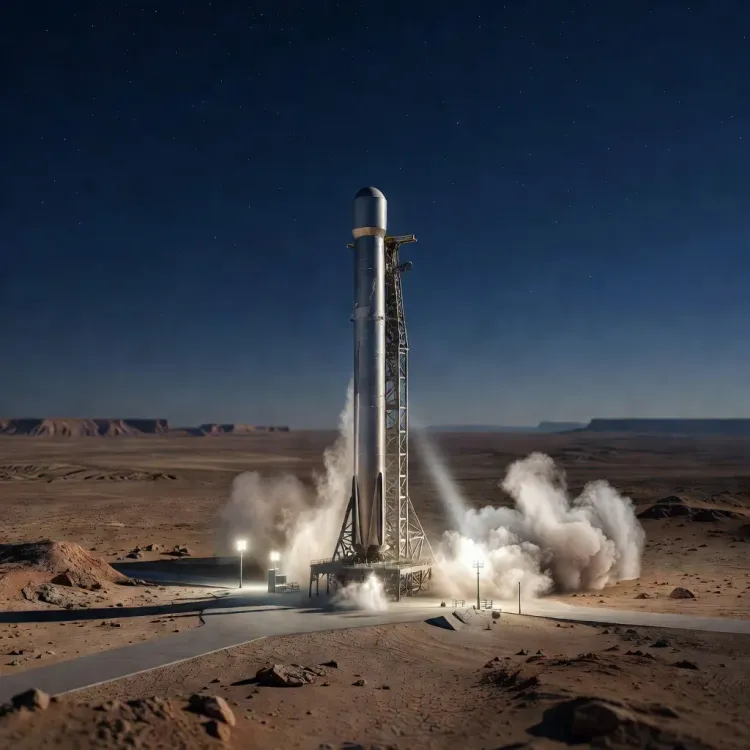
China's Qianfan broadband satellite constellation has crossed the 200-satellite threshold, reaching 201 spacecraft in orbit after a successful launch aboard a Zhuque-2E rocket from the Gobi Desert at 4:23 pm Beijing time on Tuesday, 10 June 2026. The milestone marks a symbolic step for the Starlink rival, though analysts and insiders say the pace of deployment still falls short of official targets.
The Latest Launch
The mission, confirmed by state broadcaster CCTV, delivered the Qianfan DTC-01 — a direct-to-cell test satellite — alongside a satellite belonging to China Mobile. The Zhuque-2E is a commercial launch vehicle developed independently of state-owned launch providers, underlining the increasingly mixed public-private character of China's low-Earth orbit push.
A source working at the Jiuquan Satellite Launch Centre said Shanghai Spacecom Satellite Technology (SSST) — the company behind Qianfan — had sent a delegation to observe Tuesday's launch, signalling the programme's internal significance.
Quickening Cadence, But Still Behind Schedule
Tuesday's launch came on the heels of back-to-back missions the previous Thursday and Friday from Taiyuan in central China and the new commercial spaceport in southernmost Hainan, each delivering 18 Qianfan satellites into orbit. The three launches in less than a week represent a notable acceleration in cadence for SSST.
Despite this burst of activity, the constellation's total of 201 satellites remains well below the deployment curve originally outlined by the programme. Qianfan's full design calls for thousands of satellites; reaching meaningful service coverage requires hundreds more at minimum.
The Competitive Backdrop
SpaceX's Starlink already operates more than 6,000 active satellites and serves millions of subscribers globally, giving it an enormous head start. China is running a parallel state-backed constellation called GuoWang, creating a dual-track domestic effort that some industry observers say risks fragmenting resources and complicating spectrum coordination.
The inclusion of the Qianfan DTC-01 direct-to-cell payload is significant: it mirrors Starlink's own direct-to-device push and suggests SSST is targeting smartphone connectivity as a key commercial differentiator, potentially in partnership with China Mobile.
Why It Matters
Satellite broadband is increasingly viewed as critical infrastructure, particularly for maritime, aviation, and rural connectivity markets where fibre and terrestrial 5G are uneconomical. A credible Chinese alternative to Starlink carries both commercial and geopolitical weight, especially as Western governments scrutinise SpaceX's role in conflict zones.
Cost pressure is a central concern: commercial launch rates and satellite manufacturing at scale remain expensive, and Qianfan's relatively slow build-up raises questions about whether its unit economics can compete with Starlink's vertically integrated model.
What's Next
The immediate focus will be on whether SSST can sustain a high-frequency launch cadence through the second half of 2026 and whether the DTC-01 direct-to-cell trial yields commercial agreements with China Mobile or other carriers. Investors and policymakers will be watching whether Qianfan can close the gap with Starlink — or whether cost and schedule overruns force a strategic rethink.
Point of View
A playbook borrowed directly from Starlink's T-Mobile partnership. What mainstream coverage underplays is the resource tension between Qianfan and the state-backed GuoWang constellation — two programmes competing for the same domestic launch capacity, spectrum slots, and government goodwill. If Beijing cannot rationalise this dual-track approach, neither constellation may reach the scale needed to challenge Starlink commercially before the orbital filing deadlines that govern spectrum rights expire.
NationPress
26 Oct 2026
Frequently Asked Questions
How many satellites does Qianfan have in orbit?
Qianfan has 201 satellites in orbit as of 10 June 2026 , following a launch aboard a Zhuque-2E rocket from the Gobi Desert . The total includes satellites delivered across three launches in less than one week.
Who operates the Qianfan satellite constellation?
Shanghai Spacecom Satellite Technology (SSST) , a Chinese commercial space company, operates the Qianfan constellation. A source at the Jiuquan Satellite Launch Centre confirmed that SSST sent a delegation to observe the most recent launch.
How does Qianfan compare to Starlink?
Qianfan 's 201 satellites represent a fraction of SpaceX Starlink 's fleet of more than 6,000 active satellites . Qianfan also reportedly lags its own official deployment schedule, making the competitive gap with Starlink a pressing concern for the programme.
What is the Qianfan DTC-01 satellite?
Qianfan DTC-01 is a direct-to-cell test satellite launched on 10 June 2026 alongside a China Mobile spacecraft. It is designed to test technology that would allow standard smartphones to connect directly to the satellite network without specialised hardware.
Why is Qianfan's deployment considered too slow?
Despite three launches in under a week, Qianfan 's cumulative total of 201 satellites still falls short of the programme's official targets, according to reports. Industry observers note that cost pressures and the need for thousands of satellites to achieve full coverage make the current pace a strategic liability.