South Korea pushes to set OPCON transfer timeline by end of 2025
Synopsis
South Korea wants wartime command back — and it wants a date on paper before the year is out. With the Ulchi Freedom Shield drills doubling as an OPCON evaluation and the fall Security Consultative Meeting set as the deadline for a target year, Seoul is pushing hard. The complication: Washington appears less convinced the conditions are met, and the nuclear submarine project — agreed a year ago — has barely moved.
Key Takeaways
South Korea's defence ministry on 5 August reaffirmed its goal to finalise an OPCON transfer target year by end of 2025 .
The FOC certification and transfer timeline are expected to be announced at the fall Security Consultative Meeting (SCM) .
The Ulchi Freedom Shield (UFS) exercise in August will serve as a key evaluation stage for OPCON transition readiness.
A rift has emerged between Seoul and Washington , with US Forces Korea reportedly prioritising military readiness over political timelines.
Defence Minister Ahn Gyu-back pledged to establish legal groundwork for the Jang Bogo N nuclear-powered submarine project by 2027 , targeting at least three 8,000-ton vessels by the mid-2030s .
Seoul and Washington agreed on the nuclear submarine cooperation in October last year , but bilateral talks only began in early June .
South Korea's defence ministry on Wednesday, 5 August reaffirmed its commitment to finalising a target year for retaking wartime operational control (OPCON) from the United States, with the upcoming joint military exercise serving as a key milestone in advancing that process. The announcement came during a policy briefing to President Lee Jae Myung, underscoring Seoul's urgency to reclaim wartime command authority before the end of this decade.
The OPCON Timeline and Political Urgency
South Korea is aiming to complete the transition before President Lee's five-year term expires in 2030 — and potentially before US President Donald Trump leaves office in January 2029. The defence ministry has set its sights on the annual Security Consultative Meeting (SCM) this fall as the forum where the Full Operational Capability (FOC) certification and a concrete transfer year will be formally announced.
Vice Defence Minister Lee Doo-hee told reporters on Tuesday: "We will make every effort to achieve a historic and groundbreaking turning point at the SCM, where the FOC certification and the timing of the (OPCON) transfer will be decided."
Role of the Ulchi Freedom Shield Exercise
Under the three-phase OPCON transition plan agreed upon in October 2014, the allies are currently in the second stage — verifying the combined forces' full operational capability. A senior defence ministry official confirmed that the forthcoming Ulchi Freedom Shield (UFS) drills, held every August, will serve as a critical evaluation platform.
"Those evaluations will also take place during the upcoming UFS exercise," the official said. The drills are designed to reinforce the allies' joint defence posture and deterrence, particularly against threats from North Korea, and are widely regarded as a testing ground for assessing combined capabilities essential to the OPCON handover.
Growing Rift Between Seoul and Washington
Despite shared commitments on paper, a notable divergence has emerged between South Korea and the United States over the pace of the transition. The commander of US Forces Korea has reportedly emphasised military readiness over political timelines, creating friction with Seoul's more schedule-driven approach.
The ministry official acknowledged ongoing dialogue: "We are constantly in discussions (with the US) over the OPCON transition through various channels. We believe we should be able to decide on the 'X' (target) year at this year's SCM." The ministry also plans to permanently establish the remaining two of the six component commands under the future Combined Forces Command over the next two years.
Nuclear-Powered Submarine Project Gets a Push
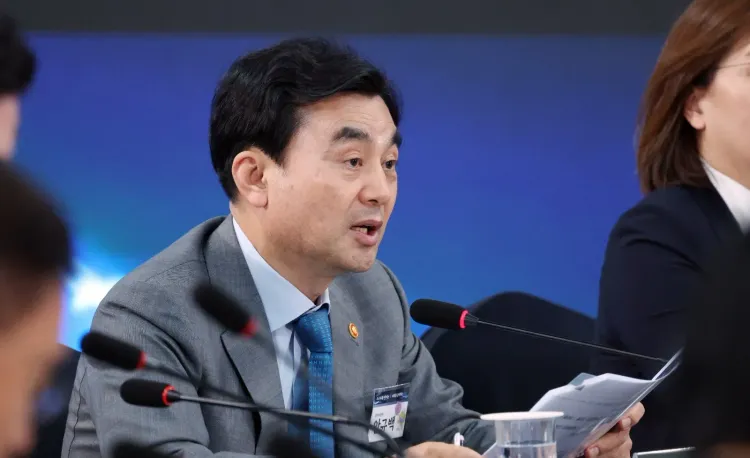
Defence Minister Ahn Gyu-back used the briefing to outline an accelerated legislative roadmap for South Korea's nuclear-powered submarine programme, known as the Jang Bogo N project. The initiative aims to build at least three 8,000-ton conventionally armed, nuclear-propelled attack submarines by the mid-2030s.
"We will establish the legal and institutional foundation to push forward the nuclear-powered submarine project in earnest by 2027 by acquiring nuclear fuel through consultations with the US and establishing a nuclear fuel management framework through consultations with the International Atomic Energy Agency," Minister Ahn said.
Seoul and Washington agreed in October last year to cooperate on the project and secure rights to enrich uranium and reprocess spent nuclear fuel for peaceful use. However, progress has been limited, with bilateral talks formally launched only in early June. The ministry has since drafted enabling legislation to lay the domestic legal groundwork for the vessels.
What Comes Next
The immediate focus shifts to the Ulchi Freedom Shield exercise later this month, which will generate the operational data needed to support the FOC certification bid at the fall SCM. Whether Seoul and Washington can bridge their differences on the transition timeline — and whether the nuclear submarine legislation clears parliament by 2027 — will define the trajectory of the alliance's strategic autonomy debate for years to come.
Point of View
And a named transfer year at the SCM would be it. But the gap with Washington is real: the US commander's emphasis on readiness over schedules is not a diplomatic nuance, it is a substantive objection. Meanwhile, the nuclear submarine project — heralded as a breakthrough last October — has produced one round of talks in eight months. Seoul's ambitions are legitimate, but the execution gap between announcements and outcomes is widening, and the fall SCM will test whether this alliance can still synchronise on its most consequential decisions.
NationPress
19 Sept 2026
Frequently Asked Questions
What is OPCON and why does South Korea want it back?
OPCON, or wartime operational control, refers to the authority to command combined South Korean and US forces during a conflict. South Korea transferred this authority to the US during the Korean War era and has been seeking to reclaim it as a marker of full defence sovereignty. Seoul aims to complete the transition before President Lee Jae Myung's term ends in 2030.
What is the Security Consultative Meeting (SCM) and why does it matter here?
The SCM is the annual high-level defence dialogue between South Korea and the United States, held between the two countries' defence ministers. Seoul wants to use this year's SCM to formally announce the FOC certification and a target year for the OPCON transfer — making it the most consequential SCM in years.
What is the Ulchi Freedom Shield exercise?
The Ulchi Freedom Shield (UFS) is a large-scale annual bilateral military exercise held every August between South Korea and the United States. Beyond its deterrence function against North Korea, it serves as a formal evaluation ground for the combined capabilities required to meet the conditions of the OPCON transition plan.
What is the Jang Bogo N nuclear-powered submarine project?
The Jang Bogo N project is South Korea's programme to build at least three 8,000-ton conventionally armed, nuclear-propelled attack submarines by the mid-2030s. Seoul and Washington agreed in October last year to cooperate on the project, including uranium enrichment and spent fuel reprocessing rights. Enabling legislation is being drafted with a target of establishing the legal framework by 2027.
Why is there a rift between South Korea and the US over OPCON?
The commander of US Forces Korea has reportedly stressed military readiness as the primary condition for the transfer, while South Korea is also factoring in political timelines tied to President Lee's term and President Trump's tenure. This divergence — readiness-first versus schedule-driven — is the central tension in the current negotiations.