Pralhad Joshi at BRE Summit: India Eyes Next Terawatt
Synopsis
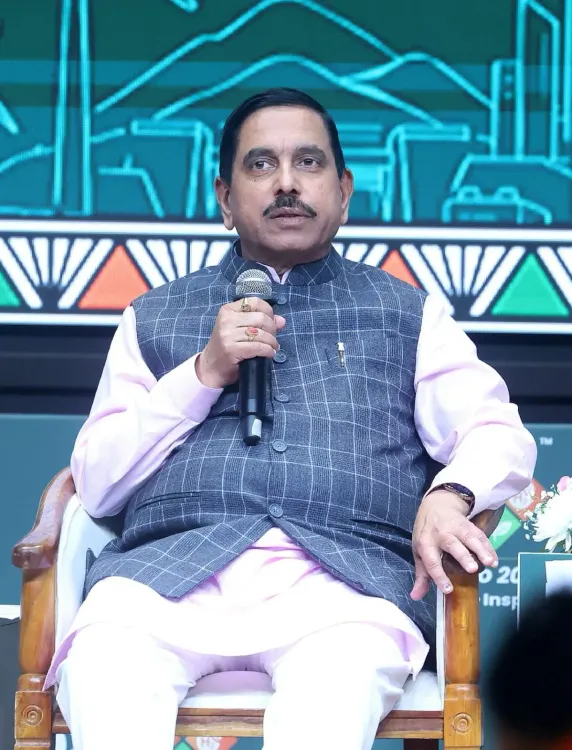
At the Bharat Renewable Energy Summit 2026, Union Minister Pralhad Joshi co-led a ministerial plenary on scaling the next terawatt of global solar capacity, joining India's Power Minister, state energy leaders, and Zimbabwe's energy envoy to advance ISA-driven Global South cooperation.
Key Takeaways
Union Minister Pralhad Joshi participated in the ministerial plenary 'The Next Terawatt' at Bharat Renewable Energy Summit 2026 on 3 November 2026 .
The session was moderated by Ashish Khanna , Director General of the International Solar Alliance , and included Zimbabwe's Permanent Secretary Dr.
India reaffirmed its commitment to ensuring renewable energy reaches every state, with both MNRE and the Ministry of Power represented at the plenary.
The ISA , launched at COP21 in 2015 , serves as India's primary vehicle for solar diplomacy with the 121-member Global South bloc.
The summit runs alongside the 9th ISA Assembly , where new bilateral renewable energy agreements with African member countries are expected.
India's domestic 500 GW non-fossil fuel capacity target by 2030 , pledged at COP26 Glasgow , formed the policy backdrop to the discussion.
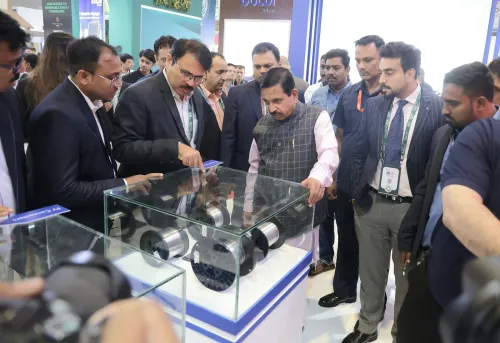
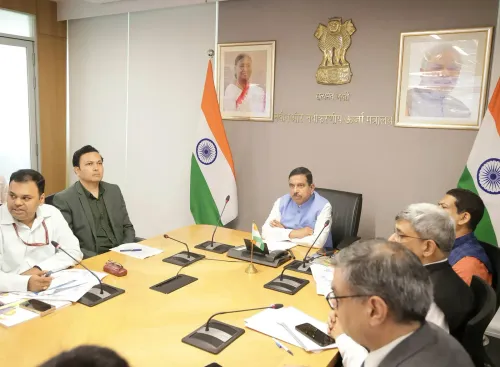
India's push to lead the global clean-energy transition moved centre-stage on Tuesday, 3 November 2026, when Union Minister of New and Renewable Energy Pralhad Joshi joined a high-powered ministerial plenary at the Bharat Renewable Energy Summit 2026 in New Delhi — a session framed around one audacious question: how do you get from national solar milestones to the world's next terawatt?
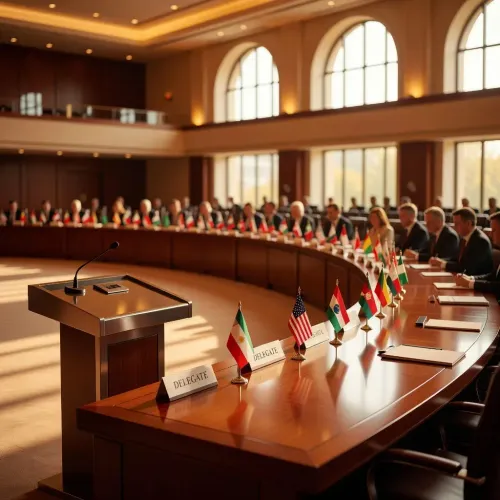
The plenary, titled 'The Next Terawatt: From National Successes to Global Solutions', was moderated by Ashish Khanna, Director General of the International Solar Alliance (ISA). Around the table sat Manohar Lal Khattar, Union Minister of Power; Shripad Yesso Naik, Minister of State for New and Renewable Energy; K.V. Singh Deo, Deputy Chief Minister of Odisha; H.L. Nagar, Energy Minister of Rajasthan; and Dr. Gloria S. Mogambo, Permanent Secretary, Ministry of Energy and Power Development, Zimbabwe.
India's solar story meets the Global South's energy hunger
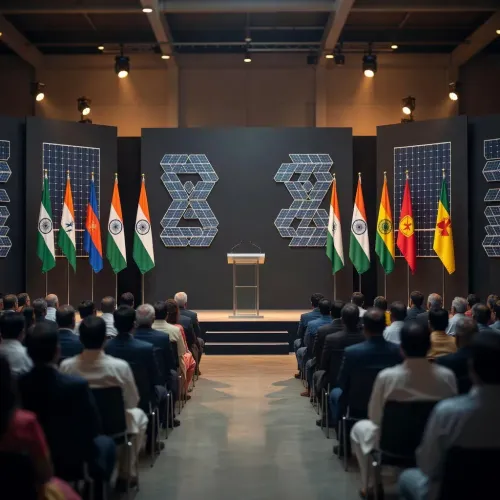
The presence of Zimbabwe's Permanent Secretary alongside sub-national leaders from Odisha and Rajasthan was deliberate — a live demonstration of the twin track India has pursued since the ISA's founding at COP21 in Paris in 2015: drive domestic deployment while exporting the institutional playbook to developing nations. Minister Joshi underlined this directly, stating that 'India's experience and the collaborative efforts of ISA can play a pivotal role in advancing affordable and sustainable energy solutions, particularly for the Global South.'
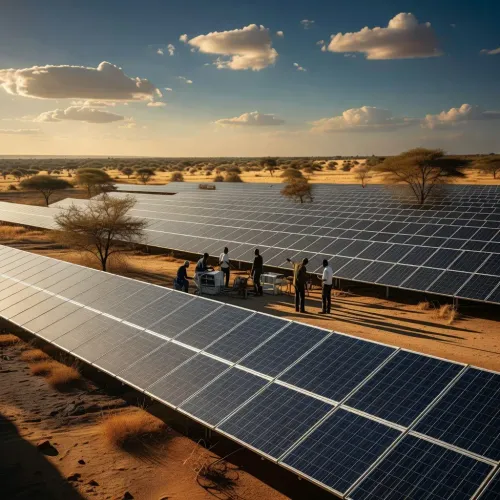
That framing matters. The Global South — spanning developing nations across Africa, Asia, and Latin America — faces a dual challenge: rapidly expanding electricity access while leapfrogging fossil fuels. India, having scaled from a fraction of its current solar base to well over 100 GW of installed solar capacity, has a credible story to tell and a multilateral vehicle — the 121-member ISA — to tell it through.
From 500 GW targets to state-level accountability
Domestically, the plenary's composition carried its own significance. At COP26 in Glasgow in 2021, India committed to 500 GW of non-fossil fuel electricity capacity by 2030 — a target that ultimately lives or dies in state electricity boards, not just central ministries. The inclusion of Rajasthan's and Odisha's energy leadership signals that the summit conversation explicitly addressed the federal dimension: how to ensure, as Joshi put it, that 'renewable energy benefits reach every state, empowering communities.'
The Ministry of New and Renewable Energy (MNRE) and the Ministry of Power together reaffirmed their commitment to that state-by-state delivery — a coordination signal given added weight by the simultaneous presence of Khattar and Naik at the same table.
The 9th ISA Assembly in the wings
The summit runs alongside the 9th ISA Assembly, flagged in the post's hashtags. Historically, ISA Assembly sessions have produced new bilateral solar project commitments and finance-sharing frameworks between India and African member countries. The Assembly is the next pressure-point: whether the ministerial rhetoric of BRE Summit 2026 translates into bankable agreements — particularly for African nations navigating energy poverty and climate finance gaps — will be the real test of the 'next terawatt' ambition.
India built the solar alliance as a diplomatic tool and an energy instrument simultaneously. Right now, both blades are being sharpened at once.
Point of View
Not just diplomatic rhetoric. The Zimbabwe presence reflects the ISA's pivot from a talking shop to an operational south-south delivery platform. For Joshi, co-chairing such a session alongside Power Minister Khattar reinforces the narrative that India's two key energy portfolios are in step — a coordination story the government clearly wants told before the 9th ISA Assembly produces its final communique. The 'next terawatt' framing is also a bid for thought-leadership in the global clean-energy race at a moment when emerging economies are increasingly impatient for bankable solutions, not just aspirational targets.
NationPress
4 Nov 2026
Frequently Asked Questions
What is the Bharat Renewable Energy Summit 2026?
The Bharat Renewable Energy Summit is an annual industry-government platform organised under the auspices of the Ministry of New and Renewable Energy (MNRE) to discuss scaling India's renewable capacity and fostering international energy cooperation.
What is the International Solar Alliance (ISA) and who leads it?
The International Solar Alliance is an intergovernmental organisation launched by India and France at COP21 in 2015 to promote solar energy among 121 solar-rich member countries. It is headquartered in Gurugram, India, and its Director General is Ashish Khanna.
What is India's renewable energy target by 2030?
India has committed to achieving 500 GW of non-fossil fuel electricity capacity by 2030, a pledge made at the COP26 climate summit in Glasgow in 2021.
Why was Zimbabwe represented at a Bharat Renewable Energy Summit plenary?
Zimbabwe is a member of the International Solar Alliance, and its Permanent Secretary Dr. Gloria S. Mogambo participated to reflect India's south-south cooperation track — sharing solar deployment experience and exploring clean-energy partnerships with African and Global South nations.
What is the 9th ISA Assembly and what outcomes are expected?
The 9th ISA Assembly is a formal gathering of ISA member countries running alongside the BRE Summit 2026. Past Assembly sessions have produced bilateral solar project commitments and technology-finance sharing frameworks, particularly with African member countries.