Sanctioned Chinese satellite firm images Nvidia, Apple HQs
Synopsis
Days after being sanctioned by the US over alleged Iran links, Chinese satellite firm Changguang Satellite published Jilin-1 constellation images of Nvidia's Santa Clara campus and Apple Park in Cupertino — calling it 'routine satellite news' but amplifying geopolitical tensions over commercial Earth-observation data.
Key Takeaways
Changguang Satellite , based in Changchun, China , posted high-definition images of Nvidia and Apple headquarters on Monday, June 5, 2026 .
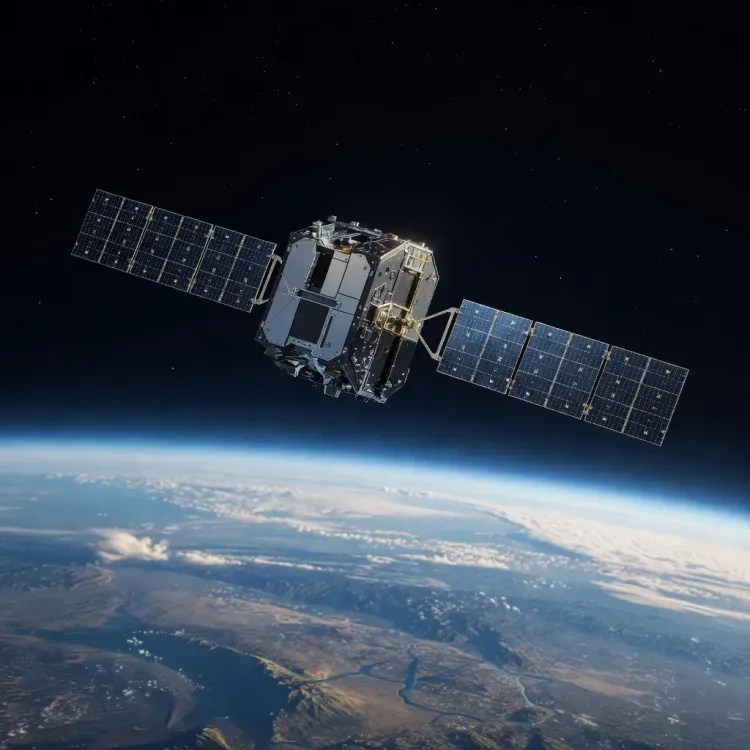
The photos were captured by the company's Jilin-1 satellite constellation and shared on social media.
Visible sites include Nvidia 's Endeavour and Voyager buildings in Santa Clara and Apple Park in Cupertino .
A company spokesman called the release 'routine satellite news' , noting Jilin-1 imagery is publicly available.
Changguang Satellite was recently sanctioned by the US government for allegedly aiding Iran .
The company has previously imaged locations including New Delhi , Hawaii , and North American World Cup stadiums.
Changguang Satellite, a Chinese remote-sensing company recently sanctioned by the US government over alleged ties to Iran, has released high-definition satellite imagery of the headquarters of Nvidia and Apple in California's Silicon Valley, posting the photos on social media on Monday, June 5, 2026.
What the images show
The photographs, captured by the company's Jilin-1 satellite constellation and shared from Changguang Satellite's base in Changchun, northeast China, offer a detailed bird's-eye view of the region. Visible in the imagery are Nvidia's futuristic Endeavour and Voyager buildings in Santa Clara, the spaceship-like Apple Park campus in Cupertino, and the red-brick grounds of Santa Clara University.
Company calls it 'routine satellite news'
A Changguang Satellite spokesman described the release as 'routine satellite news', stating that Jilin-1 imagery is publicly available. The company has a history of posting satellite views of diverse global locations, including open-pit iron mines and high-speed rail stations in China, New Delhi during a heatwave, a volcanic crater in Hawaii, and stadiums in North America being readied for the World Cup.
Why it matters
The timing is notable: the imagery release comes shortly after Changguang Satellite was placed on a US sanctions list for allegedly supporting Iran's military or surveillance programmes. Publishing high-resolution views of two of America's most strategically significant tech campuses — home to the world's leading AI chipmaker and its largest consumer electronics company — will inevitably draw scrutiny, even if the underlying data is commercially available.
The competitive backdrop
Commercial satellite imagery has become a contested domain in the broader US-China technology rivalry. Changguang Satellite's Jilin-1 constellation is among China's most capable commercial Earth-observation networks, and its imagery products are marketed globally. The company's decision to highlight Silicon Valley landmarks specifically — rather than neutral geography — amplifies the geopolitical optics of an otherwise routine content post.
What's next
Analysts will watch whether US authorities respond with additional restrictions on Changguang Satellite's data distribution channels or press allies to limit access to its imagery services. For the broader satellite-intelligence sector, the episode underscores how commercial remote-sensing assets are increasingly entangled with national-security concerns on both sides of the Pacific.
Point of View
But the deeper story is structural: Changguang Satellite's Jilin-1 constellation demonstrates that high-resolution overhead imagery of any surface target is now a commodity, not a state secret, and sanctions do little to restrict that capability once the data is in open distribution. What the episode really exposes is the inadequacy of entity-list sanctions as a tool against dual-use satellite operators whose commercial imagery pipelines run through dozens of third-party resellers globally. Washington's next move — whether export controls on ground-station software, pressure on cloud platforms hosting the data, or allied coordination — will define how seriously the US treats commercial remote sensing as a national-security vector.
NationPress
21 Oct 2026
Frequently Asked Questions
Why did Changguang Satellite release images of Nvidia and Apple headquarters?
The company described the release as 'routine satellite news,' saying its Jilin-1 imagery is publicly available. Changguang Satellite regularly posts satellite views of notable locations worldwide, from Chinese infrastructure to international landmarks and sporting venues.
What US sanctions were imposed on Changguang Satellite?
The US government sanctioned Changguang Satellite for allegedly helping Iran, though the specific details of the designation were not elaborated upon by the company. The sanctions preceded the social-media post featuring Silicon Valley imagery by a short interval.
What locations are visible in the Jilin-1 satellite images?
The images show Nvidia's Endeavour and Voyager buildings in Santa Clara, the circular Apple Park campus in Cupertino, and the red-brick buildings of Santa Clara University. All locations are in California's Silicon Valley region.
Is it legal for a Chinese satellite company to photograph US tech campuses?
Commercial satellite imagery of surface locations, including private corporate campuses, is generally permitted under international norms when collected from orbit. The data from the Jilin-1 constellation is marketed as publicly available, making the legal basis for the release straightforward even amid the sanctions context.
How capable is Changguang Satellite's Jilin-1 constellation?
Jilin-1 is one of China's largest commercial Earth-observation satellite networks, capable of capturing high-definition, detailed bird's-eye imagery of surface targets globally. The constellation has previously imaged locations as varied as New Delhi during a heatwave, a Hawaiian volcanic crater, and North American stadiums preparing for the World Cup.