Shanghai launches space-computing hub to rival US in orbital AI race
Synopsis
Shanghai has opened a space-computing industry hub in Songjiang — home to Starlink rival SpaceSail and its 15,000-satellite Qianfan ambition — marking China's most concrete step yet to shift AI workloads into orbit and contest US dominance across the entire commercial space stack.
Key Takeaways
Shanghai's Songjiang district unveiled a dedicated space-computing industry hub on 31 August 2026 at an inaugural forum.
The hub brings together aerospace developers, semiconductor makers, AI specialists, and cloud vendors to advance in-orbit data processing.
SpaceSail , the Shanghai government-backed firm, has launched over 200 satellites and targets a 15,000-satellite constellation by end of 2030 to rival SpaceX's Starlink .
Long-term plans include solar-powered orbital data centres designed to reduce strain on land-based power grids.
Songjiang is also home to satellite makers Gesi Aerospace , Xuntian Qianhe , and the Shanghai Aerospace Precision Machinery Research Institute .
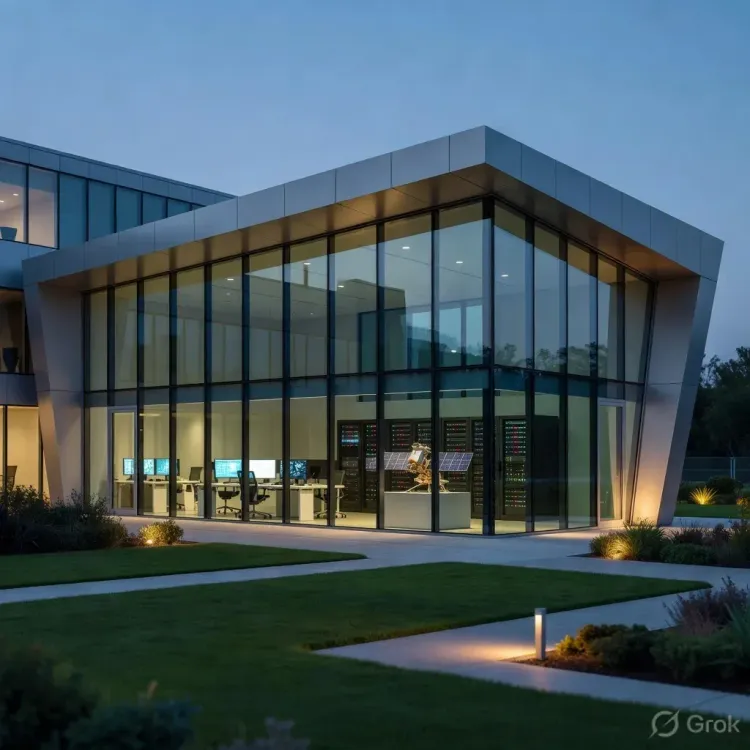
Shanghai has inaugurated a dedicated space-computing industry hub in its Songjiang district on Sunday, 31 August 2026, as China accelerates its push to build an orbital data ecosystem capable of challenging US dominance in commercial space. The centre, unveiled at an inaugural space-computing forum, convened aerospace developers, semiconductor manufacturers, AI specialists, cloud vendors, researchers, and investors to advance in-orbit data processing capabilities, according to local outlet Shanghai Observer.
What is space computing and why it matters
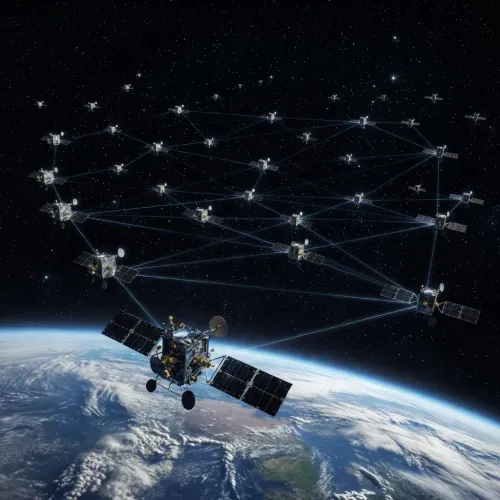
Space computing enables satellites to process and analyse data directly in orbit, eliminating the bottleneck of transmitting raw files back to ground stations and dramatically accelerating real-time intelligence delivery. More ambitious long-term blueprints envision orbital data centres powered by solar energy — a model that could meaningfully reduce pressure on land-based power grids as AI workloads multiply globally.
Songjiang: China's satellite supply-chain nerve centre
Songjiang has formally designated commercial space as a focal point of its economic development guidelines, and the district already anchors a critical segment of China's satellite supply chain. It is home to SpaceSail, the Shanghai government-backed operator constructing Qianfan — China's primary low-Earth-orbit challenger to SpaceX's Starlink. SpaceSail has launched over 200 satellites to date and is targeting a 15,000-satellite mega-constellation by the end of 2030.
The competitive backdrop
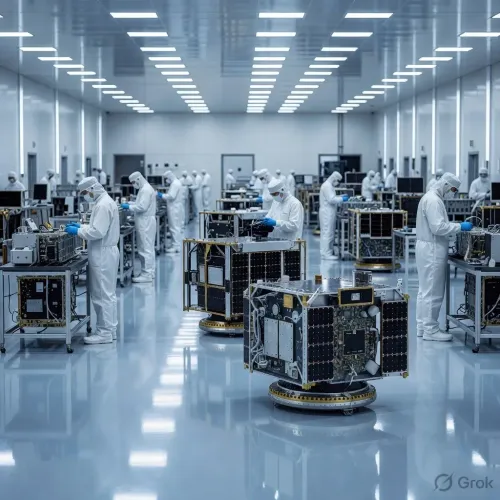
The district is also home to satellite manufacturers Gesi Aerospace and Xuntian Qianhe, as well as the Shanghai Aerospace Precision Machinery Research Institute. The clustering of these players in a single administrative zone mirrors the industrial-park model that accelerated China's semiconductor and electric-vehicle sectors, giving state planners a concentrated node to direct capital and policy support.
The forum and hub launch come as the China–US space rivalry intensifies across launch cadence, satellite broadband, and now in-orbit computing — a layer of the stack that neither side has yet fully commercialised. SpaceX's Starlink currently operates the world's largest LEO constellation, but Qianfan's scale ambitions and the new Songjiang computing hub signal that Beijing is competing across the entire value chain, not just on launch volume.
What's next
The hub is expected to deepen collaboration between Songjiang-based hardware makers and the broader Shanghai AI and cloud ecosystem as in-orbit processing standards remain nascent and up for grabs. Watch for procurement announcements from SpaceSail and policy incentives out of Songjiang that could accelerate the commercial deployment timeline well ahead of 2030.
Point of View
If realised, would sidestep the land-based energy constraints that are already throttling AI infrastructure buildout globally, giving China a structural edge that goes beyond the satellite count race. The clustering of SpaceSail, Gesi Aerospace, Xuntian Qianhe, and now a compute-focused forum in one administrative district is a deliberate policy concentration, not organic market formation. The companies most exposed to disruption are ground-station-dependent data relay operators and any Western cloud provider assuming terrestrial infrastructure will remain the default backbone for space-derived intelligence.
NationPress
17 Oct 2026
Frequently Asked Questions
What is the Shanghai space-computing hub in Songjiang?
The Shanghai space-computing hub is a dedicated industry centre in the city's Songjiang district, unveiled on 31 August 2026, that clusters aerospace developers, semiconductor makers, AI specialists, cloud vendors, and researchers to advance in-orbit data processing. It was launched alongside an inaugural space-computing forum and is backed by Songjiang's formal commercial-space development mandate.
How does space computing work and why does it matter?
Space computing allows satellites to process and analyse data directly in orbit rather than relaying raw files to ground stations, enabling faster real-time intelligence. Longer-term proposals envision solar-powered orbital data centres that could reduce pressure on land-based power grids — a significant consideration as global AI workloads grow.
What is SpaceSail's Qianfan constellation and how does it compare to Starlink?
Qianfan is a low-Earth-orbit satellite constellation being built by Shanghai government-backed SpaceSail as China's primary rival to SpaceX's Starlink. SpaceSail has launched over 200 satellites to date and aims to deploy a 15,000-satellite mega-constellation by the end of 2030.
Which companies are based in Songjiang's space cluster?
Songjiang hosts SpaceSail (operator of the Qianfan constellation), satellite manufacturers Gesi Aerospace and Xuntian Qianhe, and the Shanghai Aerospace Precision Machinery Research Institute, making it a critical node in China's satellite supply chain.
How does this development fit into the broader China-US space race?
The hub signals China's intent to compete across the entire commercial space value chain — not just on launch volume but also on in-orbit computing and AI — as the US, led by SpaceX's Starlink, currently operates the world's largest LEO constellation. The Songjiang cluster gives Chinese planners a concentrated zone to direct capital and policy support in a sector where in-orbit processing standards are still being established.