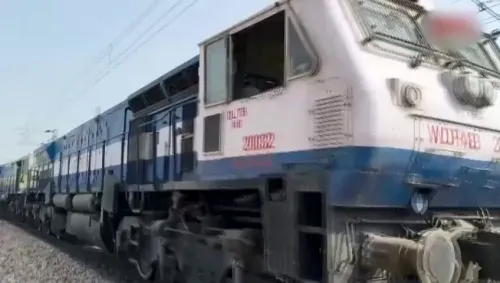
Anurag Thakur Hails India's First Hydrogen Train Milestone
Synopsis
BJP MP Anurag Thakur on 16 July 2026 celebrated Indian Railways' indigenously developed hydrogen-powered train, calling it a historic step in PM Modi's Atmanirbhar Bharat vision and India's shift to clean, sustainable transport.
Key Takeaways
BJP MP Anurag Thakur posted on 16 July 2026 hailing Indian Railways' hydrogen-powered train as a historic milestone.
The development is framed as part of PM Narendra Modi 's Atmanirbhar Bharat programme, which promotes indigenous manufacturing and R&D.
India's National Hydrogen Energy Mission , launched in 2021 , provided the policy foundation for applying hydrogen propulsion to rail transport.
The hydrogen train initiative aligns with India's net-zero by 2070 commitment and a broader rail decarbonisation strategy that includes electrification and biofuel pilots.
Key stakeholders include railway passengers and domestic engineering firms who stand to benefit from cleaner technology and reduced import dependence.
Further route trials and scale-up decisions are expected to feature in Indian Railways' upcoming annual works programme.
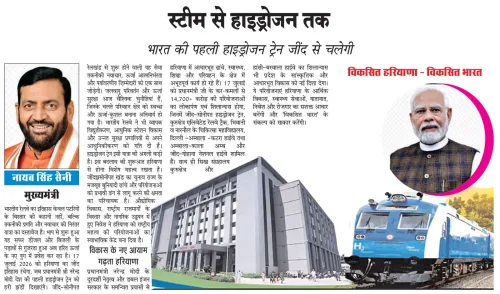
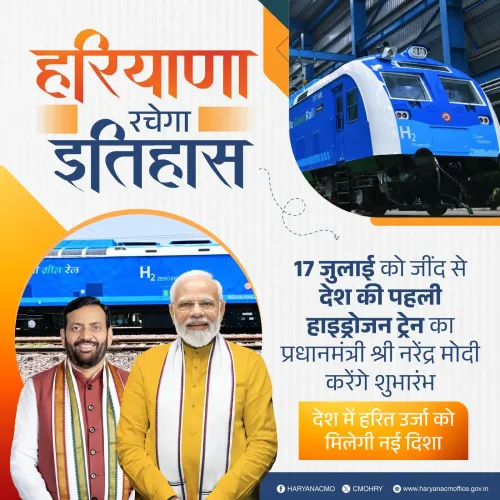
BJP MP Anurag Thakur on Thursday, 16 July 2026, celebrated what he described as a landmark moment for Indian Railways, calling the development of an indigenously built hydrogen-powered train a historic leap toward Prime Minister Narendra Modi's vision of Atmanirbhar Bharat. The post, shared on X, framed the development as evidence of New India's growing technological capability and commitment to clean, sustainable transport.
Context
Thakur's post declared the occasion as 'Making History, Powered by Hydrogen,' positioning the hydrogen train as the latest milestone in a journey he described as running 'from steam to hydrogen.' He called it 'a proud testament to India's growing technological capability and commitment to clean and sustainable transport.' The framing connects the development directly to the Atmanirbhar Bharat programme, which Prime Minister Modi announced in May 2020 to accelerate domestic research, development, and manufacturing across strategic sectors.
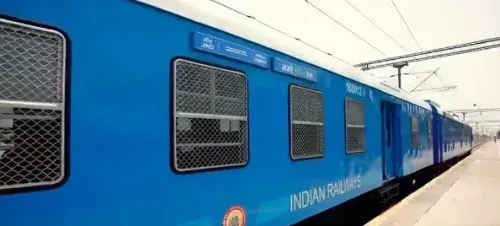
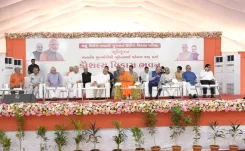
The post included a video, suggesting a visual demonstration or inauguration event associated with the train, though the specific route or operational details were not specified in the message.
Policy Backdrop
The hydrogen train initiative sits at the intersection of two major policy frameworks. The Atmanirbhar Bharat package, launched in 2020, set out to reduce India's dependence on imported technology across infrastructure and clean energy. The National Hydrogen Energy Mission, announced in 2021, specifically targeted hydrogen as a fuel source for transport and energy sectors, providing the policy scaffolding for rail-sector applications.
Indian Railways, which operates one of the world's largest rail networks, has pursued a multi-track decarbonisation strategy that includes expanded electrification, biofuel pilots, and now hydrogen propulsion. These efforts align with India's stated commitment to achieving net-zero emissions by 2070, with rail identified as a sector where technology transitions can deliver outsized carbon savings at scale.
Stakeholders and Impact
The primary beneficiaries of a successful hydrogen rail programme would be railway passengers across the network, who stand to gain from cleaner, quieter rolling stock, and domestic engineering firms positioned to supply components and systems for scale-up. Indigenous development, if realised, would also reduce the foreign-exchange outflow associated with importing propulsion technology.
For the broader clean-energy ecosystem, a hydrogen train that completes successful trials would validate India's capacity to develop zero-emission transport solutions in-house, potentially opening export opportunities and strengthening the country's standing in multilateral climate negotiations.
What's Next
The immediate focus will be on route trials and performance benchmarking under real operating conditions. Decisions on wider deployment are typically embedded in Indian Railways' annual works programme, which sets capital allocation priorities across the network. Policymakers and industry observers will watch whether the hydrogen train moves from a demonstration project to a procurement pipeline, and at what pace further routes are designated for hydrogen operations.
As India accelerates its clean-energy transition, the hydrogen rail programme is likely to feature prominently in future budget discussions and international climate commitments, making the coming months a critical window for establishing proof of concept at scale.
Point of View
Tying a technology milestone to the ruling party's flagship self-reliance narrative ahead of what is likely to be an intensifying debate over India's energy transition credentials. By invoking the arc from 'steam to hydrogen,' he positions the BJP government as the author of a century-spanning transformation, not merely an incremental policy upgrade. The hydrogen train, if it moves from demonstration to deployment, would give the government a tangible, voter-legible symbol of industrial ambition — something that electrification targets and emissions pledges rarely provide. The broader pattern suggests the Centre is keen to convert clean-energy investments into political capital, using high-visibility moments to reinforce the Atmanirbhar Bharat brand ahead of future electoral cycles.
NationPress
16 Jul 2026
Frequently Asked Questions
What is India's hydrogen-powered train?
India's hydrogen-powered train is an indigenously developed rail vehicle that uses hydrogen as its fuel source, designed to reduce carbon emissions and dependence on imported propulsion technology. It forms part of Indian Railways' broader decarbonisation strategy.
What is the Atmanirbhar Bharat programme?
Atmanirbhar Bharat is a self-reliance initiative announced by PM Narendra Modi in May 2020 , aimed at boosting domestic production and R&D across strategic sectors including infrastructure, defence, and clean energy.
What is India's National Hydrogen Energy Mission?
The National Hydrogen Energy Mission was launched in 2021 to develop hydrogen as a fuel across India's transport and energy sectors, providing the policy framework for projects like the hydrogen-powered train.
Why is Anurag Thakur talking about Indian Railways?
Anurag Thakur , a BJP Lok Sabha MP and former Union Minister, regularly comments on government policy milestones. His post on the hydrogen train highlights the development as evidence of PM Modi's Atmanirbhar Bharat vision bearing fruit in the transport sector.
What is India's net-zero target?
India has committed to achieving net-zero carbon emissions by 2070 , a goal announced at the COP26 climate summit. The hydrogen train initiative is one of several steps in the rail sector aligned with this long-term target.