Shenzhou-21 crew lands after record 200-day China space mission
Synopsis
China's Shenzhou-21 crew set a national record with a 200-plus-day Tiangong stay and returned artificial embryo samples from orbit — a world-first in space reproductive biology that could reshape the science of long-duration human spaceflight.
Key Takeaways
Shenzhou-21 astronauts landed at the Dongfeng landing site , Inner Mongolia , on 29 May 2026 at approximately 8:11 pm local time .
The mission exceeded 200 days , the longest on-orbit stay by any Chinese crew in history.
The mission was extended by one month after the spacecraft was used in an emergency return for the previous crew.
Cang Huaixing of the Chinese Academy of Sciences confirmed the artificial embryo experiment was 'successful', with samples refrigerated for ground analysis.
The embryo samples are intended to study the feasibility of human reproduction in zero gravity, with implications for future deep-space missions.
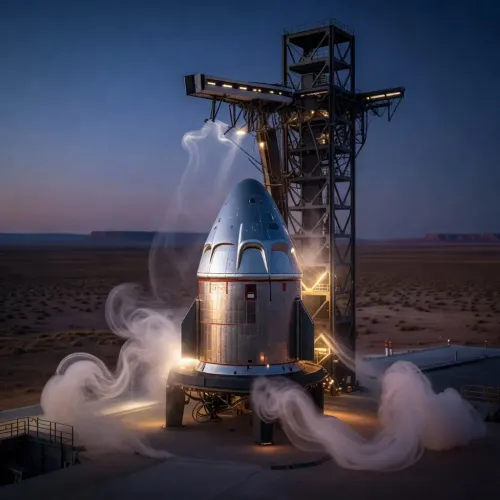
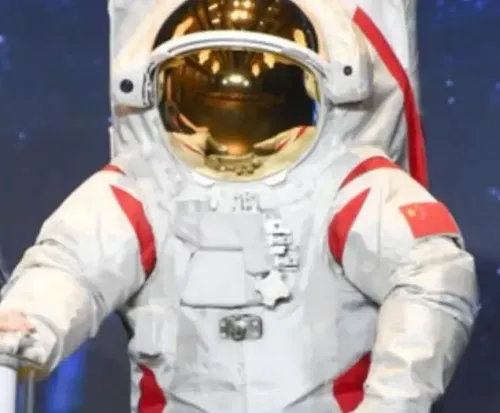
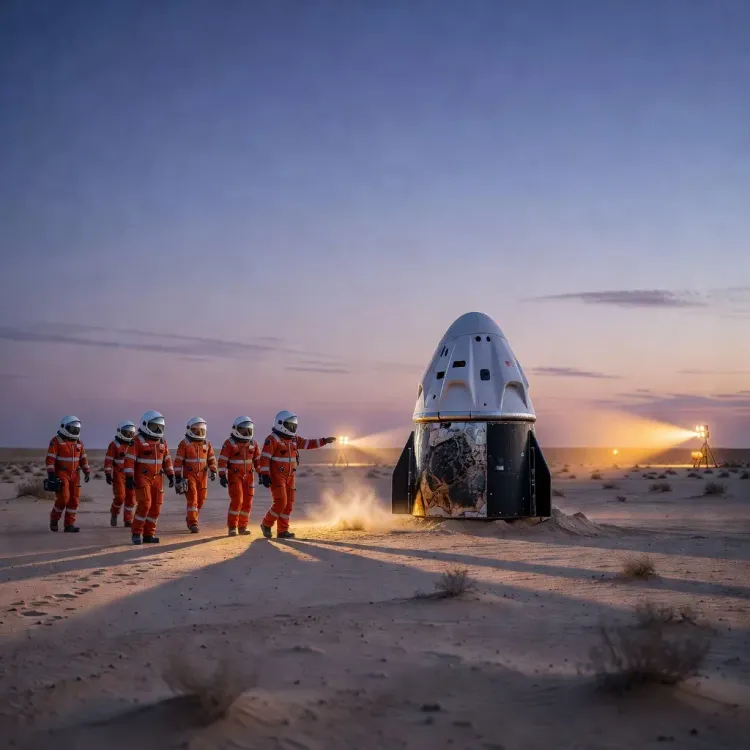
China's Shenzhou-21 astronauts touched down safely on Friday, 29 May 2026, concluding a mission of more than 200 days aboard the Tiangong space station — the longest on-orbit stay ever recorded by a Chinese crew. The trio landed at the Dongfeng landing site in the Inner Mongolia autonomous region at approximately 8:11 pm local time, aboard the Shenzhou-22 spacecraft, according to state broadcaster CCTV.
A mission extended by emergency
The crew's time in orbit was stretched by one month beyond the original schedule after their spacecraft was pressed into service as an emergency return vehicle for the previous crew. The unplanned extension underscored the operational flexibility — and the pressure — now built into China's increasingly ambitious human spaceflight programme.
Groundbreaking embryo experiment
Among the mission's most closely watched scientific objectives was the return of artificial embryo samples cultivated in microgravity, intended to help researchers determine whether human reproduction is feasible in zero gravity. Cang Huaixing, chief researcher for space station experiments at the Technology and Engineering Centre for Space Utilisation of the Chinese Academy of Sciences, confirmed the experiment went off 'successfully', with the samples refrigerated and ready for further analysis on the ground.
Why it matters
The successful return advances China's long-term ambitions for deep-space human presence, including potential lunar and Mars missions where reproduction biology could become a critical variable. Returning viable embryo samples from orbit is a milestone with few precedents globally, placing China at the frontier of space life-sciences research.
The competitive backdrop
Tiangong has now hosted multiple consecutive long-duration crews, demonstrating sustained operational capability that rivals established programmes. The Dongfeng landing site — located in the Gobi Desert region of Inner Mongolia — has become the routine recovery zone for China Manned Space Agency missions, reflecting a mature and repeatable end-to-end architecture.
What's next
The embryo samples will be handed to Chinese Academy of Sciences researchers for detailed study, with findings expected to inform future mission planning. As Tiangong continues to operate with rotating crews, the programme's next milestones will include expanding the station's scientific payload capacity and, potentially, hosting international partners — a development that geopolitical observers are watching closely.
Point of View
An area Western programmes have largely deferred. Mainstream coverage focuses on the duration record, but the embryo experiment is the strategically significant data point: it feeds directly into planning for lunar outposts and eventual Mars transit, where crew reproduction is no longer a philosophical question. The one-month emergency extension also reveals a quiet strength — Tiangong's architecture is robust enough to absorb unplanned contingencies without mission failure. As the US and China race toward permanent lunar presence, life-sciences leadership may prove as decisive as rocket thrust.
NationPress
13 Oct 2026
Frequently Asked Questions
When did the Shenzhou-21 crew land?
The Shenzhou-21 crew landed on Friday, 29 May 2026 , at approximately 8:11 pm local time at the Dongfeng landing site in Inner Mongolia , aboard the Shenzhou-22 spacecraft, according to state broadcaster CCTV .
How long were the Chinese astronauts in space?
The crew spent more than 200 days aboard the Tiangong space station , the longest on-orbit stay by any Chinese crew on record. Their mission was extended by one month after their spacecraft was used in an emergency operation for the previous crew.
What experiment did the Shenzhou-21 crew bring back?
The crew returned artificial embryo samples cultivated in microgravity to study whether human reproduction is possible in zero gravity. Cang Huaixing of the Chinese Academy of Sciences confirmed the experiment was 'successful' and the samples were refrigerated for further study.
Why does the artificial embryo experiment matter for space exploration?
Understanding human reproductive biology in zero gravity is essential for planning long-duration missions to the Moon or Mars. If the samples yield viable data, they could inform crew health protocols and life-support design for missions lasting years rather than months.
Where is the Dongfeng landing site?
The Dongfeng landing site is located in the Inner Mongolia autonomous region of China , in the Gobi Desert area. It serves as the primary recovery zone for China Manned Space Agency crewed missions returning from Tiangong .