Pralhad Joshi backs India-UK CETA, says farm sector protected
Synopsis
Union Consumer Affairs Minister Pralhad Joshi on 15 July 2026 endorsed the India-UK CETA, stressing that dairy, cereals, fruits, vegetables and edible oils are shielded from import pressure. The deal follows India's post-RCEP template of selective liberalisation, protecting farm constituencies while opening non-agricultural sectors.
Key Takeaways
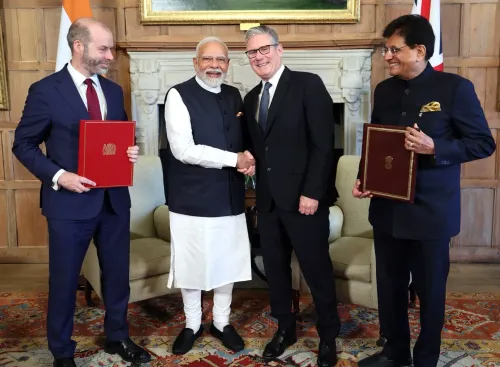
Union Consumer Affairs Minister Pralhad Joshi publicly backed the India-UK Comprehensive Economic and Trade Agreement (CETA) on 15 July 2026 .
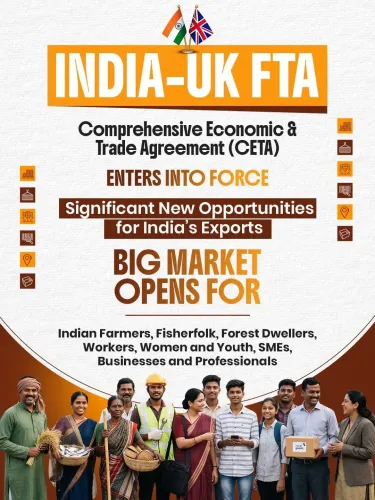
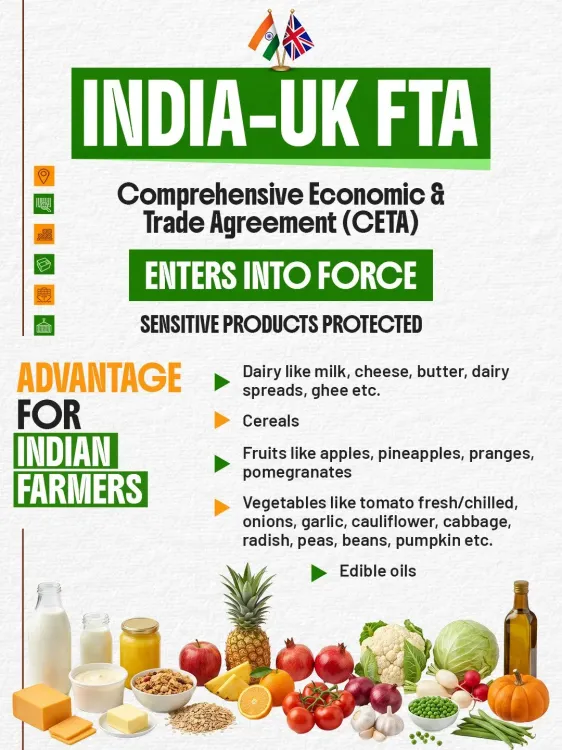
Sensitive agricultural products — dairy, cereals, key fruits, vegetables and edible oils — are explicitly listed as protected under the agreement.
The deal follows the same selective-liberalisation template as the India-UAE (February 2022) and India-Australia (December 2022) pacts, which also carved out core farm commodities.
The United Kingdom is India's fifth-largest trading partner ; formal CETA negotiations began in January 2022 after Brexit.
Parliamentary ratification in both countries and scrutiny of sanitary and phytosanitary (SPS) standards remain key steps ahead.
The agreement is credited to the trade vision of Prime Minister Narendra Modi , who withdrew India from RCEP in 2019 and pivoted to bilateral deals.
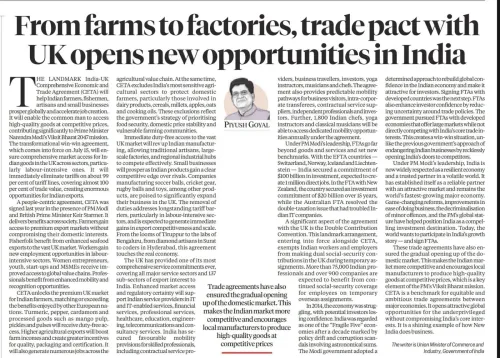
Union Consumer Affairs Minister Pralhad Joshi on Wednesday, 15 July 2026, hailed the India-UK Comprehensive Economic and Trade Agreement (CETA) as a 'landmark step' that strengthens India's economic interests while keeping the agricultural sector shielded from import pressure. Joshi emphasised that sensitive farm commodities — including dairy, cereals, key fruits, vegetables and edible oils — remain protected under the deal.
Context
In his post, Joshi stated that the agreement 'strengthens India's economic interests while safeguarding our farmers and agricultural sector,' adding that 'sensitive agricultural products including dairy, cereals, key fruits, vegetables and edible oils remain protected, ensuring enhanced market opportunities without compromising the interests of Indian farmers.' He credited the deal to the vision of Prime Minister Narendra Modi, saying India continues to pursue trade agreements that 'promote growth, expand global opportunities and keep our national interests at the forefront.'
The India-UK CETA has been under negotiation since January 2022, when formal talks were launched following the United Kingdom's departure from the European Union. The UK is India's fifth-largest trading partner, and the negotiations have covered goods, services and investment across both economies.
Policy Backdrop
The India-UK deal follows a template India has used consistently since withdrawing from the Regional Comprehensive Economic Partnership (RCEP) in 2019. Under PM Modi, India has concluded calibrated bilateral agreements that open non-agricultural sectors while maintaining high tariffs or tariff-rate quotas on politically sensitive farm products.
The India-UAE Comprehensive Economic Partnership Agreement, signed in February 2022, excluded dairy and several agricultural items from tariff cuts. The India-Australia Economic Cooperation and Trade Agreement, which entered into force in December 2022, carried similar carve-outs for wheat, rice, dairy and edible oils. The India-UK CETA appears to extend this selective liberalisation approach to one of India's most significant post-Brexit trade relationships.
Joshi's portfolio — overseeing Consumer Affairs, Food and Public Distribution — places him at the intersection of farm-price policy and trade negotiations, making his endorsement of the deal's agricultural safeguards politically significant.
Stakeholders and Impact
Indian farmers, dairy cooperatives and edible oil processors have historically been the most vocal constituencies resisting broad agricultural liberalisation. By explicitly listing the protected categories, the government's messaging is directed at reassuring these groups that the deal does not replicate the concerns that drove India out of RCEP.
On the UK side, negotiators have sought greater market access in services and Scotch whisky, while India has pushed for openings in textiles and information technology services. The exclusion of core agricultural commodities from tariff cuts means Indian farm lobbies are unlikely to face the import competition that has been a flashpoint in previous trade discussions.
Dairy cooperatives — a powerful political constituency in states such as Gujarat, Maharashtra and Uttar Pradesh — had raised concerns during earlier rounds of the India-UK negotiations about potential exposure to cheaper British dairy imports. The minister's statement directly addresses those concerns.
What's Next
The agreement will need to go through parliamentary ratification processes in both countries. Trade analysts will watch for any side letters on sanitary and phytosanitary (SPS) standards, which can effectively function as non-tariff barriers even when headline tariffs are protected. Tariff-rate quotas on products such as cheese, skimmed milk powder and edible oils may also come under review in the medium term.
With the deal now publicly endorsed at the ministerial level, the India-UK CETA marks a significant expansion of India's post-RCEP bilateral trade architecture — and a test of whether selective liberalisation can deliver measurable export gains for Indian industry without triggering political backlash from the farm sector.
Point of View
The government is pre-empting farmer-organisation criticism before ratification debates begin. The India-UK CETA represents the third major bilateral deal under the Modi government's post-RCEP pivot, consolidating a doctrine of 'open on services, protect on agriculture' that has so far kept domestic political costs manageable. The explicit ministerial endorsement from the Consumer Affairs and Food portfolio signals that the government views farm-sector optics as the primary reputational risk of the deal. How SPS standards and tariff-rate quotas are eventually structured will determine whether the agricultural ring-fence holds in practice or erodes quietly over time.
NationPress
13 Oct 2026
Frequently Asked Questions
What is the India-UK CETA and when was it announced?
The India-UK Comprehensive Economic and Trade Agreement (CETA) is a bilateral trade deal covering goods, services and investment between India and the United Kingdom. Formal negotiations began in January 2022 after Brexit, and Union Minister Pralhad Joshi publicly endorsed the concluded agreement on 15 July 2026.
Are Indian farmers protected under the India-UK trade deal?
Yes. According to Minister Pralhad Joshi, sensitive agricultural products including dairy, cereals, key fruits, vegetables and edible oils remain protected under the India-UK CETA, meaning they are shielded from tariff cuts that could expose Indian farmers to cheaper imports.
How does the India-UK CETA compare to India's other trade agreements?
The India-UK CETA follows the same selective-liberalisation template as the India-UAE pact (February 2022) and the India-Australia agreement (December 2022), both of which excluded core agricultural commodities such as dairy, wheat, rice and edible oils from tariff reductions.
What happens next after the India-UK CETA announcement?
The agreement must go through parliamentary ratification in both India and the United Kingdom. Key areas to watch include any side letters on sanitary and phytosanitary (SPS) standards and the structure of tariff-rate quotas on products such as cheese, skimmed milk powder and edible oils.
Why did India withdraw from RCEP and shift to bilateral trade deals?
India withdrew from the Regional Comprehensive Economic Partnership (RCEP) in 2019, citing concerns about import surges — particularly in agricultural and dairy products — from large economies such as China. Since then, under PM Narendra Modi, India has pursued calibrated bilateral agreements that open non-agricultural sectors while maintaining protections for farm commodities.