India-UK CETA to boost farmers, MSMEs and fishermen: Piyush Goyal
Synopsis
India's trade deal with the UK isn't just a diplomatic milestone — it's a structural market-access shift. With tariffs eliminated on 99% of lines from 15 July, Indian farmers, fisherfolk, artisans, and MSMEs gain preferential entry into one of the world's wealthiest consumer markets, while sensitive domestic sectors like dairy and millets stay protected.
Key Takeaways
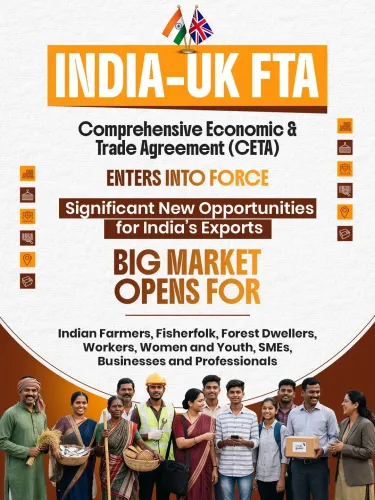
The India-UK CETA comes into force on 15 July , eliminating tariffs on approximately 99 per cent of tariff lines covering nearly 100 per cent of bilateral trade value.
Commerce Minister Piyush Goyal said the deal benefits farmers, fishermen, artisans, women entrepreneurs, startups, and MSMEs .
Agricultural products including turmeric, pepper, cardamom, mango pulp, pickles , and pulses will receive duty-free access to the UK.
Sensitive sectors — dairy, cereals, millets, apples, oats , and cooking oils — are excluded to protect domestic farmers and food security.
Manufacturers of cricket gear, soccer balls, rugby balls , and toys are among the industries expected to expand UK market share.
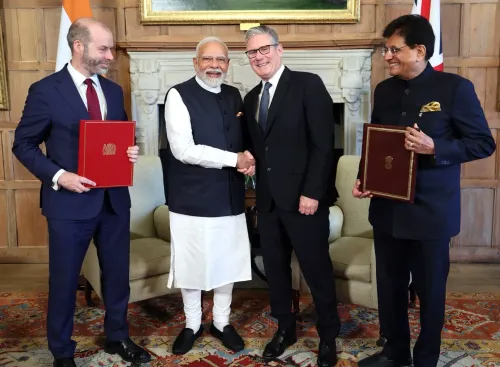
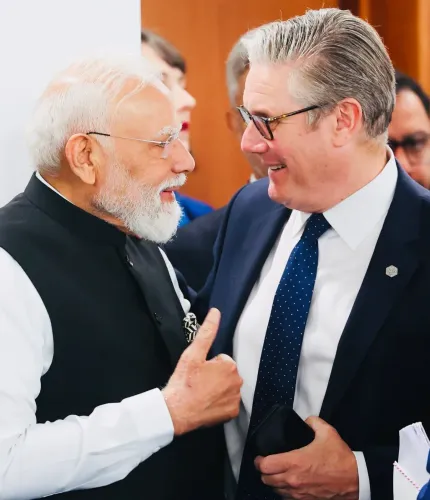
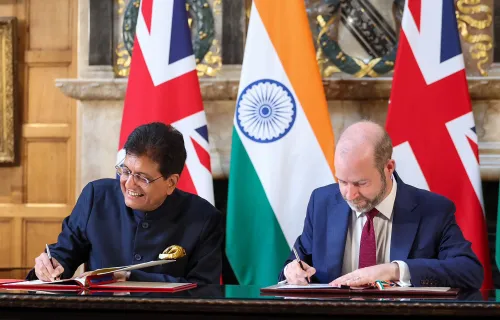
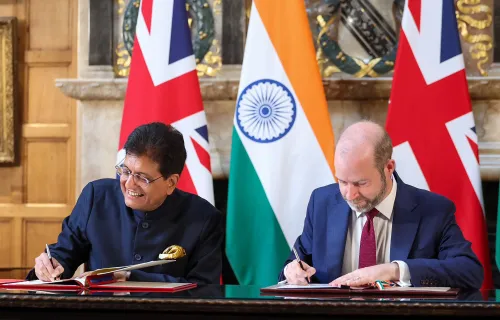
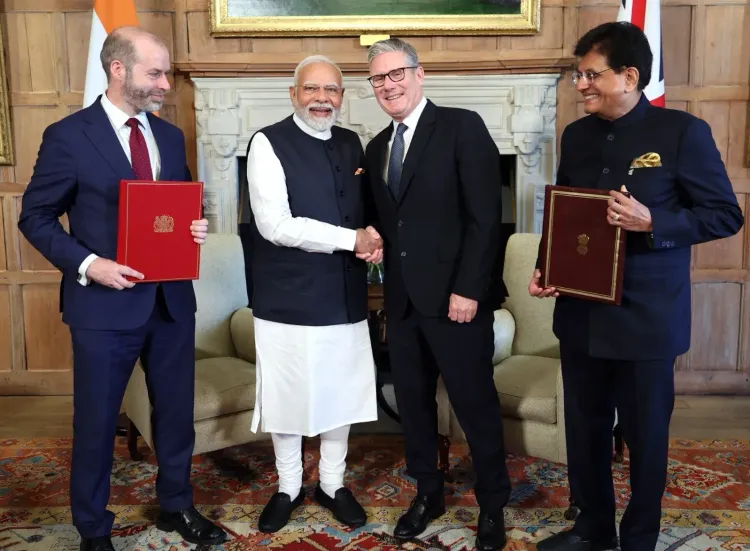
The deal was signed last year in the presence of PM Narendra Modi and British PM Keir Starmer .
Commerce and Industry Minister Piyush Goyal on Tuesday, 23 June said the India-UK Comprehensive Economic and Trade Agreement (CETA) is a people-centric pact designed to expand opportunities for Indian farmers, fishermen, artisans, women entrepreneurs, and MSMEs without compromising the country's core interests. The agreement, which comes into force on 15 July, will immediately eliminate tariffs on approximately 99 per cent of tariff lines, covering nearly 100 per cent of bilateral trade value.
What the Agreement Covers
According to Goyal, the CETA delivers comprehensive market access for Indian goods in the UK across sectors, with particular emphasis on labour-intensive industries. The deal was signed last year in the presence of Prime Minister Narendra Modi and British Prime Minister Keir Starmer. Goyal described it as a 'transformational win-win agreement' that creates immediate export competitiveness gains for Indian producers.
Specific agricultural products set to receive duty-free access to the UK include turmeric, pepper, cardamom, mango pulp, pickles, and pulses. The minister noted that these benefits match or exceed those currently enjoyed by other European nations in the UK market.
Key Beneficiaries Across Sectors
Goyal outlined a broad cross-section of beneficiaries. Farmers gain access to premium export markets; fisherfolk benefit from enhanced seafood export volumes to the UK; workers in labour-intensive sectors stand to gain new employment; and professionals receive improved mobility and credential recognition opportunities.
On the manufacturing side, businesses producing soccer balls, cricket gear, rugby balls, and toys are expected to significantly expand their UK footprint. The minister cited hubs spanning the country — 'from the looms of Tiruppur to the labs of Bengaluru, from diamond artisans in Surat to coders in Hyderabad' — as direct beneficiaries of the deal.
Sensitive Sectors Kept Out
The CETA deliberately excludes India's most sensitive agricultural categories. Dairy products, cereals, millets, apples, oats, and cooking oils have been kept outside the agreement's scope. Goyal stated these exclusions reflect the government's strategy of prioritising food security, domestic price stability, and the interests of vulnerable farming communities.
Broader Economic Impact
Beyond agriculture, Goyal argued that immediate duty-free UK market access will accelerate Indian manufacturing, enabling traditional artisans, large-scale factories, and regional industrial hubs to compete more effectively against rival exporters. Small businesses, he said, will gain a clear competitive edge as tariff barriers — particularly in labour-intensive sectors — are dismantled from the agreement's effective date.
With the CETA set to take effect on 15 July, industry bodies and exporters will be watching closely to see whether the projected gains in farm incomes, job creation, and MSME access to global value chains materialise in the first full year of implementation.
Point of View
Cold-chain logistics, or packaging standards the UK market demands. The exclusion of dairy and millets is prudent, but the government has yet to detail how it will help smaller agri-exporters meet UK phytosanitary and quality benchmarks. The deal's 15 July effective date gives exporters almost no runway to prepare, raising legitimate questions about whether the projected first-year gains are achievable or aspirational.
NationPress
22 Sept 2026
Frequently Asked Questions
What is the India-UK CETA and when does it take effect?
The India-UK Comprehensive Economic and Trade Agreement (CETA) is a bilateral free trade deal signed last year by Prime Minister Narendra Modi and British Prime Minister Keir Starmer. It comes into force on 15 July and eliminates tariffs on approximately 99 per cent of tariff lines, covering nearly 100 per cent of bilateral trade value.
Which Indian agricultural products get duty-free access to the UK under CETA?
Products including turmeric, pepper, cardamom, mango pulp, pickles, and pulses will receive duty-free access to the UK market. Commerce Minister Piyush Goyal said these benefits match or exceed those currently available to other European nations.
Are any agricultural sectors excluded from the India-UK trade deal?
Yes. Dairy products, cereals, millets, apples, oats, and cooking oils have been kept outside the agreement's scope. The government says these exclusions are intended to protect food security, domestic price stability, and vulnerable farming communities.
How will Indian MSMEs and manufacturers benefit from the CETA?
Immediate duty-free access to the UK market is expected to boost competitiveness for small businesses and manufacturers, particularly in labour-intensive sectors. Companies producing cricket gear, soccer balls, rugby balls, and toys are among those projected to expand their UK business significantly.
Who are the primary beneficiaries of the India-UK CETA according to the government?
According to Commerce Minister Piyush Goyal, the primary beneficiaries include farmers, fishermen, artisans, workers in labour-intensive sectors, women entrepreneurs, youth, startups, MSMEs, and professionals seeking mobility and credential recognition opportunities in the UK.