India-UK Free Trade Agreement takes effect: Modi calls it 'significant moment'
Synopsis
After years of stop-start negotiations, the India-UK CETA is now in force — delivering zero-duty access for nearly 99% of India’s exports and exempting Indian professionals in the UK from double social security contributions for up to five years. For Indian MSMEs, textile exporters, and IT firms, this is the most consequential bilateral trade shift in a generation.
Key Takeaways
The India-UK Comprehensive Economic and Trade Agreement (CETA) and Agreement on Social Security came into force on 15 July .
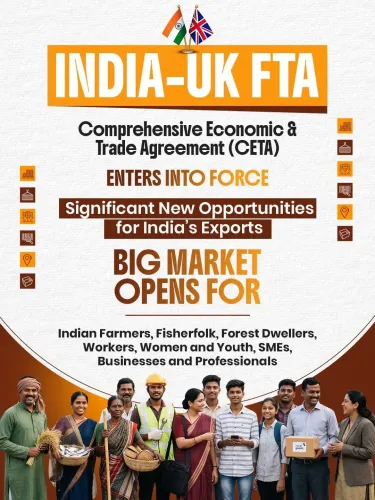
The CETA provides zero-duty market access for nearly 99% of India’s exports, covering almost 100% of trade value.
Key beneficiary sectors include textiles , leather , gems and jewellery , engineering goods , marine products , and processed food .
The Social Security Agreement exempts Indian professionals on temporary UK assignments from double contributions for up to five years .
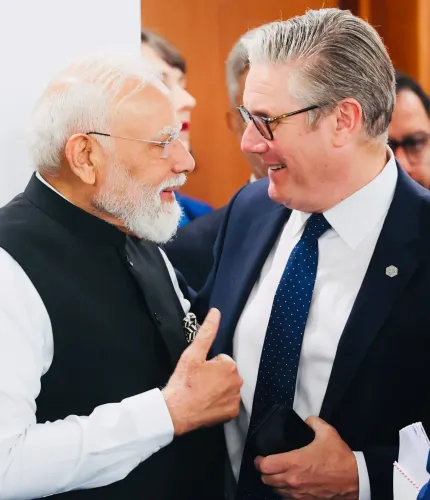
Prime Minister Narendra Modi described the development as a ‘significant moment’ in the India-UK partnership.
Commerce Minister Piyush Goyal called it a ‘defining milestone’ achieved under Prime Minister Modi’s leadership.
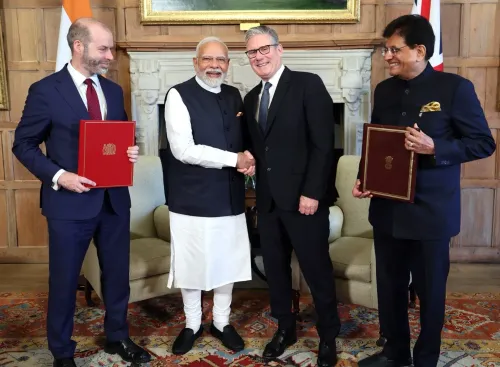
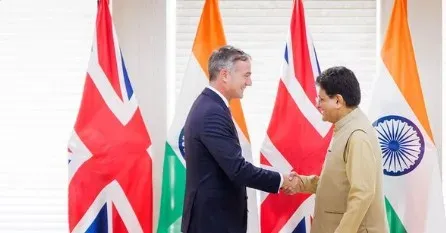
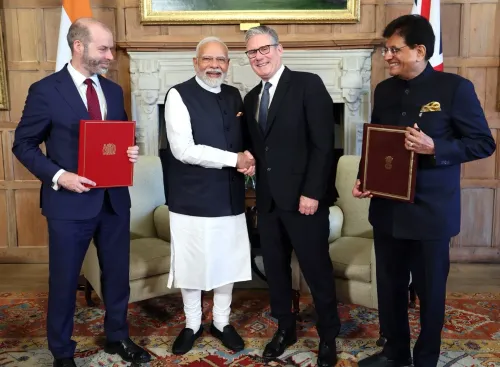
Prime Minister Narendra Modi on Wednesday, 15 July hailed the coming into force of the India-UK Comprehensive Economic and Trade Agreement (CETA) and the accompanying Agreement on Social Security as a “significant moment” in bilateral ties. The twin pacts, which take effect immediately, are expected to deepen economic engagement and open new avenues for businesses, workers, and investors across both nations.
What Modi Said
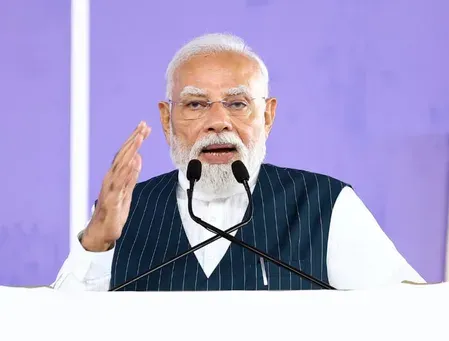
Responding to a post by Union Commerce and Industry Minister Piyush Goyal on X, the Prime Minister wrote: “This is a significant moment in the India-United Kingdom partnership. With the coming into force of the Comprehensive Economic and Trade Agreement (CETA) and the Agreement on Social Security, our economic linkages are going to get even deeper.”
Modi further stated that the agreements “translate our shared ambition into tangible opportunities for our people,” adding that the CETA would “give fresh momentum to our farmers, entrepreneurs and MSMEs” and grant several vibrant sectors stronger access to the UK market.
On professional mobility, the Prime Minister said the deal would “deepen cooperation in technology, professional services and innovation, while supporting greater mobility for skilled Indian talent.” He described the development as “a reflection of the mutual trust between our democracies and our resolve to build a forward-looking partnership driven by trade, technology, investment and innovation.”
Key Provisions of the CETA
Commerce and Industry Minister Piyush Goyal described the agreement as “a defining milestone in India-UK relations.” According to Goyal, the CETA delivers zero-duty market access for nearly 99% of India’s exports, covering almost 100% of trade value.
Sectors set to benefit include textiles, leather, gems and jewellery, engineering goods, marine products, chemicals, and processed food. The agreement is also expected to open new avenues in IT, financial services, education, professional services, and business services, while facilitating greater mobility for Indian professionals.
The Social Security Agreement Explained
The accompanying Agreement on Social Security exempts Indian professionals on temporary assignments in the UK from paying double social security contributions for up to five years. This provision is expected to significantly enhance the competitiveness of Indian companies operating in the UK and reduce the cost burden on skilled Indian workers deployed temporarily abroad.
Broader Impact and What It Means for India
The twin agreements are widely seen as a major step in expanding trade and investment flows between the two countries. MSMEs, farmers, and manufacturers are among the primary beneficiaries flagged by the government. This comes amid a broader Indian push to conclude trade deals with major economies — the UK pact follows years of negotiations that had stalled repeatedly over tariff sensitivities and immigration-linked social security concerns.
Notably, the Social Security Agreement directly addresses a long-standing demand from Indian industry, which had flagged double-contribution requirements as a structural barrier to deploying talent in the UK. With both agreements now in force, industry bodies are expected to begin operationalising the new access framework in the coming weeks.
Point of View
But the real test lies in utilisation. Past preferential trade agreements India has signed have seen chronically low uptake from exporters unfamiliar with rules-of-origin requirements or unable to meet UK compliance standards. The Social Security Agreement is arguably the more immediately impactful of the two: double-contribution costs have been a genuine deterrent for Indian IT and professional services firms deploying talent in the UK, and removing that friction for five years could shift hiring calculus meaningfully. Whether MSMEs — consistently cited as beneficiaries — can actually access UK markets at scale without trade facilitation support remains the unanswered question mainstream coverage has largely glossed over.
NationPress
14 Oct 2026
Frequently Asked Questions
What is the India-UK CETA and when did it come into force?
The India-UK Comprehensive Economic and Trade Agreement (CETA) is a bilateral free trade pact that came into force on 15 July 2025. It grants zero-duty market access for nearly 99% of India’s exports, covering almost 100% of trade value, and opens new avenues across goods and services sectors.
Which Indian sectors benefit most from the India-UK free trade agreement?
Textiles, leather, gems and jewellery, engineering goods, marine products, chemicals, and processed food are among the primary goods sectors to benefit. On the services side, IT, financial services, education, and professional services stand to gain, along with greater mobility for skilled Indian professionals.
What does the India-UK Social Security Agreement do?
The Agreement on Social Security exempts Indian professionals on temporary assignments in the UK from paying double social security contributions for up to five years. This is expected to reduce costs for Indian companies deploying talent in the UK and improve their competitiveness.
How does the CETA help Indian MSMEs and farmers?
According to Commerce Minister Piyush Goyal, the CETA will give MSMEs, farmers, and manufacturers preferential access to the UK market under zero or reduced duties. The government expects this to unlock new export opportunities and boost competitiveness for smaller Indian enterprises.
How significant is this agreement compared to India’s other trade deals?
The India-UK CETA is considered one of India’s most comprehensive bilateral trade agreements to date, given the breadth of sectors covered and the near-total coverage of trade value under zero-duty access. Negotiations had been ongoing for several years, making its conclusion a notable diplomatic and economic milestone.