PM Modi hails India-UK trade and social security pacts

Synopsis
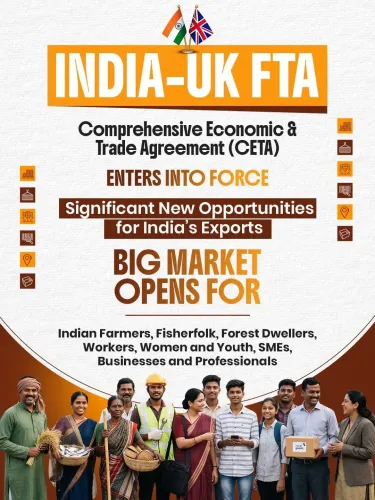
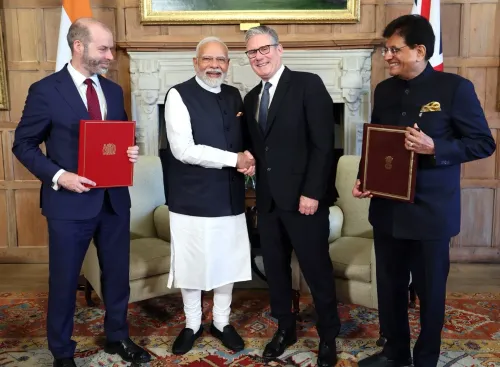
Prime Minister Narendra Modi on 15 July 2026 announced the coming into force of India's Comprehensive Economic and Trade Agreement and Social Security Agreement with the United Kingdom, calling it a significant milestone in the bilateral partnership and deepening economic ties between the two nations.
Key Takeaways
Prime Minister Narendra Modi on 15 July 2026 confirmed that the India-UK Comprehensive Economic and Trade Agreement has come into force.
An Agreement on Social Security between India and the United Kingdom has also simultaneously come into force.
Negotiations for a bilateral trade deal were formally launched in January 2022 , making this the culmination of over four years of talks.
The deal is part of India 's accelerated FTA strategy, which previously delivered agreements with the UAE (2022) and Australia (2022).
Key beneficiaries include Indian exporters , UK service firms , and Indian professionals working in the United Kingdom .
Implementation focus will now shift to tariff schedules, social security coordination, and joint dispute-resolution mechanisms.
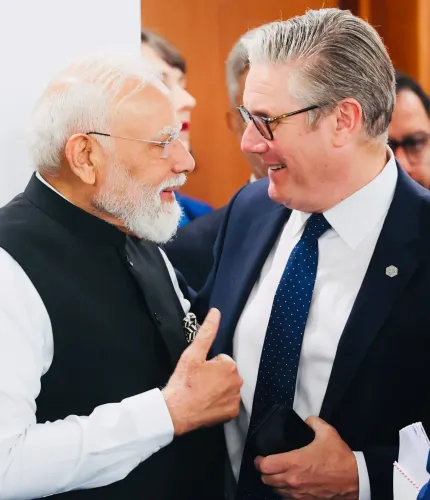
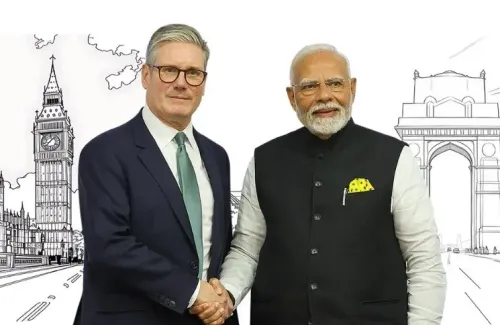
Prime Minister Narendra Modi on Wednesday, 15 July 2026 welcomed the coming into force of two landmark bilateral agreements with the United Kingdom — a Comprehensive Economic and Trade Agreement (CETA) and an Agreement on Social Security — describing the development as 'a significant moment in the India-United Kingdom partnership.'
Context
Modi posted on X that the two agreements, now in force, would deepen economic linkages between the two countries. His post, though truncated, signals the formal operationalisation of a trade architecture that both governments have worked toward for several years. The dual nature of the announcement — covering both goods-and-services trade and social security — underscores the comprehensive scope of the bilateral reset.
India and the United Kingdom formally launched free trade agreement negotiations in January 2022, positioning the deal as a flagship post-Brexit economic partnership for London and a key pillar of New Delhi's accelerated FTA strategy.
Policy Backdrop
The agreements fit squarely into India's broader push to diversify trade relationships since 2021. New Delhi concluded a trade pact with the UAE in February 2022 and with Australia in December 2022, reflecting a deliberate strategy to expand market access for Indian exporters while attracting foreign investment and services partnerships.
For the United Kingdom, the agreement with India — the world's fifth-largest economy — represents one of the most consequential bilateral trade deals pursued since Brexit. London has simultaneously sought accession to the Comprehensive and Progressive Agreement for Trans-Pacific Partnership (CPTPP) and concluded separate deals with Australia and New Zealand, but the sheer scale of the Indian market makes this pact particularly significant.
Social security agreements, which typically coordinate contribution rules for professionals temporarily working in the other country, are a standard accompaniment to modern trade pacts. Their inclusion here is especially relevant given the large number of Indian skilled workers and professionals present in the UK.
Stakeholders and Impact
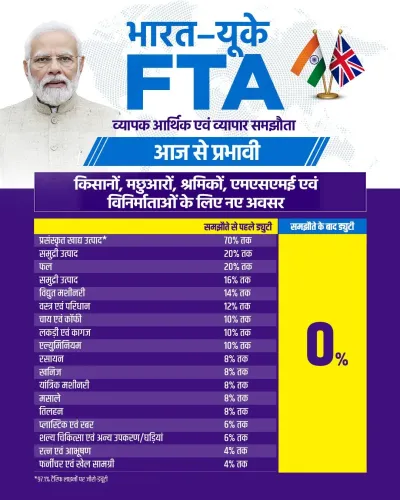
Indian exporters in sectors such as textiles, pharmaceuticals, engineering goods, and information technology stand to gain improved market access to the UK. Conversely, British financial services, education, and professional services firms are expected to benefit from enhanced access to the Indian market.
The Agreement on Social Security is of direct relevance to Indian professionals working in the UK and their employers, as it is expected to prevent double payment of social security contributions and clarify benefit portability. UK nationals working in India stand to receive reciprocal protections.
Parliamentarians, industry chambers, and trade unions in both countries will now scrutinise sector-specific tariff schedules and implementation timelines to assess the on-ground impact of the pact.
What's Next
With both agreements now in force, attention shifts to implementation: the rollout of revised tariff schedules, the operationalisation of social security coordination mechanisms, and the establishment of joint review bodies to monitor compliance and resolve disputes. Sector-specific transition periods, where applicable, will be closely watched by industry.
The coming into force of these pacts is likely to accelerate business-to-business engagement between the two countries, and may prompt similar momentum in India's ongoing trade negotiations with other major economies, including the European Union.
Point of View
Moving it from aspiration to enforceable architecture. For Modi, this is a tangible foreign-policy win that reinforces his government's narrative of India as a confident, deal-making economic power. The inclusion of a social security agreement signals that New Delhi extracted meaningful concessions on the mobility of skilled workers — historically a sticking point in FTA talks with developed economies. Coming alongside India's existing pacts with the UAE and Australia, this deal further cements the pattern of India anchoring its trade strategy in bilateral agreements rather than multilateral forums.
NationPress
13 Oct 2026
Frequently Asked Questions
What is the India-UK Comprehensive Economic and Trade Agreement?
The India-UK Comprehensive Economic and Trade Agreement (CETA) is a bilateral trade pact between India and the United Kingdom that came into force in July 2026 , aimed at reducing tariffs and expanding market access for goods and services between the two countries. Negotiations were launched in January 2022 following the UK's departure from the European Union.
What does the India-UK Social Security Agreement mean for Indian workers in the UK?
The India-UK Agreement on Social Security is designed to prevent Indian professionals working in the United Kingdom from paying social security contributions in both countries simultaneously. It also helps clarify benefit portability, offering greater financial certainty to skilled workers and their employers on both sides.
When did India and the UK start FTA negotiations?
India and the United Kingdom formally launched free trade agreement negotiations in January 2022 , positioning the deal as a priority post-Brexit partnership for both governments.
How does the India-UK trade deal fit into India's broader FTA strategy?
India has pursued an accelerated bilateral FTA strategy since 2021, concluding deals with the UAE in February 2022 and with Australia in December 2022 . The India-UK agreement is the latest and most significant addition to this expanding network of trade partnerships.
Who benefits from the India-UK trade and social security agreements?
Key beneficiaries include Indian exporters in sectors such as textiles, pharmaceuticals, and IT, as well as UK financial services and professional services firms seeking greater access to the Indian market. Indian skilled workers in the UK also benefit directly from the social security provisions.