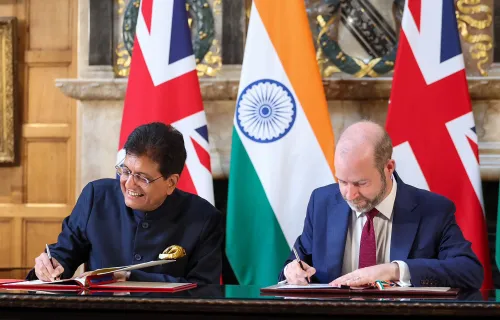
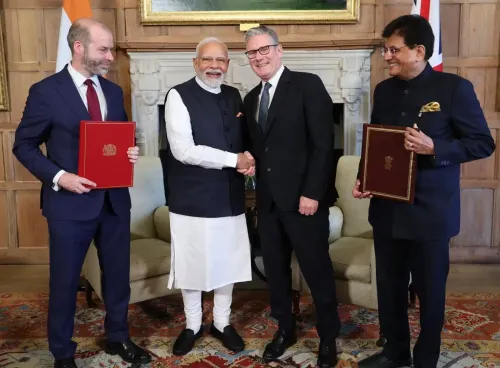
Piyush Goyal hails India-UK CETA as people-centric trade win
Synopsis
Commerce Minister Piyush Goyal has championed the India-UK CETA as a people-centric agreement that opens the premium UK market for Indian farmers, MSMEs, women entrepreneurs and startups while protecting India's core interests, signalling the government's push for domestic ratification.
Key Takeaways
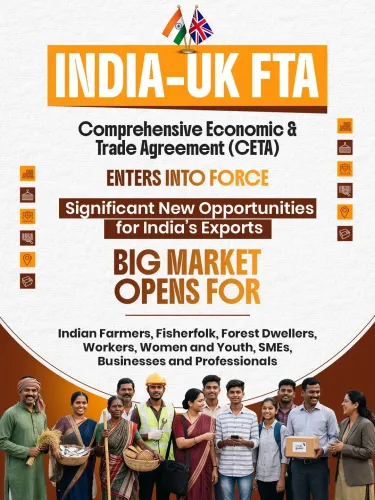
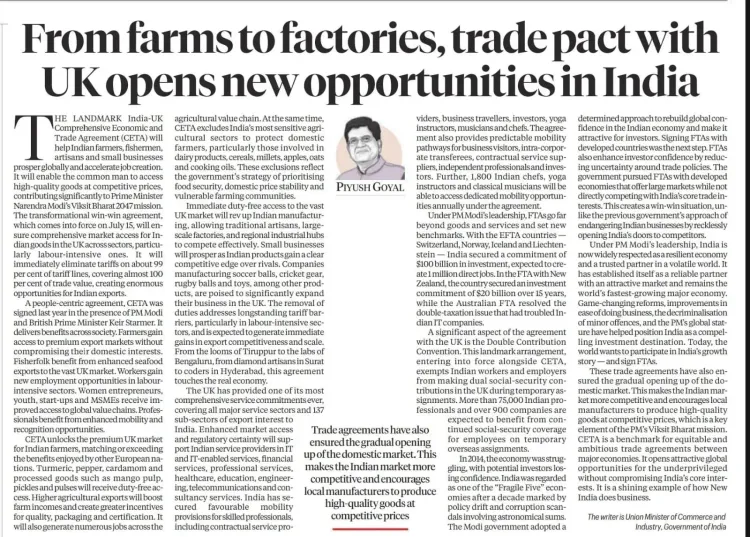
Union Commerce Minister Piyush Goyal publicly backed the India-UK CETA on 23 June 2026 , calling it a defining example of how 'New India does business.' The minister identified Indian farmers, artisans, MSMEs, women entrepreneurs, youth and startups as the primary beneficiaries of the agreement.
Goyal argued the deal unlocks the premium United Kingdom market while 'empowering the underprivileged without compromising India's core interests.' India-UK FTA negotiations were relaunched in January 2022 , part of a broader trade diversification drive that also produced deals with the UAE and Australia .
Next steps include parliamentary ratification in both countries, publication of the final tariff schedule, and formation of a joint implementation committee.
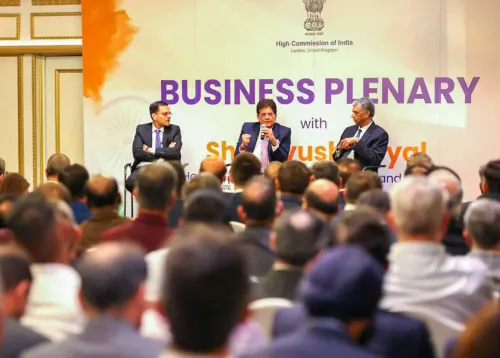
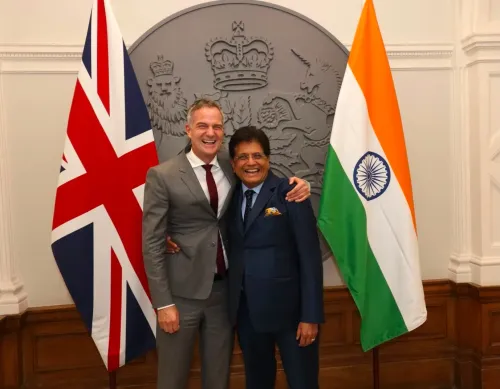
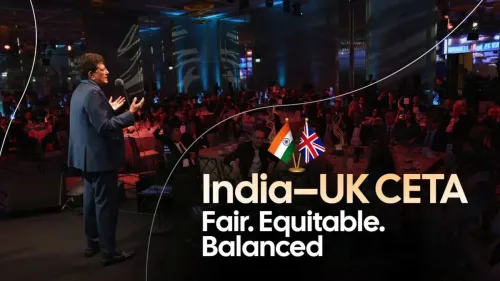
Union Commerce and Industry Minister Piyush Goyal on Tuesday, 23 June 2026 publicly championed the India-UK Comprehensive Economic and Trade Agreement (CETA), calling it a testament to how 'New India does business' and arguing the pact will deliver tangible benefits to farmers, artisans, women entrepreneurs, youth, startups and MSMEs across the country.
Context
In a detailed opinion article, Minister Goyal described the India-UK CETA as a 'truly people-centric agreement' that unlocks the premium United Kingdom market for a wide cross-section of Indian society. He specifically highlighted that the deal creates 'attractive global opportunities' for women entrepreneurs and the youth while 'empowering the underprivileged without compromising India's core interests.' The minister's public advocacy signals the government's intent to build domestic consensus around the agreement.
The pact covers goods, services and investments, with Indian farmers and MSME exporters identified as among the primary beneficiaries. Goyal's framing — from farms to factories — underlines the administration's pitch that trade liberalisation with a developed economy need not come at the cost of vulnerable domestic sectors.
Policy Backdrop
India and the United Kingdom formally relaunched Free Trade Agreement negotiations in January 2022 after a gap of several years, part of a broader Indian push to diversify export markets. Around the same period, India concluded Comprehensive Economic Partnership Agreements with the UAE in February 2022 and with Australia in April 2022, signalling an accelerated bilateral trade strategy under the Commerce Ministry.
Successive rounds of talks between Indian and British negotiators covered tariff schedules on labour-intensive goods — including textiles, leather, and agricultural produce — alongside services chapters relevant to India's IT and professional-services sectors. The government's consistent position has been to seek tariff cuts on export-competitive products while retaining safeguards on sensitive agricultural and industrial items, a calibrated opening rather than wholesale liberalisation.
Stakeholders and Impact
Indian farmers stand to gain from improved market access for agricultural products in a high-value consumer market. MSMEs, which account for a significant share of India's export basket, are expected to benefit from reduced tariff barriers and simplified rules of origin. Women entrepreneurs and startups have been specifically called out by Goyal as groups the agreement is designed to empower, reflecting the government's broader push to mainstream gender-inclusive trade policy.
For the United Kingdom, the agreement offers access to one of the world's fastest-growing consumer markets and a large, skilled workforce. Analysts have long noted that a UK-India deal carries symbolic weight for post-Brexit Britain as it builds an independent trade portfolio outside the European Union's framework.
What's Next
The agreement will need to clear parliamentary ratification processes in both countries before it enters into force. Key milestones to watch include the publication of the final tariff schedule, which will detail sector-by-sector concessions, and the constitution of a joint implementation committee to oversee compliance and dispute resolution. Goyal's high-profile public commentary suggests the government is preparing the political ground for that ratification process domestically.
If successfully implemented, the India-UK CETA would mark one of India's most significant trade agreements with a major Western economy and could set a template for ongoing negotiations with other developed-world partners, including the European Union.
Point of View
Human-interest terms — farmers, women, youth — rather than the technical tariff language that typically dominates FTA discourse. This is consistent with the BJP government's broader communication strategy of anchoring economic policy in grassroots narratives. The explicit mention of 'core interests' being protected is also a signal aimed at domestic constituencies wary of agricultural concessions, a politically sensitive fault line in every Indian trade negotiation. The minister's prominence as Leader of the House in the Rajya Sabha adds legislative weight to the advocacy, suggesting the government is readying the parliamentary path for ratification.
NationPress
22 Sept 2026
Frequently Asked Questions
What is the India-UK CETA?
The India-UK CETA, or Comprehensive Economic and Trade Agreement, is a bilateral trade pact between India and the United Kingdom designed to expand market access for goods, services and investments between the two countries. Negotiations were formally relaunched in January 2022.
Who will benefit from the India-UK trade deal?
According to Commerce Minister Piyush Goyal, the agreement is designed to benefit Indian farmers, artisans, MSMEs, women entrepreneurs, youth and startups by opening up the premium UK consumer market to Indian exporters.
Has the India-UK trade agreement been signed?
Minister Goyal's statements on 23 June 2026 indicate the agreement has been concluded at the negotiating level. The pact still requires parliamentary ratification in both countries before it formally enters into force.
What did Piyush Goyal say about the India-UK CETA?
Goyal described the India-UK CETA as a 'truly people-centric agreement' that unlocks attractive global opportunities for women entrepreneurs, youth and MSMEs while empowering the underprivileged and protecting India's core interests.
How does the India-UK deal fit into India's broader trade strategy?
The India-UK CETA is part of India's accelerated bilateral FTA drive that also produced agreements with the UAE in February 2022 and Australia in April 2022, aimed at diversifying export markets and integrating Indian industry into global value chains.