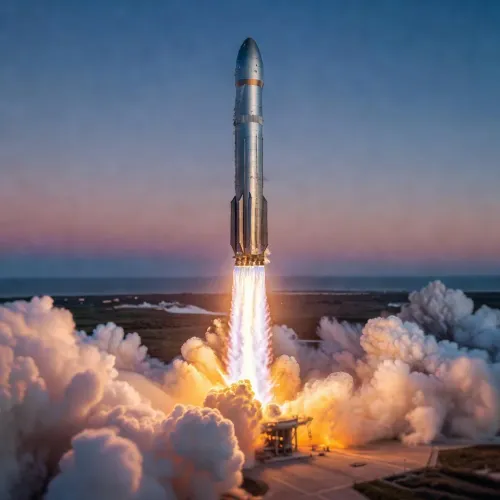
SpaceX IPO set for June 12 as space race moves beyond Earth
Synopsis
SpaceX is set to go public on June 12, 2026 — a landmark IPO that doubles as a geopolitical flashpoint, with China accelerating its own lunar programme and analysts questioning whether the world's most powerful rocket is nearing its engineering ceiling.
Key Takeaways
SpaceX is scheduled to go public on June 12, 2026 , marking one of the most anticipated tech IPOs in recent history.
A new institute in Beijing is reportedly focused on leapfrogging energy bottlenecks in space, reflecting the off-planet dimension of the US-China tech rivalry as of June 5, 2026 .
Technical analysts raised concerns around May 26, 2026 that SpaceX 's heavy-lift rocket may be encountering engineering limits similar to those that ended the Soviet N1 programme.
China released new details on May 25, 2026 about integrating expertise from both crewed and uncrewed lunar missions into a unified deep-space strategy.
The IPO will be the first major public valuation test for a commercial space giant operating at the intersection of private capital and national security.
SpaceX, the commercial space company founded by Elon Musk, is preparing to go public on June 12, 2026, a milestone that is drawing intense scrutiny from markets and governments alike — including China, which is watching the listing as a bellwether for the broader US-China tech competition now extending into outer space.
Why it matters
The SpaceX IPO is not merely a capital markets event. It represents the first major public valuation test for a private commercial space giant, and its timing coincides with an accelerating rivalry between Washington and Beijing over space infrastructure, launch capacity, and long-duration energy systems beyond Earth's atmosphere. Analysts note that the listing will set a benchmark for how investors price sovereign-adjacent space assets.
A newly established institute in Beijing has reportedly been highlighting the country's bid to leapfrog energy bottlenecks in space, underscoring how the tech race with the United States is increasingly moving off-planet, according to reports published as recently as June 5, 2026.
Engineering limits in focus
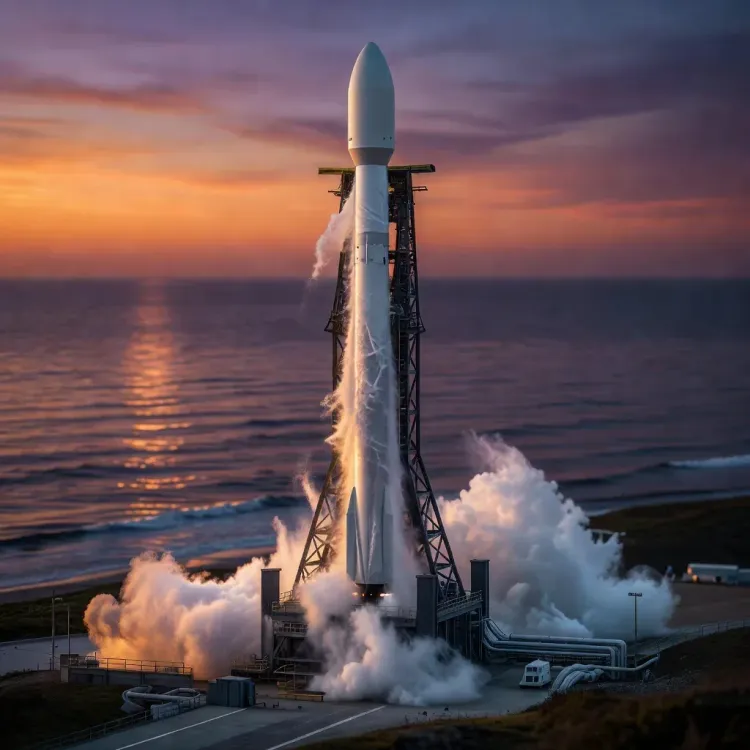
SpaceX's flagship heavy-lift vehicle has faced renewed questions about whether the world's most powerful rocket is encountering engineering constraints analogous to those that doomed the Soviet N1 rocket programme decades ago. The comparison, raised in technical circles around May 26, 2026, points to the inherent difficulty of scaling rocket systems beyond certain thrust thresholds without cascading failure modes.
Whether SpaceX has resolved those underlying physics challenges — or is managing them operationally — is expected to be a key disclosure risk that prospective IPO investors will scrutinise in the company's public filings.
China's lunar programme gains detail
China released further details around May 25, 2026 about how it is 'combining experiences and expertise' from its crewed and uncrewed lunar missions, signalling that its own deep-space roadmap is maturing in parallel with the SpaceX listing. The disclosure positions Beijing as a credible long-term competitor in cislunar operations, not merely a follower of American commercial space development.
The competitive backdrop
The SpaceX IPO arrives at a moment when commercial space has become a proxy for national technological leadership. China's state-backed launch providers and a growing cohort of private Chinese rocket firms are expanding capacity, while US export controls on satellite and propulsion technology have sharpened the bifurcation between the two ecosystems. Public markets will now have a direct mechanism to price that geopolitical premium into SpaceX shares.
What's next
All eyes will be on the June 12, 2026 debut and the valuation SpaceX commands at open. The offering is expected to clarify the company's revenue mix across launch services, Starlink broadband, and government contracts. How Beijing responds — diplomatically, regulatorily, and through accelerated domestic programme announcements — will be the secondary story to watch in the weeks that follow.
Point of View
But the more consequential story is how public ownership changes SpaceX's operational latitude under existing export control and ITAR regimes. China's pointed acceleration of lunar programme disclosures in the same week is unlikely to be coincidental — it is a signal to global investors that the space domain will remain contested, capping any 'monopoly premium' the market might otherwise assign to SpaceX. The Soviet N1 comparison is the wildcard: if engineering constraints on the heavy-lift vehicle prove real, the growth narrative underpinning the IPO valuation faces a material rerating risk that no amount of Starlink subscriber growth can fully offset.
NationPress
27 Oct 2026
Frequently Asked Questions
When is the SpaceX IPO date?
SpaceX is scheduled to go public on June 12, 2026 . The listing is expected to be one of the largest tech IPOs in recent years, providing public investors their first direct stake in the commercial space company founded by Elon Musk .
Why is China paying attention to the SpaceX IPO?
China views the SpaceX IPO as a marker of the broader US-China technology competition moving into space. A newly established institute in Beijing has reportedly been studying how to leapfrog energy bottlenecks in space infrastructure, signalling that Beijing is treating the listing as a strategic, not merely financial, event.
What are the engineering concerns about SpaceX's rocket?
Technical analysts have raised questions about whether SpaceX 's heavy-lift rocket is hitting engineering limits comparable to those that caused the failure of the Soviet N1 programme decades ago. The concern centres on the difficulty of scaling rocket thrust beyond certain thresholds without triggering cascading failures, an issue that prospective IPO investors are expected to probe in company filings.
What has China revealed about its lunar programme?
China released additional details on May 25, 2026 about how it is 'combining experiences and expertise' from both crewed and uncrewed lunar missions. The disclosure indicates that Beijing 's deep-space programme is maturing rapidly and is being developed as a direct counterpart to American commercial and government space activity.
How does the SpaceX IPO affect the global space industry?
The SpaceX IPO will establish the first major public market valuation for a commercial space giant, creating a pricing benchmark for the entire sector. It also intensifies pressure on rival space programmes — both state-backed and private — in China , Europe , and elsewhere, as public capital flows into US commercial space at scale.