India hits 100 launches, 460 satellites in decade on National Space Day
Synopsis
India has quietly built one of the world's most active launch records — 100 missions, 548 satellites, and roughly 460 of those in just the last decade. National Space Day is the moment the country pauses to recognise that trajectory, anchored by Chandrayaan-3's historic south pole landing and accelerated by a private sector that barely existed in India's space story a few years ago.
Key Takeaways
India has completed 100 cumulative space launches and placed 548 satellites in orbit, with approximately 460 launched in the last 10 years .
National Space Day is observed on 23 August to mark ISRO's Chandrayaan-3 south pole landing in 2023 .
India became the fourth country to soft-land on the Moon and the first to reach its southern polar region.
The Pragyan rover and Vikram lander operated for a full lunar day (~14 Earth days) , meeting all mission objectives.
Space startups and private-sector players are increasingly driving India's orbital ambitions alongside ISRO .
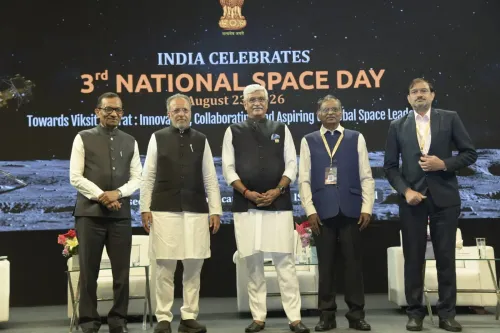
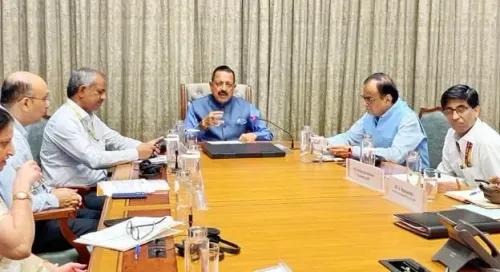
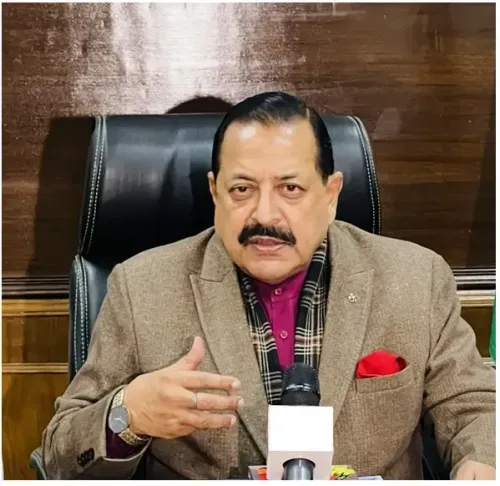
India's space programme crossed a landmark threshold with 100 cumulative launches and 548 satellites placed in orbit — roughly 460 of them in the last 10 years alone — Petroleum and Natural Gas Minister Hardeep Singh Puri said on Sunday, 23 August 2025, marking the occasion of National Space Day. The figures underscore how sharply India has accelerated its orbital ambitions over the past decade.
Minister's Remarks on National Space Day
'On National Space Day, we come together to celebrate the remarkable distance India has soared in the space sector. From Chandrayaan-1 and Mangalyaan to Chandrayaan-3 and Aditya-L1, India's space programme reflects our scientific excellence, ambition and spirit of innovation,' Puri said.
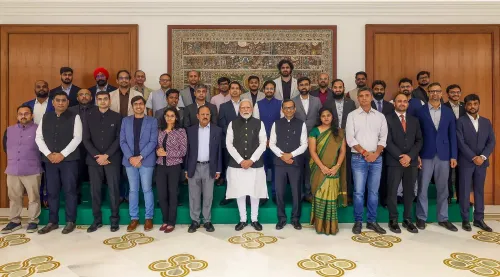
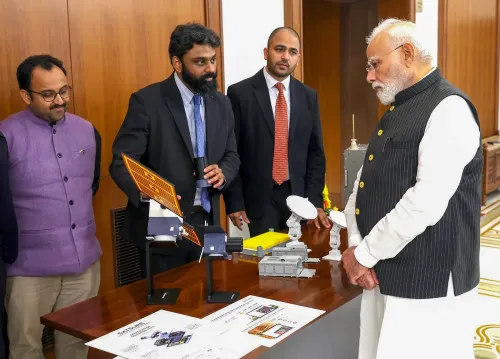
He also pointed to the growing role of private enterprise, noting that space startups and private-sector innovators are converting bold ideas into tangible outcomes, giving fresh momentum to India's broader space ambitions.
The Chandrayaan-3 Mission That Sparked the Day
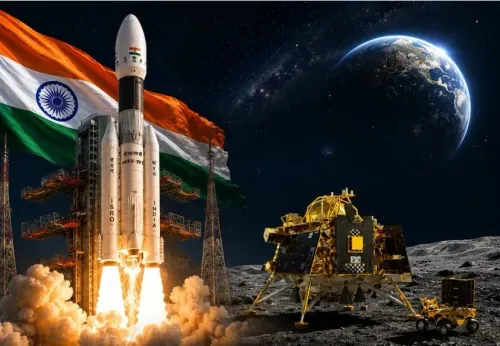
National Space Day is observed on 23 August each year to commemorate the moment ISRO successfully soft-landed the Chandrayaan-3 spacecraft near the lunar south pole on 23 August 2023. The feat made India only the fourth country — after the United States, China, and the former Soviet Union — to achieve a soft lunar landing, and the first to reach the Moon's rugged southern polar region.
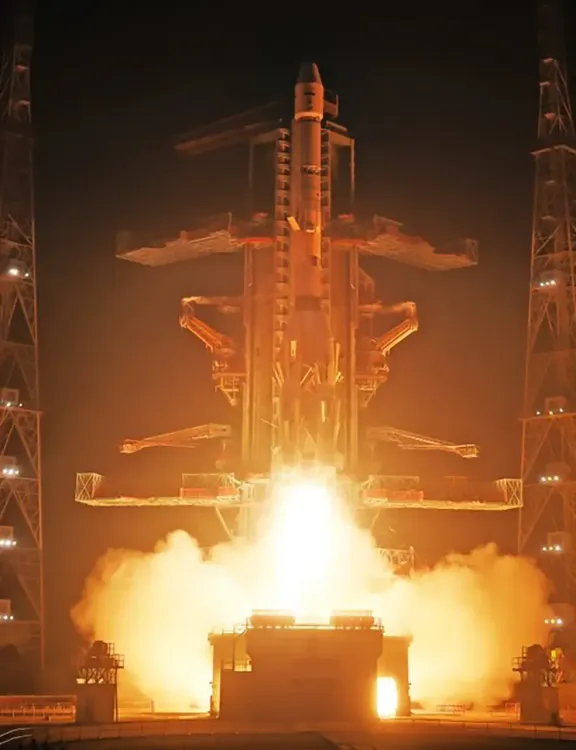
The mission was launched aboard the LVM3-M4 rocket from Sriharikota on 14 July 2023, with three core objectives: a safe and soft lunar landing, rover mobility on the surface, and in-situ scientific experiments. All three were met. The first National Space Day was observed a year later, on 23 August 2024.
What Chandrayaan-3 Found on the Moon
After touchdown, the Pragyan rover rolled out of the Vikram lander and conducted experiments covering the Moon's surface temperature, seismic activity, plasma environment, and elemental composition. The lander and rover operated for one lunar day — equivalent to approximately 14 Earth days — the full duration for which they were designed, and ISRO declared all mission objectives successfully met.
Private Sector and the Road Ahead
Puri highlighted that India's space journey is no longer driven solely by government institutions. Space startups are increasingly playing a role in expanding the country's orbital footprint, a shift that has gathered pace since the sector was formally opened to private players. This comes amid a broader push under the Viksit Bharat vision, with the space programme described by Puri as 'a vital force in shaping a technologically advanced and Aatmanirbhar Bharat.'
With ISRO eyeing missions including Gaganyaan — India's first crewed spaceflight — and continued deep-space exploration, the trajectory set over the last decade appears poised to steepen further.
Point of View
Not just national prestige missions. Chandrayaan-3 was the headline, but the quieter story is whether India's launch infrastructure — Sriharikota's throughput, the new Kulasekarapattinam port, and ISRO's commercial arm — can scale fast enough to capture the global small-satellite market before SpaceX and new Chinese entrants lock in long-term contracts. National Space Day risks becoming a self-congratulatory ritual if it is not paired with hard targets for commercial revenue and private-sector launch share.
NationPress
8 Oct 2026
Frequently Asked Questions
What is National Space Day and why is it celebrated on 23 August?
National Space Day is observed on 23 August each year to commemorate ISRO's successful soft-landing of Chandrayaan-3 near the lunar south pole on 23 August 2023. The first edition of the day was observed on 23 August 2024, intended to celebrate India's broader achievements in space science and technology.
How many satellites has India launched in the last 10 years?
According to Minister Hardeep Singh Puri, approximately 460 of India's total 548 satellites placed in orbit were launched in the last decade, as part of 100 cumulative space launches.
What made Chandrayaan-3 historically significant?
Chandrayaan-3 made India the fourth country to achieve a soft lunar landing and the first to land near the Moon's southern polar region. The mission launched on 14 July 2023 and landed on 23 August 2023, with the Pragyan rover and Vikram lander meeting all scientific objectives over one lunar day.
What experiments did the Chandrayaan-3 mission conduct on the Moon?
The Pragyan rover and Vikram lander studied the Moon's surface temperature, seismic activity, plasma environment, and elemental composition near the south pole — an area that had not been explored at surface level before.
What is India's next major space mission?
India is working towards Gaganyaan, its first crewed spaceflight mission, alongside continued deep-space exploration programmes. The government has also opened the space sector to private players, with startups now contributing to the country's growing orbital footprint.