How Did Shubhanshu Shukla and the NISAR Mission Propel India’s Space Aspirations in 2025?
Synopsis
In a groundbreaking year for India's space sector, 2025 witnessed historic achievements including the first Indian astronaut at the ISS and the launch of private satellite constellations. Looking forward to 2026, all eyes are on the uncrewed Ganganyaan mission, which promises to be a significant leap in human spaceflight.
Key Takeaways
Shubhanshu Shukla made history as India's first astronaut at the ISS.
India launched its first private earth imaging satellite constellation.
The space economy reached $13 billion .
ISRO celebrated its 100th launch, enhancing its global standing.
Preparations for the Ganganyaan mission are in advanced stages.
New Delhi, Dec 25 (NationPress) In 2025, the Indian space sector achieved remarkable milestones, highlighted by Group Captain Shubhanshu Shukla becoming the first Indian to visit the International Space Station (ISS). The year also saw India establish its first private earth imaging satellite constellation. As we look ahead, 2026 will be pivotal, kicking off with the inaugural uncrewed Ganganyaan mission.
The space initiatives of 2025 were propelled by both government-backed ISRO and private enterprises, collectively elevating the space economy to approximately $13 billion. The aim is to capture 8-10 percent of the global commercial space market within the next ten years.
January marked the successful docking of the SPADEX (Space Docking Experiment) satellites -- SDX01 (the Chaser) and SDX02 (the Target) -- each weighing around 220 kg, making India the fourth nation to master space docking technology.
ISRO celebrated its 100th launch from the Sriharikota spaceport on January 29, successfully placing the NVS-02 navigation satellite into its planned Geosynchronous Transfer Orbit aboard the GSLV rocket.
The Union Cabinet greenlit the construction of the Third Launch Pad (TLP) at the Satish Dhawan Space Centre of ISRO in Andhra Pradesh.
Space startup Digantara launched its Space Camera for Object Tracking (SCOT) satellite aboard SpaceX's Transporter-12 mission to bolster space safety and monitor Resident Space Objects (RSOs).
Bengaluru's Pixxel successfully deployed its first three satellites of the Firefly constellation, marking India's first private satellite constellation.
In February, ISRO unveiled the initial major batch of scientific data from its solar mission Aditya-L1, featuring unprecedented observations of a solar flare "kernel".
The space sector received a substantial allocation of Rs 13,416.2 crore in the Union Budget for 2025-26, along with the removal of customs duties on satellite and launch vehicle components to foster domestic manufacturing.
By March, ISRO delivered the first sets of two 32-bit microprocessors, VIKRAM3201 and KALPANA3201, to the Semiconductor Laboratory in Chandigarh for integration into launch vehicle systems.
ISRO's orbital platform completed 1,000 orbits, successfully accommodating ten private payloads from various startups.
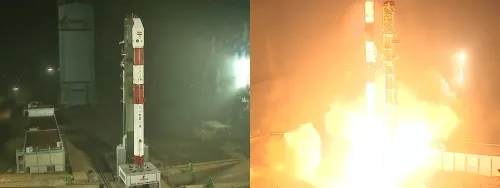
In May, ISRO undertook its 101st launch with the PSLV-C61 mission, deploying the 1,696 kg EOS-09 Earth Observation Satellite into a 505 km Sun-Synchronous Polar Orbit. While initial flight stages performed optimally, a technical issue in the rocket's third stage hindered the mission's intended orbit.
Significantly, ISRO achieved a technological milestone with a series of successful hot tests for its 2000 kN-class semi-cryogenic engine (SE2000) at the ISRO Propulsion Complex (IPRC) in March, April, and May.
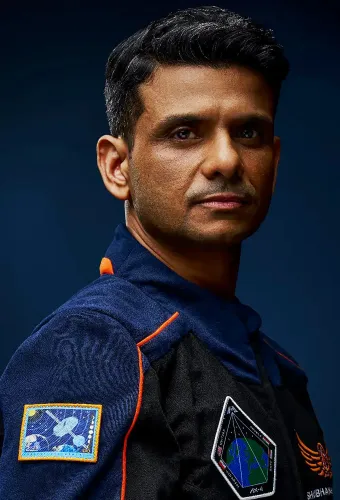
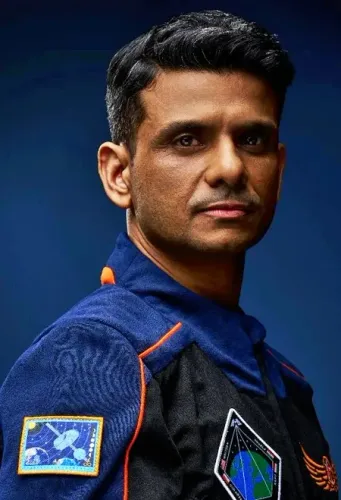
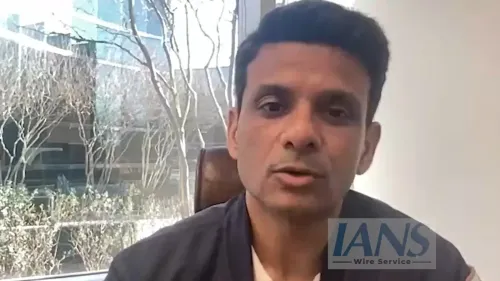
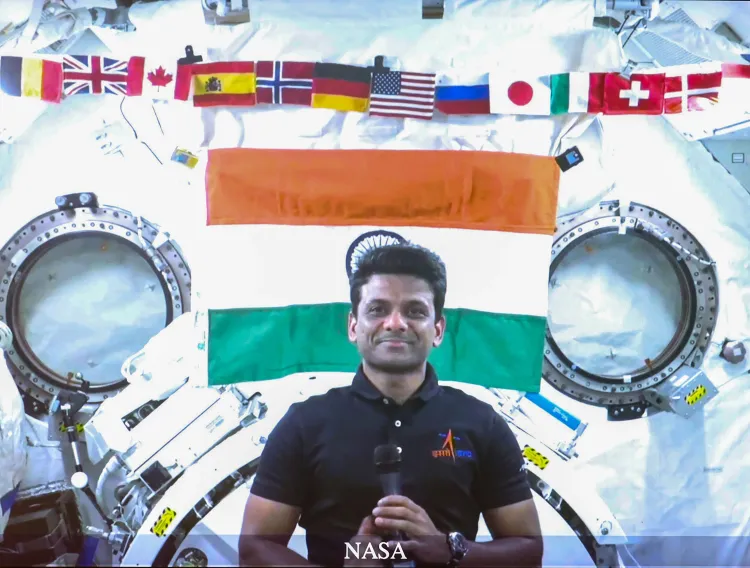
June saw Shukla’s groundbreaking 18-day mission to the ISS, marking a historic achievement for an Indian astronaut, following Rakesh Sharma in 1984. This mission is regarded as a defining moment for the Indian space sector in 2025.
During his mission, Shukla not only piloted the SpaceX Dragon capsule to and from the ISS but also conducted seven microgravity experiments, focusing on muscle regeneration, algal growth, crop viability, microbial survivability, cognitive performance in space, and cyanobacteria behavior—each aimed at enhancing our understanding of human spaceflight and microgravity science.
ISRO further made strides with the successful launch of the NASA-ISRO Synthetic Aperture Radar (NISAR) mission—a pioneering joint satellite venture between the US and India—aboard the GSLV-F16 rocket in July.
In August, private aerospace company Skyroot Aerospace completed the first static test of its KALAM 1200 solid motor at Sriharikota.
ISRO's November mission saw the successful deployment of the CMS-03, the heaviest communication satellite ever launched at 4,400 kg, which also achieved the first-ever in-space restart of the C25 cryogenic engine.
December witnessed the LVM3-M6 mission successfully deploying the BlueBird Block-2 satellite, recognized as the largest commercial communication satellite in Low Earth Orbit.
Advancing the Indian Human Spaceflight Programme, ISRO conducted two significant interrelated ground-based 10-day simulation missions, Anugami (July) and HOPE (August), aimed at preparing for future human spaceflight and interplanetary exploration. These missions collectively yield crucial Indian-subject data to tackle challenges for Gaganyaan, the Bharatiya Antariksh Station, and upcoming missions to the Moon and Mars.
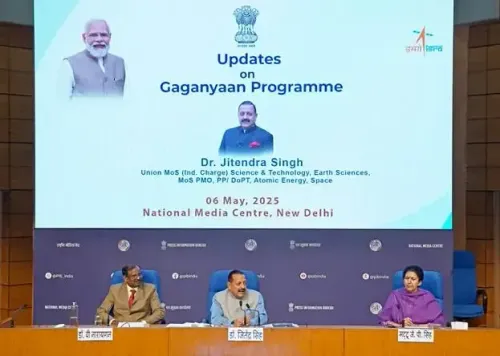
Notably, the year marked significant progress for the Gaganyaan mission, with the first human spaceflight mission now 90 percent ready, currently undergoing its final phase of system-level qualification and safety testing, with a historic crewed flight anticipated in 2027.
In August, ISRO successfully executed the inaugural Integrated Air Drop Test (IADT-01) for the Gaganyaan programme at the Satish Dhawan Space Centre (SDSC), Sriharikota. This test validated the performance of the critical parachute-based deceleration system for the Crew Module in a typical mission scenario.
December also saw the completion of a series of deployment tests for the Drogue Parachutes at the TBRL facility in Chandigarh, alongside successful trials for the service module engines and thrusters to confirm space maneuvering and braking capabilities.
The first uncrewed G1 mission is projected to be the most significant space endeavor for 2026.
Additionally, preparations are underway for major launch vehicles, including LVM3, PSLV, GSLV Mk II, and SSLV, to facilitate a series of seven missions in 2026.
Noteworthy upcoming launches include GalaxEye's Mission Drishti—India's largest privately constructed satellite (160 kg)—and Agnikul's inaugural commercial orbital mission.
Point of View
I observe that India's space sector is on an accelerated trajectory, with significant advancements and private sector involvement enhancing our capabilities. The achievements in 2025, particularly with the Ganganyaan mission on the horizon, reaffirm India's commitment to becoming a global leader in space exploration.
NationPress
27 Sept 2026
Frequently Asked Questions
What were the major achievements of India's space sector in 2025?
In 2025, major achievements included Shubhanshu Shukla's historic ISS visit, successful satellite launches, and advancements in launch vehicle technology, contributing to a $13 billion space economy.
What is the Ganganyaan mission?
The Ganganyaan mission is India's ambitious human spaceflight program aiming to send astronauts into space, with the first uncrewed mission scheduled for 2026.
How did the private sector contribute to India's space achievements?
Private companies like Digantara and Pixxel launched significant satellites, marking India's entry into the competitive global space market.
What budget was allocated to the Indian space sector in 2025?
The Indian space sector received Rs 13,416.2 crore in the Union Budget for 2025-26.
What future missions are planned for 2026?
2026 will see major missions including the uncrewed G1 mission of the Ganganyaan program and several launches by leading space vehicles like LVM3 and PSLV.