How is the Namo Drone Didi Scheme Empowering Rural Women in Banaskantha?
Click to start listening
Synopsis
Discover how the Namo Drone Didi Yojana is transforming the lives of rural women in Banaskantha by providing them with essential skills and opportunities. This initiative is not just about technology; it's about empowerment, self-reliance, and breaking traditional barriers. Join us in exploring Asha Chaudhary's inspiring journey as she leads the way for others.
Key Takeaways
- The Namo Drone Didi Yojana empowers rural women with technology.
- Women like Asha Chaudhary exemplify the transformative impact of such initiatives.
- Access to training and resources fosters self-reliance in rural communities.
- Success stories highlight the importance of targeted policy interventions.
- Empowered women are crucial to the nation's development.
Banaskantha, Dec 25 (NationPress) The initiatives aimed at women by the Central government are providing rural women with new avenues for empowerment and self-sufficiency, with the Namo Drone Didi Yojana acting as a revolutionary catalyst at the community level.
Within Banaskantha district, this scheme is granting women the ability to shatter traditional constraints and embrace technology-driven careers.
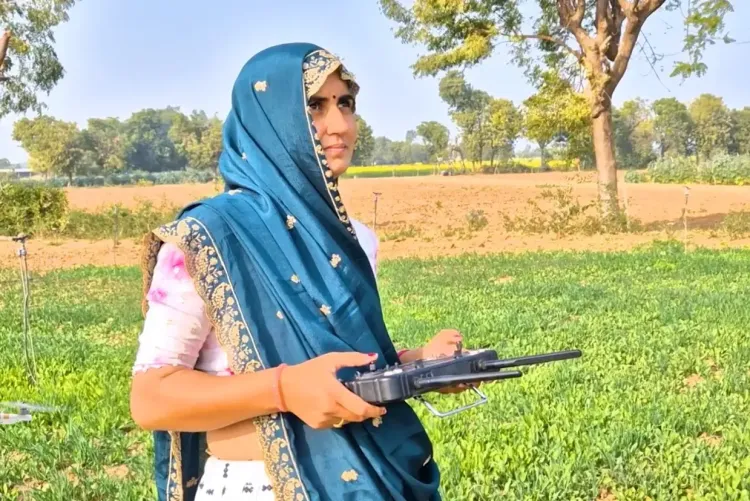
A remarkable instance is Asha Chaudhary, a local from Talepura village in Deesa taluka, who has transformed training and opportunities into enduring self-employment.
Driven by the belief that an empowered woman enhances not only her own life but also her family's, community, and the nation, the government led by PM Modi has introduced numerous programs aimed at women's economic autonomy.
The Namo Drone Didi Yojana is an initiative that is paving the way for modern skill acquisition and income generation in rural India.
Upon finishing her training under this scheme, Asha was awarded a drone kit valued at Rs 17 lakh by the Central government.
With advanced technology and practical skills at her disposal, she commenced offering drone-based agricultural services, signifying a substantial shift from traditional rural employment.
Asha has achieved financial independence and has become a vital support for her family.
Reflecting on her journey, Asha shared that the scheme instilled in her confidence and skills, enabling her to envision a future beyond conventional boundaries.
Her endeavors have not only boosted her household income but also motivated other women in the village to pursue new opportunities.
The outreach of government welfare schemes is progressively reaching even the most remote villages in Gujarat, integrating rural women into the mainstream of development.
Stories like that of Asha Chaudhary emphasize how strategic policy interventions can bring about genuine change at the grassroots level.
As women gain access to technology, training, and financial resources, they are establishing the groundwork for a self-sufficient and developed India.
The success of the Namo Drone Didi Yojana in Banaskantha exemplifies the essence of “Atal leadership, uninterrupted development,” where empowered women are becoming the driving force behind inclusive growth.
Point of View
It is vital to recognize that initiatives like the Namo Drone Didi Yojana are pivotal in fostering women's empowerment and economic independence. The success stories emerging from Banaskantha serve as a testament to the effectiveness of targeted policy interventions. This approach aligns with our commitment to promoting progressive narratives that uplift marginalized communities and drive inclusive growth across the nation.
NationPress
25/12/2025
Frequently Asked Questions
What is the Namo Drone Didi Yojana?
The Namo Drone Didi Yojana is a Central government initiative aimed at empowering rural women by providing them with training and resources to engage in technology-driven livelihoods.
How has the scheme impacted women in Banaskantha?
The scheme has allowed women like Asha Chaudhary to break traditional barriers, gain financial independence, and inspire others in their communities.
What resources are provided under the Namo Drone Didi Yojana?
Participants receive training and valuable resources, including drone kits, enabling them to offer innovative agricultural services.